
Die griechischen Säulenbasen
By (author) Uta Dirschedl

Hardback (Published)
(October 2013)
ISBN: 9783895009501
8.27 x 11.69 inches
Price: $152.00
In stock
This volume records column plinths from around 460 Greek architectural monuments from the (proto)geometric to the late Hellenic period in the Greek homeland, in the Peloponnese, on the Greek islands and in Asia Minor as well as some examples from the Greek colonies of Magna Graecia. It differentiates between twelve different types of Greek plinths and some variations and modifications thereof, as well as a few special forms. The study examines the geographical spread, choice of materials, combinations with columns and building types, shapes, fluting and decoration, proportion, period, origin, derivation as well as the stone carving and the technical elements of each individual type. The results are summarized in the form of a synopsis covering all different types. German text.
English summary: The subject of the present study is the Greek column base – the “foot” of the Ionian column, whose architectural shape evolved from the early first millenium B.C. up to the late Hellenistic era. The column bases of about 460 different Greek monuments from (proto)geometric to late Hellenistic times – spanning a period of more than 900 years – in the Greek home territory and on the Peloponnese, the Greek islands and in Asia minor, as well as examples from Greek colonies in southern Italy and Sicily, the Black Sea region and the Nile Delta, are covered. Landmarks of Hellenistic cantral and southern Italian, Ptolemaic and Punic architecture with Greek column bases were also included in the study, as well as some isolated remnants of the Hellenistic world’s Eastern periphery. Twelve different types of Greek column bases, some variants and modifications and a few special forms can be distinguished and, in part, classified in a new way. The different forms were studied for their distribution, choice of materials, combination with forms of columns and building styles, forms, fluting or decoration, proprotions, dating, origin, derivation, stone carving and technique; the results are summarised in a synopsis spanning all the different forms. The analysis of the column bases shows, among other things, that the “foot” of the Ionian or Corinthian column , in contrast to the shaft and the capital, provided room for creative design, and the various individually formed types of column base with a particular area of distribution were apparently used as a characteristic form of expression for local architectural traditions. This is shown, for example, in the use of “exotic” Asia Minor column bases on monuments in temples with more than regional importance, such as the treasure houses of Clazonenae and Massalia, the Athenians’ Hall in Delphi or the Ptolemies’ votive offering in Olypmpia, which point to the origin of the founders, a place of military conflict or the home of the recipient. The conscious readoption of the Ionian-Carian tradition of the archaic Ephesian column bases in late classical buildings of the Carian Hecatomnidean dynasty in Labraunda and Halicarnassus after an interruption of roughly a century during the co-called Ionian remaissance also illustrates this. The new designs of column bases at the temple of Nike on the Athenian Acropolis and the temple of Apollo in Bassai-Phigalia in the second half of the 5th century, which are influenced by the Ionian column bases, being independent “Attic” or “Peloponnesian” types of bases, are also motivated by the need to assimilate the Ionian column as received in Attica and on the Peloponnese using individual local base types. German description: Gegenstand der vorliegenden Untersuchung ist die griechische Saulenbasis – der “Fuss” der ionischen Saule, der ab dem fruhen ersten Jahrtausend v. Chr. bis in spathellenistische Zeit architektonisch gestaltet wird. Die Untersuchung der griechischen Saulenbasen zeigt, dass der Fuss der ionischen bzw. korinthischen Saule im Gegensatz zu Saulenschaft und Kapitell einen gestalterischen “Spielraum” bot, und die verschiedenen individuell ausgebildeten Saulenbasistypen, die eine spezifische Verbreitung aufweisen, offensichtlich als charakteristisches Ausdrucksmittel lokaler Architekturtraditionen eingesetzt wurden. Besonders augenfallig wird dies z. B. an der Verwendung “fremdartiger” kleinasiatischer Saulenbasen an Denkmalern in uberregional bedeutenden Heiligtumern, wie z. B. an den Schatzhausern von Klazomenai und Massalia und der Athener-Halle in Delphi sowie dem Ptolemaer-Weihgeschenk in Olympia, die auf die Herkunft bzw. ursprungliche Herkunft der Stifter, den Ort einer kriegerischen Auseinandersetzung oder die Heimat des Adressaten verwiesen. Die an die dreigliedrige Form des “Peloponnesischen Typus B” anknupfenden sog. Tarentiner Basen demonstrierten in der Magna Graecia offenbar die “peloponnesische” Herkunft der Kolonisten. Das bewusste Wiederaufnehmen der “ionisch-karischen Tradition” der archaischen ephesischen Saulenbasen nach etwa einhundertjahriger Unterbrechung in der sog. Ionischen Renaissance an den spatklassischen Bauten der karischen Hekatomniden in Labraunda und Halikarnassos verdeutlicht dies ebenfalls. Auch die von ionischen Saulenbasen abhangigen Neuschopfungen von Saulenbasen am Nike-Tempel der Athener Akropolis sowie am Apollon-Tempel in Bassai-Phigalia in der zweiten Halfte des 5. Jahrhunderts – als jeweils eigenstandige “attische” bzw. “peloponnesische Basistypen” – sind motiviert durch das Bedurfnis, sich die in Attika und auf der Peloponnes neu rezipierte ionische Saule anhand einer individuellen lokalen Basisform “zu Eigen” zu machen. Erfasst wurden die Saulenbasen von etwa vierhundertsechzig verschiedenen griechischen Baudenkmalern (proto)geometrischer bis spathellenistischer Zeit – aus einem Zeitraum von mehr als neun Jahrhunderten – im griechischen Stammland und auf der Peloponnes, auf den griechischen Inseln und in Kleinasien sowie exemplarisch in den griechischen Kolonien in Unteritalien und Sizilien, im Schwarzmeergebiet und im Nildelta. Auch Denkmaler der hellenistischen mittel- und unteritalischen, ptolemaischen sowie punischen Architektur mit griechischen Saulenbasen werden in die Untersuchung einbezogen sowie vereinzelt architektonische Zeugnisse der ostlichen Peripherie der hellenistischen Welt.
- By (author) Uta Dirschedl
„Zusammengefasst ist die Arbeit von Uta Dirschedl eine sehr umfangreiche und mit immensem Fleiß aus profunder Literaturkenntnis zusammengetragene Materialsammlung, die sehr gut recherchiert und systematisch erschlossen ist.“<br/><br/>Von Christof Hendrich<br/><br/>In: Bonner Jahrbücher Bd. 214 (2014), S. 333-334.
—
Other Titles in this Series
 Aizanoi, Dokimion und Anatolien
Stadt und Land, Siedlungs- und Steinmetzwesen vom späteren 4. bis ins 6. Jahrhundert n. Chr.
 Aegyptiaca aus Al MIna und Tarsos im Verbande des nordsyrische – sudostanatolischen Raumes
Volume 28


 Privatportrat
Die Darstellung realer Personen in der spatantiken und byzantinischen Kunst. Akten des Internationalen Workshops an der Osterreichischen Akademie der Wissenschaften in Wien, 14.-15. Februar 2013
Volume 30
 Späthellenistische und frühkaiserzeitliche Keramik aus Priene
Untersuchungen zu Herkunft und Produktion
 Numidia Romana?
Die Auswirkungen der römischen Präsenz in Numidien (2. Jh. v. Chr. – 1. Jh. n. Chr.)
 Das Athenaheiligtum von Priene
Die Nebenbauten – Altar, Halle und Propylon – und die bauliche Entwicklung des Heiligtums
 Hellenistische Wanddekorationen
Syntax, Semantik und Chronologie des Ersten Stils im westlichen Mittelmeerraum
 Der Turm der Winde in Athen
mit Beiträgen von Pavlina Karanastasi zu den Reliefdarstellungen der Winde und Karlheinz Schaldach zu den Sonnenuhren


 Die Casa del Fauno in Pompeji (VI 12) 1
Stratigraphische Befunde der Ausgrabungen in den Jahren 1961 bis 1963 (von Andrea Faber). Bauhistorische Analyse (von Adolf Hoffmann nach Vorarbeiten von René von Schöfer und Arnold Tschira)
 Ägyptens schöne Gesichter
Die Mumienmasken der römischen Kaiserzeit und ihre Funktion im Totenritual


 Antike Malerei zwischen Lokalstil und Zeitstil
Akten des XI. Internationalen Kolloquiums der AIPMA, 13.-17. September 2010
Volume 23
 Die figürlichen Terrakotten von Priene
Fundkontexte, Ikonographie und Funktion in Wohnhäusern und Heiligtümern im Licht antiker Parallelbefunde

 Die rote Feinkeramik von Aizanoi als lokaler Kulturträger
Untersuchungen zum Verhältnis von lokaler roter Feinkeramik und importierter Sigillata
Similar Books

 Caesar’s Visions and Impact on the Roman Empire
Revisiting the Archaeological and Historical Record of the 40s BC
Volume 2


 Drunk the Potion, No Whit Charmed
The Doctrine of Pure and Perfect Souls from Iamblichus to Damascius

 Epiphanies of the Divine in the Septuagint and the New Testament
Fifth International Symposium of the Corpus Judaeo-Hellenisticum Novi Testamenti (CJHNT), 14-17 May 2015, Nottingham


 Etruscan and Roman Hellenistic Anatomical ex votos
Reassessing Popular Religious Expressions in Central Italy
Volume 8



 Invisible Labour in Antiquity
Visualizing Obscure Work in the Ancient Mediterannean and West Asia
Volume 1
 Language and Power in the Roman Empire and Early India
Hierarchy, Ambiguity, and the Art of Reading the Signs in Cosmopolitan Cultures
 Late Antique villae in the Balkans (3rd–7th c. AD): Current Research Questions and Perspectives
HAEMUS Companion to the Late Antique Balkans 1
Volume 4

 Nurturing the Elite
Representations of Drinking, Eating, and Religious Vessels in Palmyrene Funerary Iconography
Volume 13


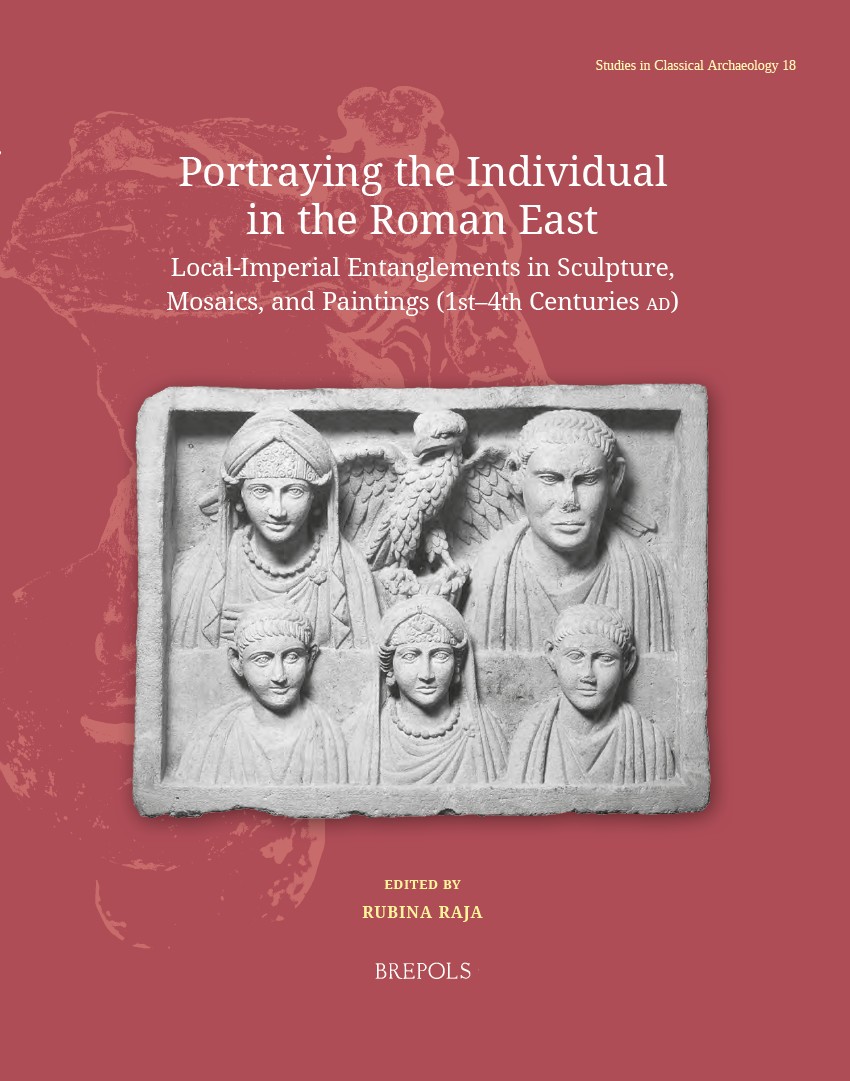 Portraying the Individual in the Roman East
Local–Imperial Entanglements in Sculpture, Mosaics, and Paintings (First–Fourth Centuries AD)
Volume 18

 Small Worlds and Relational Agencies: Local Societies in Early Medieval Iberia
Pequeños mundos y Agencias relacionales: Sociedades locales altomedievales en la Península Ibérica
 The Compositional History of the Book of Kings
An Analysis of the Evaluative Frameworks in 1 Kings 14–2 Kings 25

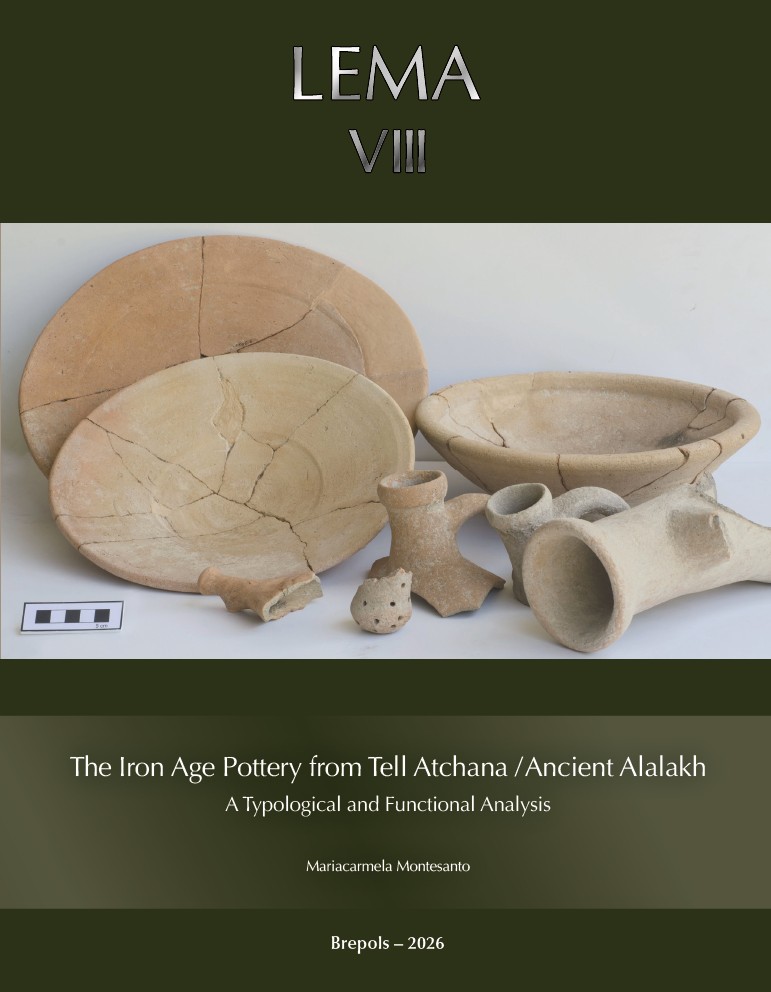 The Iron Age Pottery from Tell Atchana / Ancient Alalakh
A Typological and Functional Analysis
Volume 8

 Writing in the Church of the Nativity in Bethlehem
Inscription and Graffiti in a Multilingual and Multigraphic Perspective
Volume 45
 Contesting Labeled Identities
The Sociology of Gentilics in Biblical and Northwest Semitic Literature


 After Life in Roman Paganism. L’Égypte des astrologues. Les Mages hellénisés
Introductions historiographiques
Volume 7

 Atlante tematico di topografia antica 36-2026
Urbanistica e monumenti, porti, Roma. Ricerche sui monti Aurunci
Volume 36
 Cerámica común romana y ciclo haliéutico
Análisis de los contextos de las cetariae de Iulia Traducta


 Diodor über den ersten Sklavenaufstand auf Sizilien
Ein philologischer und historischer Kommentar
Volume 67