
Dance, Ideology and Power in Francoist Spain (1938-1968)
Edited by Beatriz Martinez del Fresno Edited by Belen Vega Pichaco

In 1938, the first regular Government of General Franco was constituted in the national area. Under this regime, and for almost 40 years between the end of the Civil War in 1939 and the death of the dictator in 1975, the arts in Spain developed inevitably within the frame of promotion, repression and control imposed by Francoism. In this sense, dance constitutes a privileged field of study to explore not only the propagandistic uses of ballet and dance, but also the construction of a national imagery through the activities displayed in diverse functional spectra of the time. This book aims to study systematically for the first time the relationship of dance with the dictatorial regime, the role models endorsed by the political party Falange Espanola, the traditionalist spheres and the so-called National-Catholicism, along with the propaganda and censorship strategies emanated from the State before 1968. Twenty scholars from various disciplines – Musicology, Anthropology, History, History of Dance, Cinematography – analyse the ideological and political dimensions of choreographic art. Special attention is paid to the practises and discourses on Body, Gender and Nation and to the cultural policies regarding the Festivales de Espana organized by the Ministry of Information and Tourism. Furthermore, to the imagery of flamenco exhibited in government media and questioned in certain films, the processes of instrumentalisation of traditional dance as also to the existing mechanisms of control and transgression effected in dance halls and other spaces of sociability. Together with the cultural and biopolitical strategies of Francoism, the survival of concepts arising at that time is highlighted where it is still present in the performance and teaching of Spanish dance.
In 1938, the first regular Government of General Franco was constituted in the national area. Under this regime, and for almost 40 years between the end of the Civil War in 1939 and the death of the dictator in 1975, the arts in Spain developed inevitably within the frame of promotion, repression and control imposed by Francoism. In this sense, dance constitutes a privileged field of study to explore not only the propagandistic uses of ballet and dance, but also the construction of a national imagery through the activities displayed in diverse functional spectra of the time. This book aims to study systematically for the first time the relationship of dance with the dictatorial regime, the role models endorsed by the political party Falange Espanola, the traditionalist spheres and the so-called National-Catholicism, along with the propaganda and censorship strategies emanated from the State before 1968. Twenty scholars from various disciplines – Musicology, Anthropology, History, History of Dance, Cinematography – analyse the ideological and political dimensions of choreographic art. Special attention is paid to the practises and discourses on Body, Gender and Nation and to the cultural policies regarding the Festivales de Espana organized by the Ministry of Information and Tourism. Furthermore, to the imagery of flamenco exhibited in government media and questioned in certain films, the processes of instrumentalisation of traditional dance as also to the existing mechanisms of control and transgression effected in dance halls and other spaces of sociability. Together with the cultural and biopolitical strategies of Francoism, the survival of concepts arising at that time is highlighted where it is still present in the performance and teaching of Spanish dance.
- Edited by Beatriz Martinez del Fresno
- Edited by Belen Vega Pichaco
Other Titles in this Series


 Music and Colonialism in Fascist Italy
Identity, Propaganda, and Ethnographic Representation
Volume 13

 Luigi Dallapiccola between Politics, Text and Musical Thought
With an Appendix of New Sources
Volume 11

Similar Books


 As Messianism Turns to Heresy
The Regenstein Chair Lectures On Lurianic Kabbalah and Shabbatai Tzevi at Hebrew Union College - Cincinnati
 Beyond Sovereign Courts
Agents and Practices in Early Modern Spanish and Habsburg Diplomacy
Volume 3





 European Drama and Performance Studies
Dramatisations politiques. Théâtre, politique et idéologie au XIXe siècle (1806-1914)
Volume 27

 Food Security under Armed Conflict
Global Knowledge Landscape and Public Attention to Social, Economic, and Humanitarian Dimensions


 Innovationes Lovanienses: Arts, Law and Theology at the University of Louvain (1425–1797)
Studium Lovaniense: Learning across Borders, 2
Volume 18


 John Dunstaple Reading Boethius
John Dunstaple’s Annotations to Boethius’s “De institutione musica” in the Manuscript Oxford, Corpus Christi College Library, MS 118


 Modernization, Crises, Cultural Revolutions
Yugoslavia’s 1960s and 1970s through the amateur film lens
Music and Colonialism in Fascist Italy
Identity, Propaganda, and Ethnographic Representation
Volume 13


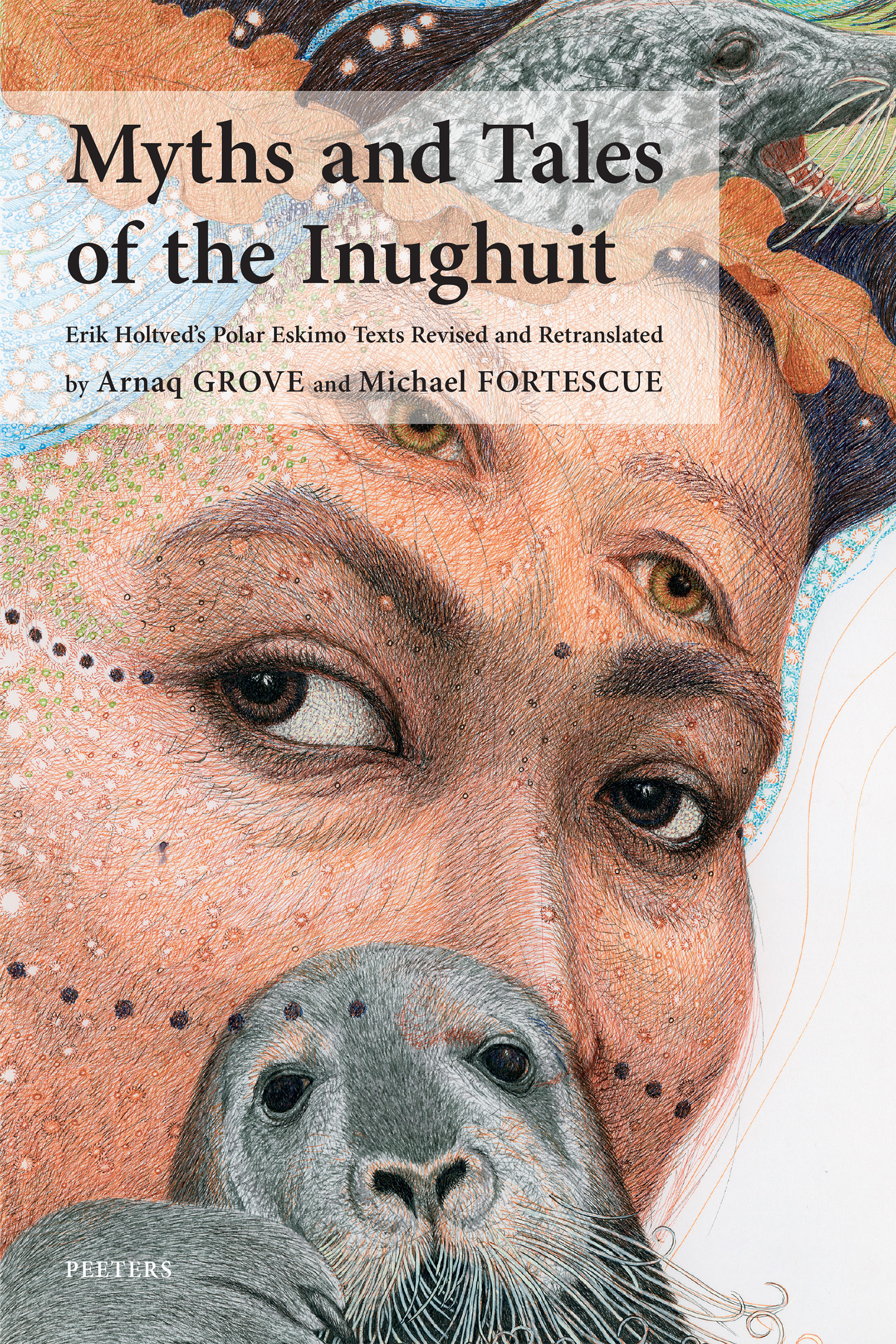 Myths and Tales of the Inughuit
Erik Holtved's Polar Eskimo Texts Revised and Re-translated into Danish and English
Volume 475, 12


