
Community Archaeology in Israel / Palestine
edited by Raz Kletter, Liora Kolska Horwitz and Emanuel Pfoh
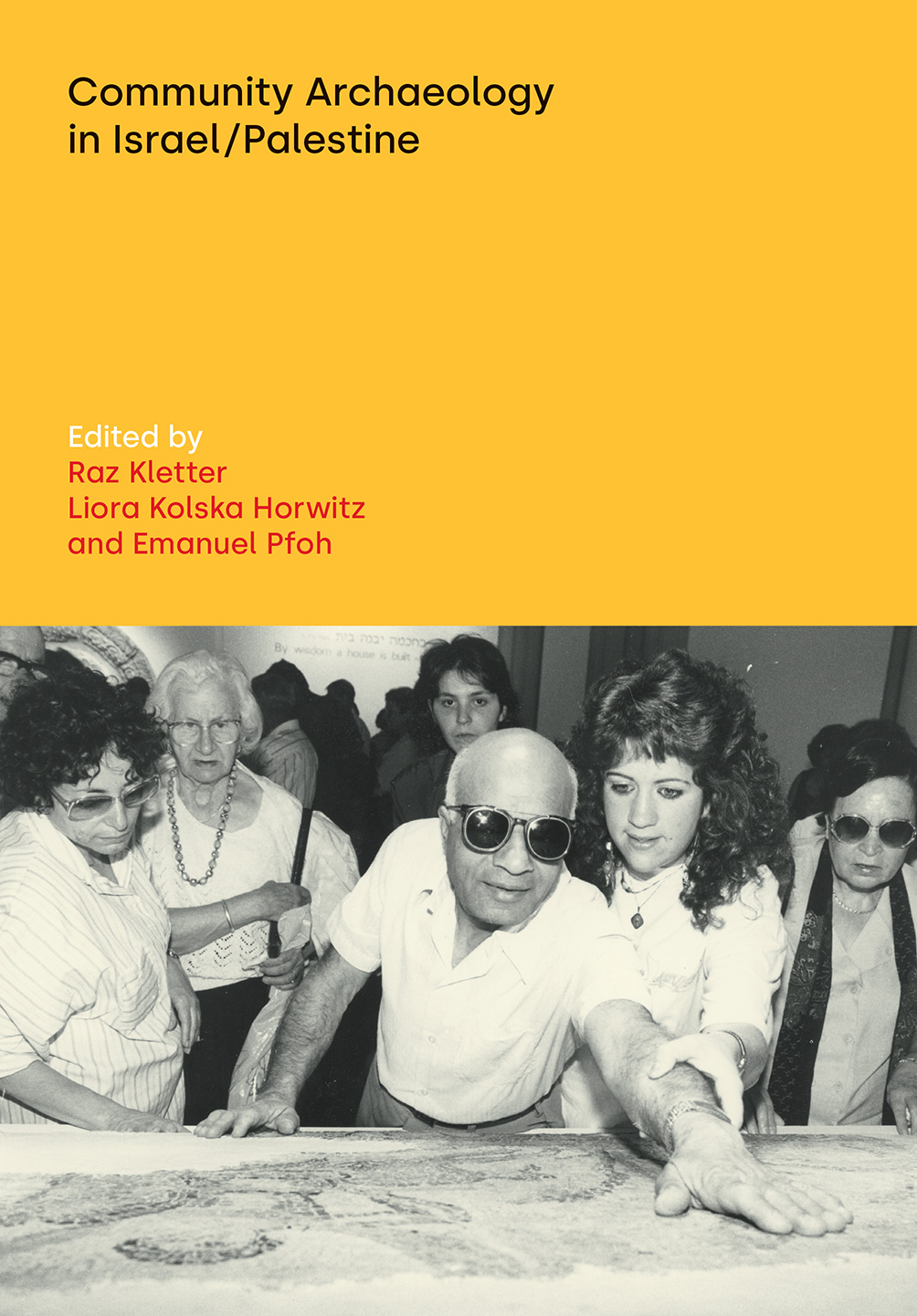
Chapters in the book challenge (in several ways, though not always explicitly) the traditional “Biblical Archaeology” approach to the archaeology of Israel/Palestine.
Although Community (or Public) Archaeology originated in western countries, it has now spread all over the world. It integrates the archaeological past with living peoples in new and unique ways. It is however, a rather loosely-defined field; to some it means an attitude and a theoretical concept, which is, or should be, valid for archaeology as a whole and for every archaeologist. For others it is a certain practice or sub-field of archaeology, which by now has its own experts – that is, community archaeologists. It is perhaps not surprising that in Israel/Palestine Community Archaeology touches heavily upon the present, perhaps more than upon the past. No archaeology in this region is ‘neutral’ and the living communities are part of the heated, on-going political, social and religious conflicts that have shaped the past, and are shaping this land for over more than a hundred years. The question is whether archaeology, including Community Archaeology, strive to neutrality? Can Community Archaeology free us from the hegemonic position of the archaeologies of nations and states? This is the first volume dedicated to Community Archaeology in Israel/Palestine. Chapters in the book challenge (in several ways, though not always explicitly) the traditional “Biblical Archaeology” approach to the archaeology of Israel/Palestine. They present their individual concepts and ideas about Community Archaeology in Israel/Palestine, bringing different questions and treating different case studies, and also reaching different though not unrelated conclusions. The volume gives a first, refreshing look of a new archaeology in an old land.
- Edited by Liora Kolska Horwitz
- Edited by Raz Kletter
- Edited by Emanuel Pfoh
Other Titles in this Series



Similar Books





 Archaeological Excavations at Irmis Rka: An Investigation of a Multi-Layered Settlement in Southwest Georgia
Results from the 2020 Season: Early Bronze Age to Medieval Occupations


 Boğazköy Tablets in the Museum of Anatolian Civilizations (Bo 9032–Bo 9097)
Anadolu Medeniyetleri Müzesinde Bulunan Boğazköy Tabletleri (Bo 9032–Bo 9097)
Volume 4


 Catuvellaunia and Rome: Economic and Political Relations during the Final Decades Pre-conquest
The Role of Grain from Southeastern Britain and Its Potential for Maintenance of the Roman Military along the Frontier on the Rhine
 Cities through Time
Glimpses into Urbanity and Community in Mediaeval to Modern West Asia and Egypt
Volume 1
 Colour Concept “Secoli bui” a colori
Codici cromatici e architetture dipinte nell’età tardoantica e medievale
 Connecting the Dots: Counting, Writing, and the Beginnings of Civilization
The Secret Lives of Clay Tokens: A Memoir


 Crossing Disciplines in the Study of Archaeology and Prehistoric Art: Insights from the Sahara and Mediterranean Africa
Proceedings of the XX UISPP World Congress (5–9 September 2023, Timișoara, Romania) Volume / Session 18
 Crossing Sacred Landscapes
Contacts and Continuities in the Desert Cults and Beliefs of Ancient Northern Arabia and the Arid Southern Levant
 Cuneiform Artefacts from Archaeological Contexts: New Research on Ancient Iraq
Proceedings of a Conference Held at the Bavarian Academy of Sciences and Humanities, July 4–5, 2024
Volume 2
 Curating the Prehistoric Past
Studies on West Asian Archaeology and Beyond in Honour of Yoshihiro Nishiaki


 ENTANGLED AFRICA
Intra-African Relations Between Rain Forest and Mediterranean from Around 4,000 BCE to 1,500 CE



 Exploring Gender Dynamics across the Ancient Near East
Collected Essays of Gender and Methodology in the Ancient Near East (GeMANE) 4 and 5
Volume 7
 Exploring Prehistoric Pottery in Japan
A Study of Organic Inclusions, Adhering Materials, and Impressions of Woven Items


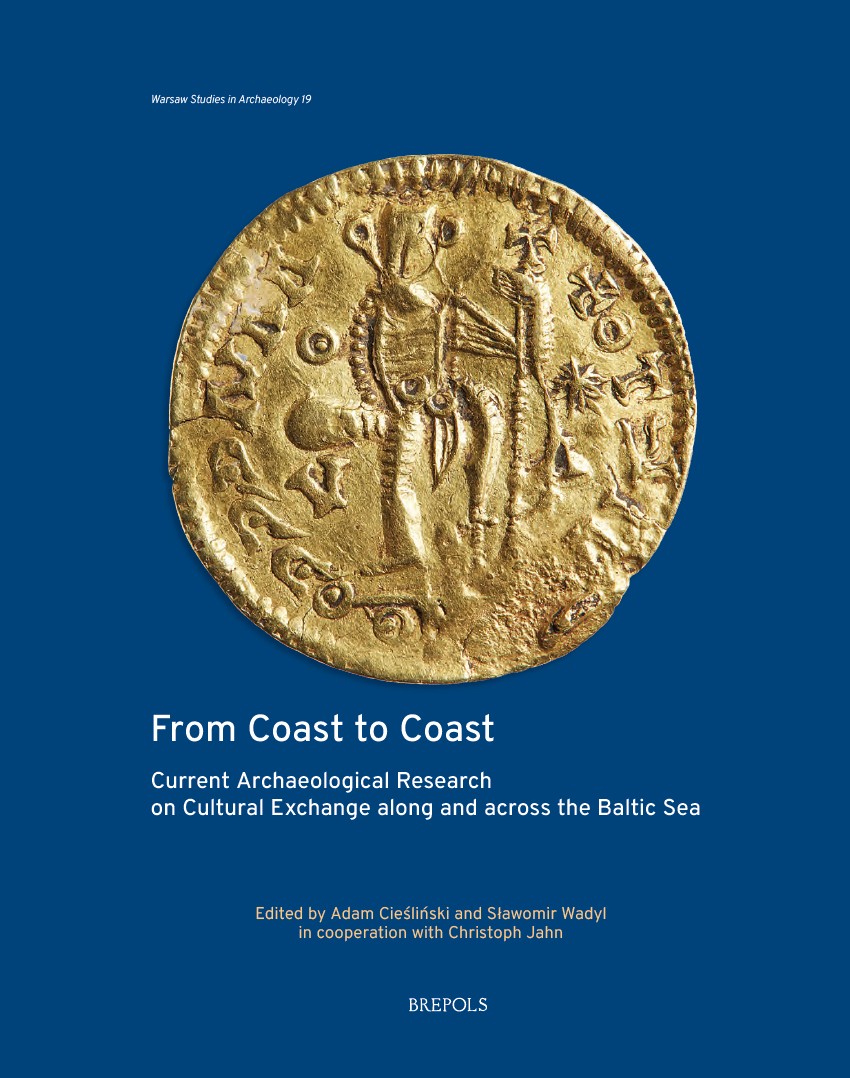 From Coast to Coast
Current Archaeological Research on Cultural Exchange along and across the Baltic Sea
Volume 19
