
Representations of Antiquity in Film
From Griffith to Grindhouse
by Kevin M. McGeough
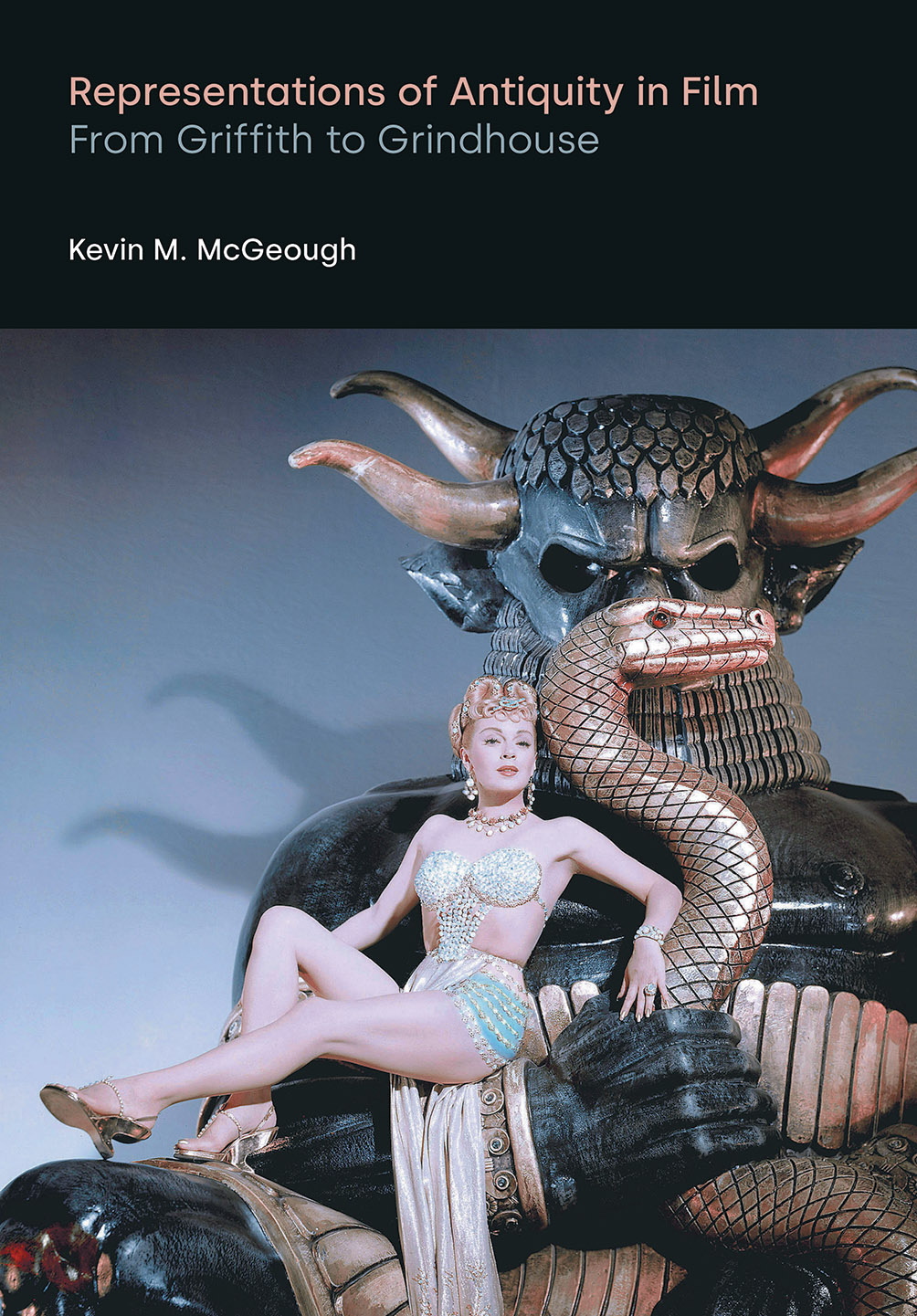
Representations of Antiquity in Film offers an introduction to how the ancient world is represented in film and especially Hollywood cinema. McGeough considers the potential that movies have for helping us think about antiquity and their relationship to more traditional academic historical work. The book shows how contemporary issues are drawn out through the cinematic presentations of the past and how modern values are naturalized through their presentation in ancient settings. Through discussion of films from the silent film era to the present, McGeough traces the formative role that films of various genres have had in shaping our perceptions of Egypt, Mesopotamia, the Holy Land, Greece, Rome, barbarian Europe, and the Maya. Not ignoring the traditional historical epic film, the book also presents detailed analyses of comedies, action films, art house fare, exploitation flicks and any type of movie in which audiences experience depictions of the past. By considering cinematic narrative as well as various elements of film design, McGeough presents a comprehensive overview of the topic designed for students and scholars with varying backgrounds in media studies, archaeology, religious studies, and ancient history.
Representations of Antiquity in Film offers an introduction to how the ancient world is represented in film and especially Hollywood cinema. McGeough considers the potential that movies have for helping us think about antiquity and their relationship to more traditional academic historical work. The book shows how contemporary issues are drawn out through the cinematic presentations of the past and how modern values are naturalized through their presentation in ancient settings. Through discussion of films from the silent film era to the present, McGeough traces the formative role that films of various genres have had in shaping our perceptions of Egypt, Mesopotamia, the Holy Land, Greece, Rome, barbarian Europe, and the Maya. Not ignoring the traditional historical epic film, the book also presents detailed analyses of comedies, action films, art house fare, exploitation flicks and any type of movie in which audiences experience depictions of the past. By considering cinematic narrative as well as various elements of film design, McGeough presents a comprehensive overview of the topic designed for students and scholars with varying backgrounds in media studies, archaeology, religious studies, and ancient history.
- By (author) Kevin M. McGeough
Other Titles in this Series


Similar Books






 Contesting Labeled Identities
The Sociology of Gentilics in Biblical and Northwest Semitic Literature



 Drunk the Potion, No Whit Charmed
The Doctrine of Pure and Perfect Souls from Iamblichus to Damascius


 Epigraphic “Shades” from Hellenistic Thrace
Contextualizing Inscriptions in Greek from Thracian Tombs

 Epiphanies of the Divine in the Septuagint and the New Testament
Fifth International Symposium of the Corpus Judaeo-Hellenisticum Novi Testamenti (CJHNT), 14-17 May 2015, Nottingham


 Gold, Silver and Glass: Power Networks, Cultural Identities, Technology Transfers and Agency across the Old World (7th Century BC – 1st Century AD)
Proceedings of a Conference Held at the British Museum, 16–18 June 2023



 John Dunstaple Reading Boethius
John Dunstaple’s Annotations to Boethius’s “De institutione musica” in the Manuscript Oxford, Corpus Christi College Library, MS 118

 Language and Power in the Roman Empire and Early India
Hierarchy, Ambiguity, and the Art of Reading the Signs in Cosmopolitan Cultures
 Late Antique villae in the Balkans (3rd–7th c. AD): Current Research Questions and Perspectives
HAEMUS Companion to the Late Antique Balkans 1
Volume 4


 Music and Colonialism in Fascist Italy
Identity, Propaganda, and Ethnographic Representation
Volume 13