
Bayt Farhi and the Sephardic Palaces of Ottoman Damascus in the Late 18th and 19th Centuries
by Elizabeth Macaulay-Lewis

Lavishly illustrated with extensive colour photographs, plans, and reconstruction drawings the book brings to life for the first time the home environment of the lost elite Sephardic community of Ottoman Damascus. An essential resource for those studying the architecture, history, and culture of Syria and the Ottoman Empire. 255 col & 47 b/w illus.
One of the largest and most important palatial houses of late 18th- and early 19th-century Damascus belonged to the Farhi family, who served as financial administrators to successive Ottoman governors in Damascus and Acre. The conversion of Bayt Farhi to a hotel provided a unique opportunity to make a detailed examination of its architecture, which is comparable to those of affluent Christians and Muslims, and decorated with high quality materials in the latest styles. Bayt Farhi’s outstanding architecture and decoration is documented and presented in this first comprehensive analysis of it and Damascus’s other prominent Sephardic mansions Matkab ‘Anbar, Bayt Dahdah, Bayt Stambouli, and Bayt Lisbona. The Hebrew poetic inscriptions in these residences reveal how the Farhis and other leading Sephardic families perceived themselves and how they presented themselves to their own community and other Damascenes. A history of the Farhis and the Jews of Damascus provides the context for these houses, along with the architectural development of the monumental Damascene courtyard house. Lavishly illustrated with extensive color photographs, plans, and reconstruction drawings the book brings to life the home environment of the lost elite Sephardic community of Ottoman Damascus. It will be an essential resource for those studying the architecture, history, and culture of Syria and the Ottoman Empire. Co-published with Manar al-Athar, University of Oxford.
- By (author) Elizabeth Macaulay-Lewis
"Damascus is a treasure trove of Ottoman domestic architecture. The old city preserves no greater example than the grand three-courtyard house of the prominent Jewish banker, Farhi al-Muallam. Elizabeth Macaulay-Lewis has done much more than accurately document and describe this marvel, recently restored to shine again in its original splendour. She provides us with a picture of the house in its context, even tracing back to the citys Roman phase. Her narrative explores how life for a Jewish family in late eighteenth century Damascus existed in an environment far removed from todays dysfunctional confessional divisions and where a Jewish family could grace the house with equally prominent references to its Jewish and Arab associations. The book is meticulously illustrated with plans and photographs bringing out every detail of the restoration process. It shows the house as it exists today, with its stunning palette of colours which previously only the English painter, Frederic Leighton, could adequately convey." --Prof Ross Burns (Macquarie University, Sydney), author of Damascus A History, Monuments of Syria, Aleppo A History
—
Other Titles in this Series

 Reflections of Empire
Archaeological and Ethnographic Perspectives on the Pottery of the Ottoman Levant
Volume 64
 City and Cemetery
Excavations at Kourion's Amathous Gate Cemetery, Cyprus. The Excavations of Danielle A. Parks Volume 1: Context, Analysis, and Conclusions
Volume 76
 City and Cemetery
Excavations at Kourions Amathous Gate Cemetery, Cyprus. The Excavations of Danielle A. Parks Volume 2: Human Bone, Ecofacts, and Artifacts
Volume 77


 The Nabataean Temple at Khirbet et-Tannur, Jordan, Volume 1
Architecture and Religion. Final Report on Nelson Glueck's 1937 Excavation
Volume 67
 An Examination of the Stratigraphy and Neolithic-Iron Age Pottery from Tel Jezreel, Area A
Volume 73
 The Nabataean Temple at Khirbet et-Tannur, Jordan, Volume 2
Cultic Offerings, Vessels, and Other Specialist Reports. Final Report on Nelson Glueck's 1937 Excavation
Volume 68

 Crossroads and Boundaries
The Archaeology of Past and Present in the Malloura Valley, Cyprus
Volume 65
 The Archaeology of the Ostraca House at Israelite Samaria
Epigraphic Discoveries in Complicated Contexts
Volume 70


 Unsilencing the Archives
New Approaches to the History of Archaeological Labor in the Mandate Period Middle East
Volume 80
Similar Books





 Connecting the Dots: Counting, Writing, and the Beginnings of Civilization
The Secret Lives of Clay Tokens: A Memoir

 Curating the Prehistoric Past
Studies on West Asian Archaeology and Beyond in Honour of Yoshihiro Nishiaki

 Exploring Gender Dynamics across the Ancient Near East
Collected Essays of Gender and Methodology in the Ancient Near East (GeMANE) 4 and 5
Volume 7


 Ḫattušaš utnē išḫameški
Hittite and Other Ancient Near Eastern Studies Presented to Piotr Taracha on the Occasion of His 65th Birthday




 Kultur – Kontakt – Kultur
Beiträge anlässlich der 66. Rencontre Assyriologique Internationale in Frankfurt/Main und Mainz, 25.–29. Juli 2022
Volume 35
 Money of Mercenaries in the Cimmerian Bosporus
From the Mithridatic Wars to the Roman-Bosporan War of AD 45-49
Volume 45

 New Research on Old Collections in Southwest Asian Archaeology
Proceedings of the Workshop Held at the British Museum, London, 31 July – 2 August, 2023
 Old Aramaic Inscriptions and their Contexts
An Epigraphic, Archaeological, and Historical Synthesis
Volume 63

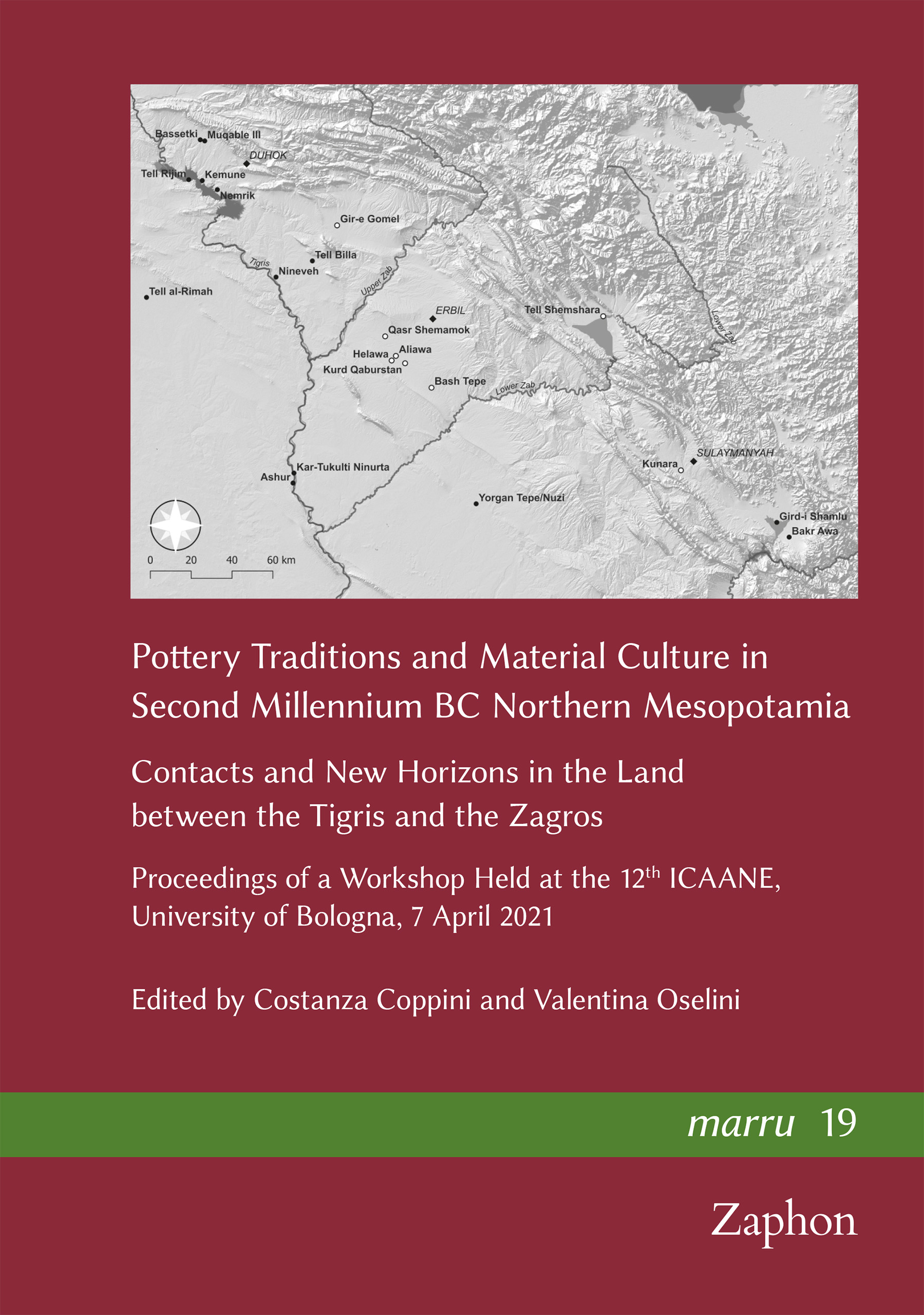 Pottery Traditions and Material Culture in Second Millennium BC Northern Mesopotamia
Contacts and New Horizons in the Land between the Tigris and the Zagros. Proceedings of a Workshop Held at the 12th ICAANE, University of Bologna, 7 April 2021
Volume 19
 Punning in Odd or Elegant Constructions in Jeremiah
The Convergence of Linguistics, Rhetoric, and Textuality in the Hebrew Text of Jeremiah

 Sertorius, the Exiles of the Sullan Regime and the Provinces of the Empire
Legitimacy, Morality and Imperial Discourse in the 70s BCE
 Shame in the Worlds of the Hebrew Bible and Akkadian Texts
A Linguistic Study and Its Implications
Volume 33

 Telling Contexts
Archaeological and Textual Studies in Honor of Elizabeth Bloch-Smith and Mark S. Smith
 The Body
Lived, Cultured, Adorned: Essays on Dress and the Body in the Bible and Ancient Near East in Honor of Nili S. Fox
 The Discourse of Rites
Shaping and Reshaping the (Counter-)Priestly Rituals Conducted Outside the Tabernacle
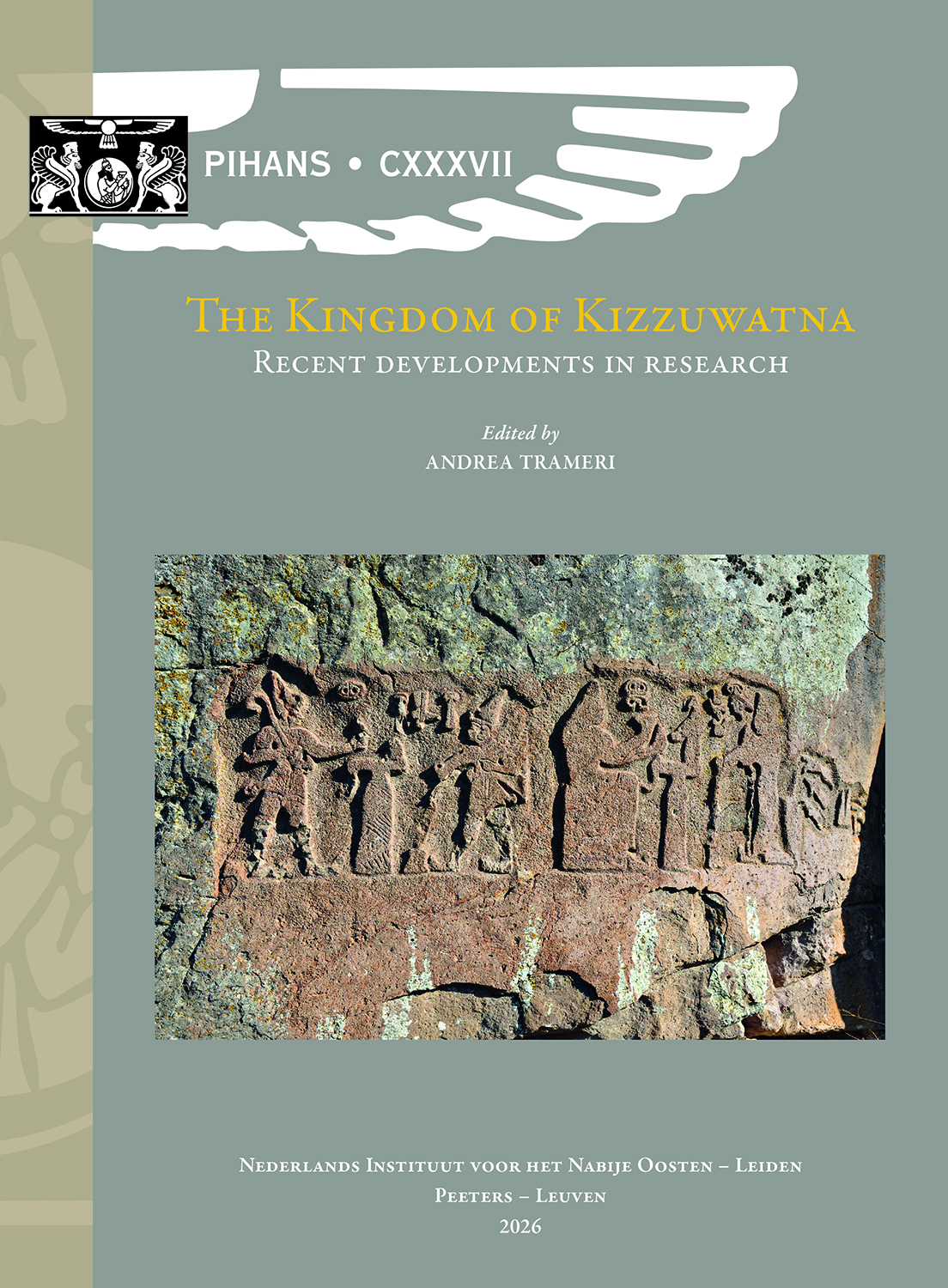 The Kingdom of Kizzuwatna: Recent Developments in Research
Proceedings of the Third NINO Postdoctoral Research Fellow Annual Conference, Leiden, 23rd-25th March 2023
Volume 137


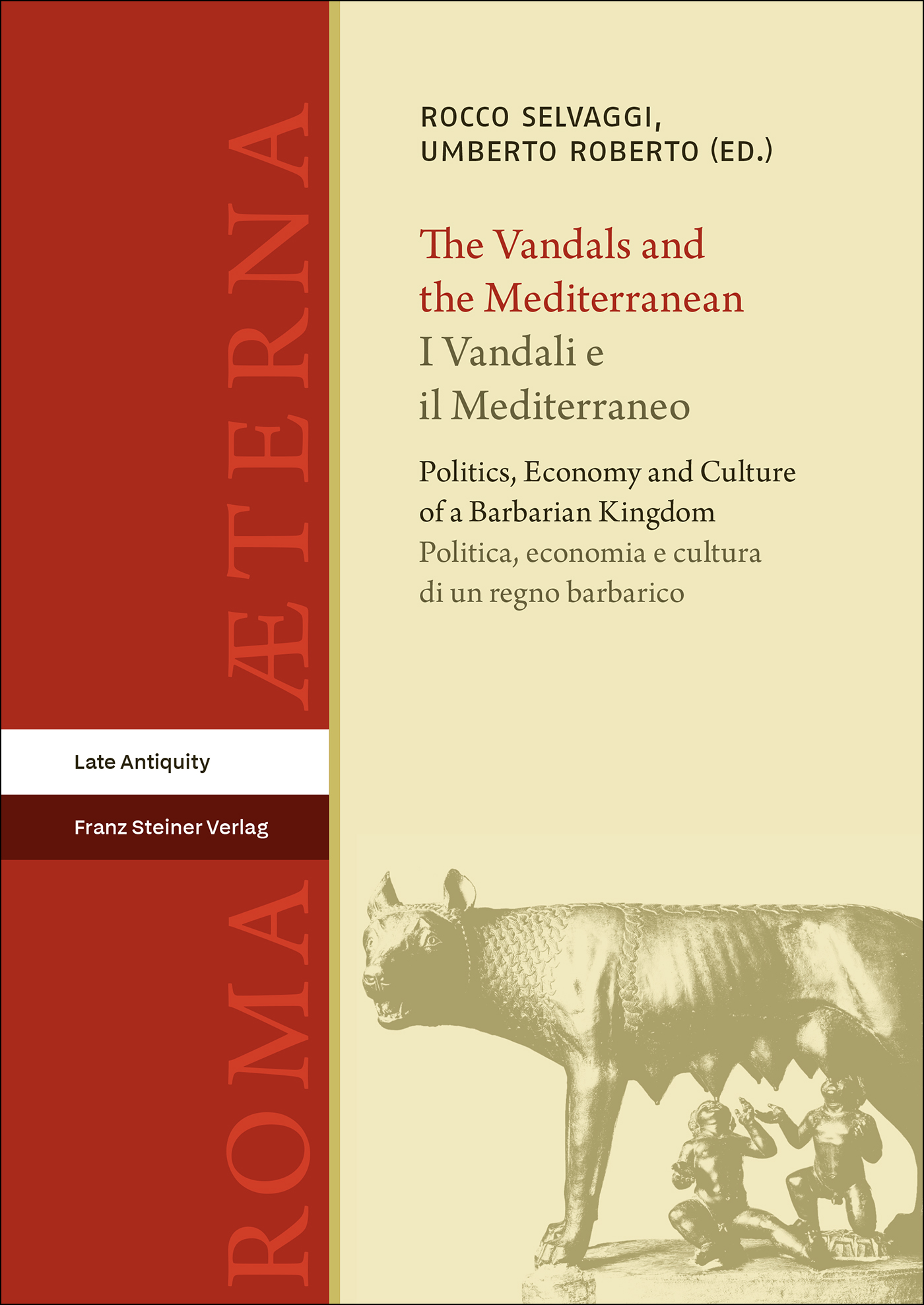 The Vandals and the Mediterranean / I Vandali e il Mediterraneo
Politics, Economy and Culture of a Barbarian Kingdom / Politica, economia e cultura di un regno barbarico