
Abendmahl feiern in Geschichte, Gegenwart und Zukunft
by Christian Grethlein
Paperback (Out of print)
(June 2015)
ISBN: 9783374041664
6.06 x 9.06 inches
Price: $35.00
On back order
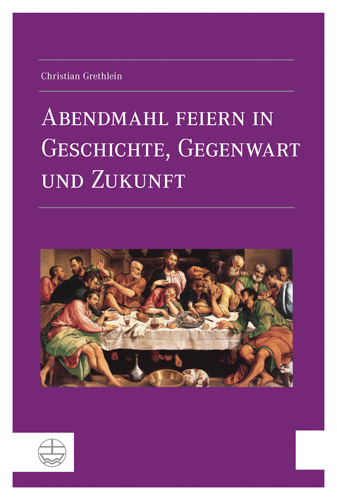
The table fellowship of Jesus, open to all people, developed in the context of ancient and medieval culture into a cultic ritual. The forms of meaning and celebration separated. By now only a minority is communicating. An analysis of today’s eating habits and a comparison with the eucharistic practice in other churches and countries provides impulses for developing the potential of the Lord’s Supper for today. An understanding of the celebration of the Lord’s Supper as a form of communication of the Gospel takes these developments into account and gives theological and empirical arguments for its reform. In this context the early Christian connection with the Agape meal and with diaconia comes into view again.
- By (author) Christian Grethlein
Similar Books
 ‘For You I Study, For You I Work, For You I Live, For You I Am Ready To Even Give My Life’
Essays in Honour of Francis (Frank) J Moloney, SDB
 A Connecting Polemic in the Medieval Mediterranean
The Correspondence of Leo III and ʿUmar II
Volume 6





 Ars Prophetica
Theology in the Poetry of Twentieth-Century Hebrew Poets Avraham Halfi, Shin Shalom, Amir Gilboa, and T. Carmi
 As Messianism Turns to Heresy
The Regenstein Chair Lectures On Lurianic Kabbalah and Shabbatai Tzevi at Hebrew Union College - Cincinnati


 Creating the Woman in Antiquity
Proceedings of the 16th Melammu Workshop, Innsbruck, 2–3 June 2022
Volume 13

 Drunk the Potion, No Whit Charmed
The Doctrine of Pure and Perfect Souls from Iamblichus to Damascius






 Extracanonical Traditions and the Holy Land
Texts, Rituals, and Material Culture in Late Antique Palestine
 Fear, Fear of God, God-Fearers
Philological and Historical Perspectives on the World of Ancient Judaism and Christianity




 Legal Visuality
Exegesis, Ambiguity, and Dissimulation of the Donation of Constantine in the Early Modern Period
 Liturgia semper reformanda
Adaptations and accommodations in the liturgy in light of canon 838 of the Code of Canon Law