
A Systemic History of the Middle Way
Its Biological, Psycho-developmental and Cultural Conditions
By (author) Robert M. Ellis

Paperback (Published)
(August 2024)
ISBN: 9781800504493
6.15 x 9.2 inches
Price: $32.00
In stock
Hardback (Published)
(August 2024)
ISBN: 9781800504486
6.15 x 9.2 inches
Price: $100.00
In stock
Provides a detailed exploration of the relationship between the Middle Way and systems theory, biology, developmental psychology, and world history.
Systemic history is an approach to explaining the past, that tries to maximize our understanding of context. Unlike most history, it does not do this by just narrating a chain of causal relationships for a given group through time. Instead, it shows how simpler systems become more complex over time through the interaction of reinforcing and balancing feedback loops. Systemic history offers the best way of understanding the processes that shape the Middle Way, because the Middle Way involves improving responses to complexity, rather than falling back on shortcut simplifications (absolutizations). This book examines the history of the Middle Way in four inter-related ways: as the biological development of organisms in relation to reinforcing or balancing feedback loops, as the psychological development of individual humans during a lifetime, as a succession of reinforcing and balancing feedback tendencies in human culture through history, and as a successive development of integrative practice. This shows how the Middle Way is a path distinctive to the human response to complexity, but nevertheless one rooted in the wider processes of all life. In the process it provides a detailed exploration of the relationship between the Middle Way and systems theory, biology, developmental psychology, and world history.
Contents List of Diagrams and Tables vii Foreword to the Middle Way Philosophy Series Iain McGilchrist viii Preface and Acknowledgements ix Introduction 1 1. Conflict and Integration in Organic Systems 10 a. The Emergence of Self-organization 11 b. Electrical Responsiveness and Optionality 16 c. Competition and Predation 25 d. Sexual Reproduction and Adaptivity 30 e. Multicellular Organisms and Homology 38 f. Nervous Systems, Senses, and Action 42 g. Bilaterianism 47 h. Bilateral Asymmetry 52 i. Left-hemisphere Repression 60 j. The Biology of the Middle Way 65 2. Stages of Psychological Development 72 a. Issues of Psychological Development 73 b. Birth and the Incorporative Stage 80 c. The Impulsive Stage 86 d. The Imperial Stage 91 e. The Interpersonal Stage 97 f. The Ideological Stage 105 g. The Interindividual Stage 113 3. Provisionality and Absolutization in Human Culture 118 a. Provisionality in the Old Stone Age 119 b. The Two Faces of Farming 127
c. Religious Archetypes and their Projection 136 d. Desire, Exploitation, and Liberation 147 e. Literacy and Idolatry 157 f. Sceptical Philosophy and its Appropriation 163 g. Scientific Method and Scientism 170 h. Technology: Shaped Things Shape Us 178 i. Specialization and Over-specialization 187 j. Administration and Bureaucracy 194 k. Relativism and Breakdown 204 4. A History of Integrative Practices 211 a. Archetypal Inspiration 212 b. Ethical Observance 218 c. Prayer and Meditation 225 d. Bodywork 233 e. The Arts 238 f. Philosophical Enquiry 246 g. Education 252 h. Humour 259 i. Reflection and Autobiography 263 j. Travel and Foreign Languages 267 k. Recreation and Green Environments 274 l. Democracy 279 m. Psychotherapy 285
n. Critical Thinking 289 Conclusion 293 The Old and New Middle Way Philosophy Series 296 Bibliography 298
Index 311
- By (author) Robert M. Ellis
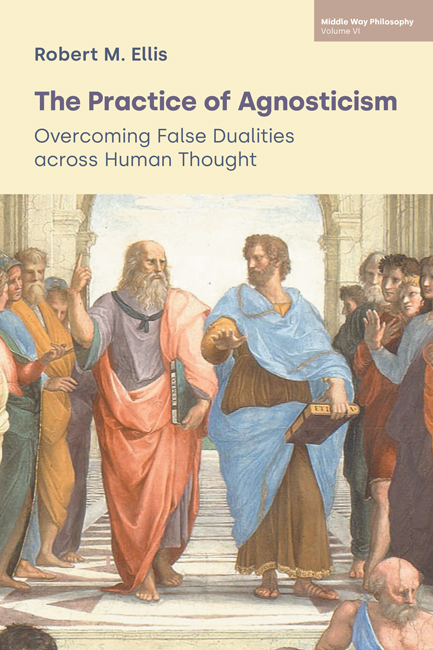
Other Titles in this Series
 Embodied Meaning and Integration
Overcoming the Abstracted Grip on Meaning in Theory and Practice (Volume IV)


Similar Books


 Attics and Basements
The Evocative, Expressive and Embracing Functions of Homes and Other Human Dwellings


 Drunk the Potion, No Whit Charmed
The Doctrine of Pure and Perfect Souls from Iamblichus to Damascius


 Libertinage et philosophie à l’époque classique (XVIe-XVIIIe siècle)
Athéisme, Modernité et Sécularisation / Atheism, Modernity and Secularization
Volume 23


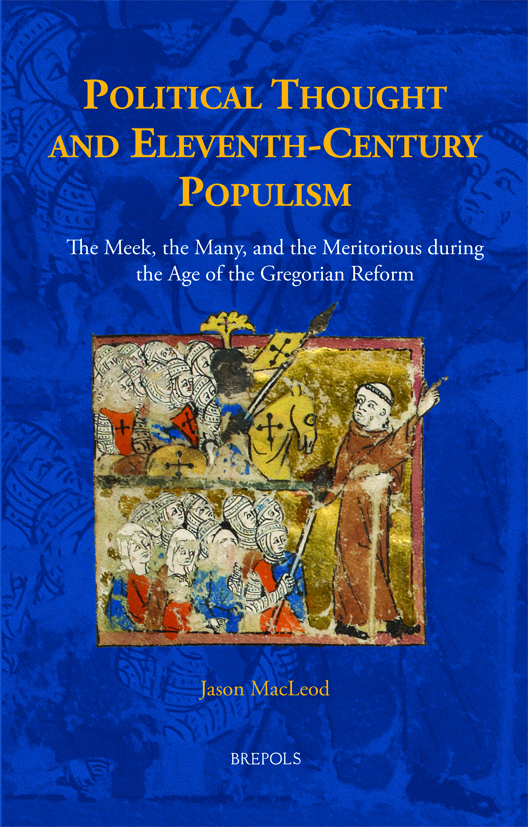 Political Thought and Eleventh-Century Populism
The Meek, the Many, and the Meritorious during the Age of the Gregorian Reform
Volume 38
 Recycling and Regeneration of Spent Lithium-Ion Batteries
Technologies, Applications, and Sustainable Futures
