
A Concise Dictionary of Koranic Arabic
By Arne A. Ambros with the collaboration of Stephan Procházka

Hardback (Published)
(September 2004)
ISBN: 9783895004001
6.69 x 9.45 inches
Price: $74.00
In stock
Das Worterbuch bietet das gesamte lexikalische Material im Koran mit englischen Glossen. Die Eintragungen werden durch selektive Belegstellen-Angaben und durch ausgewahlte Textzitate erganzt. Den Hauptteil vervollstandigen zusatzliche Listen, so z. B. von Eigennamen, von syntaktischen Partikeln und von Wortern in bestimmten Kategorien spezieller Bedeutung.
A Concise Dictionary of Koranic Arabic is the first dictionary of its kind to appear in well over a century, i. e. after a stretch of time during which, thanks to the endeavors of both Muslim and western scholars, tremendous progress has been made towards the exact linguistic understanding of the Noble Koran, one of the most important texts of all humankind. This dictionary presents the entire Koranic lexical material in an easily accessible arrangement, with glosses in English based primarily, yet critically, on the German translation by R. Paret, with certain new proposals by the compiler. The entries are accompanied by a selective (in some instances, exhaustive) listing of their places of occurrence in the text and by the citation of a great number of relevant textual segments. The main part of the dictionary, the “Lexicon of Roots”, contains the nouns and verbs, arranged by their consonantal roots, as is traditional in Arabic lexicography. This is followed by a categorized list of “Proper Names”, provided in order to enable the user to look up, e. g., which prophets, which scriptures or which pagan idols are mentioned in the text. The third section, “Pronouns and Particles”, is meant to provide extensive information on the syntactic structure of the text; in it are listed all the lexical items that, because of not being root-derived, could not be included in the “Lexicon of Roots”. As a special feature, “Additions to the Lexicon from the Canonical Readings” surveys the additional lexical material contained in the recognized variants (the so-called “Seven Readings”) of the standard text. A further feature of the dictionary is a listing of certain major and minor lexical problems arising during the close reading of the text. The dictionary is supplemented by an extensive “Appendix”. This contains various lists, some semantically, some morphologically defined, that appear to be of special interest, such as the nouns and noun-phrases referring to God, the numerals, the elative forms, the designations of Judgment Day and the names of the suras and their lengths. The dictionary ends with a “Bibliography” of works of general importance, supplemented by an index referring the user to the great number of citations of special studies embedded in the individual articles. The dictionary aims at reflecting the state of the art of Koranic philology, and so at providing both a guideline for the student of Arabic and Islamics and a research tool for the specialized scholar.
- By (author) Arne A. Ambros
- With Stephan Procházka
„Nella chiarezza del suo impianto, nella precisione delle glosse, nell’essenzialità dei contenuti, il volume può dunque proporsi come un sussidio indispensabile per chiunque (specialista o meno) abbia qualche interesse ad accostare il Corano. Il vantaggio più immediato dell’opera è quello di offrire un materiale già selezionato del grande patrimonio arabo, permettendo al compilatore di approfondire da vari punti di vista gli aspetti specifici di lingua e di pensiero contenuti nel grande libro sacro e all’utente una ricerca mirata su di esso.“<br/><br/>In: Salesianum. 71 (2009) 2. S. 404.<br/><br/>-------------------------------<br/><br/>„The length of this review should make it clear that Ambros’ dictionary is a major leap forward in Qur’anic studies, a book worthy of detailed discussion, and one that calls for reactions. Going through the dictionary, I had a feeling that something of note had happend, that some advance in the field had been made. And that is a rare feeling.“<br/><br/>In: Wiener Zeitschrift für die Kunde des Morgenlandes. Band 96 (2006). S. 438-444.<br/><br/>-------------------------------<br/><br/>„Das vorliegende handwerklich sehr sauber gearbeitete Handwörterbuch wird sich als nützliches didaktisches Hilfsmittel für die orientalistische Ausbildung bewähren, das auch dem Fachmann den erreichten Forschungsstand bequem darbietet, und wird so allen Ansprüchen gerecht, die man an ein Handwörterbuch stellen kann. Die Anhänge sind dazu geeignet, Hilfen und Impulse für die weitere Erforschung der arabischen Sprache und der koranischen Theologie zu geben.“<br/><br/>In: Orientalistische Literaturzeitung. 101 (2006) 3. Sp. 362-364.<br/>
—
Similar Books


 Cities through Time
Glimpses into Urbanity and Community in Mediaeval to Modern West Asia and Egypt
Volume 1
 Cuneiform Artefacts from Archaeological Contexts: New Research on Ancient Iraq
Proceedings of a Conference Held at the Bavarian Academy of Sciences and Humanities, July 4–5, 2024
Volume 2
 Des mots aux actes
Traduction épistémique et littéraire. Nouvelles tendances en histoire et didactique
Volume 15


 Global Gulf
Geo-Economic, Geo-Political, and Geo-Technological Transformation in Saudi Arabia, the United Arab Emirates, and Qatar


 Ismail Hakki Bursevi’s translation of and commentary on Fusus al-Hikam By Muhyiddin Ibn ‘Arabi
Volumes 1-4


 Monastic Manuscripts from the Eastern Mediterranean (Sinai, Jerusalem, Antioch)
Production, Use, and Contexts


 Punning in Odd or Elegant Constructions in Jeremiah
The Convergence of Linguistics, Rhetoric, and Textuality in the Hebrew Text of Jeremiah
 Qatar’s Societal Security
Towards the Inclusive National Concept of ‘Baladna’ Identity, Migration and External Threats Since 2017


 The Discourse of Rites
Shaping and Reshaping the (Counter-)Priestly Rituals Conducted Outside the Tabernacle


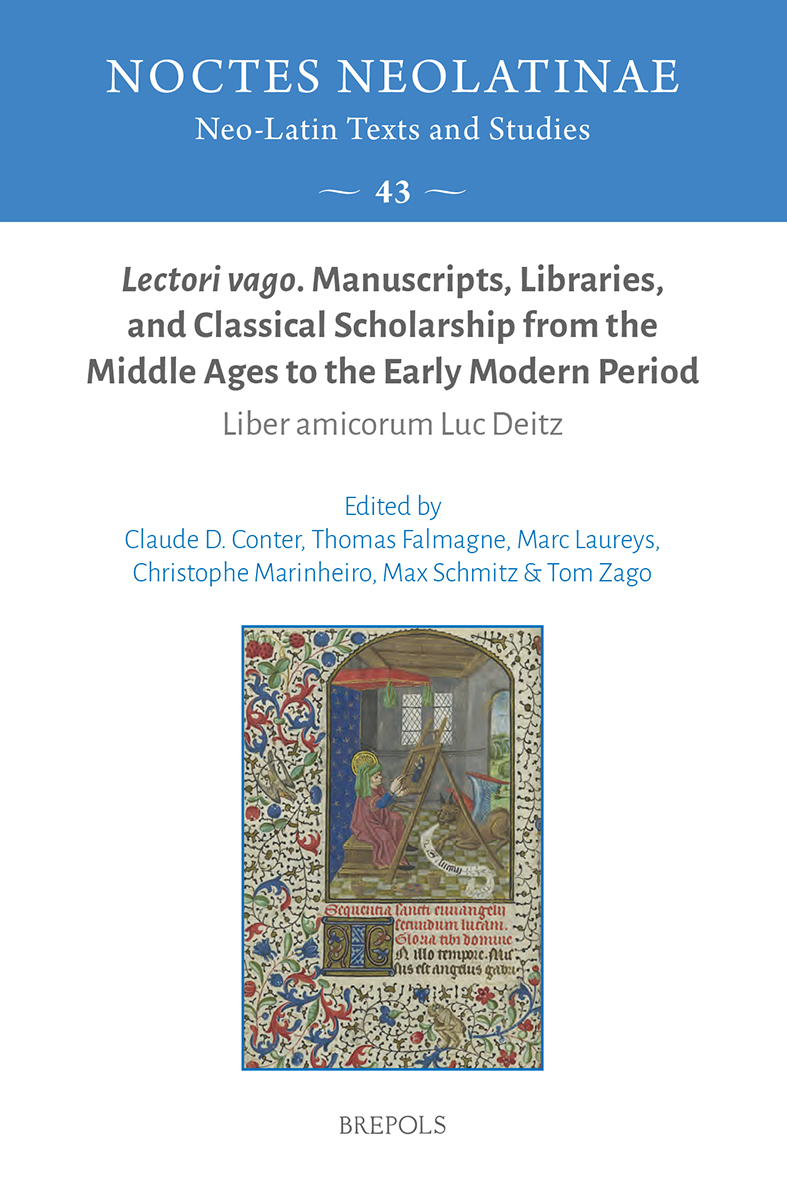 Lectori vago. Manuscripts, Libraries, and Classical Scholarship from the Middle Ages to the Early Modern Period
Liber amicorum Luc Deitz
Volume 43

 »Ein elend-schönes Land«
Gattung und Gedächtnis in Lea Goldbergs hebräischer Literatur. Aus dem Hebräischen von Rainer Wenzel


