
A Brief History of Delos
By (author) V. Chankowski

The remains on Delos became known to fifteenth-century seafarers and travellers and were then explored primarily by the French School at Athens from 1873 onwards. They have yielded substantial records that serve as a benchmark in Mediterranean archaeology. In conjunction with many ancient texts, they provide an outstanding account of the changing features of a civilization – its religion and institutions, its economy and everyday life – from the onset of archaic times through to late antiquity. Lying in the heart of the Cyclades, Delos shares with other islands in the archipelago a semi-arid climate and low relief where powerful northerly and southerly winds contend or alternate. Measuring just 3.5 km2 in area, it might seem quite insignificant had it not become, from antiquity and for several centuries, one of the Greek world’s leading centres of political, religious and financial power. For visitors sailing from Mykonos along the craggy northern shore of Delos, the contrast with the haunting remains of the ancient port and sanctuaries that come into view shortly after is striking. It is that same contrast between the island’s seemingly barren ground and its fabulous wealth that the myths and legends about Delos sought to explain. The great sanctuary of Apollo that arose on the island was the hub of things. All areas of Delian life depended on it, whatever the changes down the centuries. From the earliest known developments on the island in the seventh century BC up until it was gradually deserted in the sixth century AD, through the remains we can contemplate the unique history of an island community amid the swirls and eddies of the major changes in the eastern Mediterranean.
The remains on Delos became known to fifteenth-century seafarers and travellers and were then explored primarily by the French School at Athens from 1873 onwards. They have yielded substantial records that serve as a benchmark in Mediterranean archaeology. In conjunction with many ancient texts, they provide an outstanding account of the changing features of a civilization – its religion and institutions, its economy and everyday life – from the onset of archaic times through to late antiquity. Lying in the heart of the Cyclades, Delos shares with other islands in the archipelago a semi-arid climate and low relief where powerful northerly and southerly winds contend or alternate. Measuring just 3.5 km2 in area, it might seem quite insignificant had it not become, from antiquity and for several centuries, one of the Greek world’s leading centres of political, religious and financial power. For visitors sailing from Mykonos along the craggy northern shore of Delos, the contrast with the haunting remains of the ancient port and sanctuaries that come into view shortly after is striking. It is that same contrast between the island’s seemingly barren ground and its fabulous wealth that the myths and legends about Delos sought to explain. The great sanctuary of Apollo that arose on the island was the hub of things. All areas of Delian life depended on it, whatever the changes down the centuries. From the earliest known developments on the island in the seventh century BC up until it was gradually deserted in the sixth century AD, through the remains we can contemplate the unique history of an island community amid the swirls and eddies of the major changes in the eastern Mediterranean.
- By (author) V. Chankowski
Other Titles in this Series


Similar Books


 Caesar’s Visions and Impact on the Roman Empire
Revisiting the Archaeological and Historical Record of the 40s BC
Volume 2

 Construction Processes in Historical Western Societies (5th c. BC – 10th c. AD)
Case Studies on Techniques, Models, and Costs


 Etruscan and Roman Hellenistic Anatomical ex votos
Reassessing Popular Religious Expressions in Central Italy
Volume 8




 Invisible Labour in Antiquity
Visualizing Obscure Work in the Ancient Mediterannean and West Asia
Volume 1

 Late Antique villae in the Balkans (3rd–7th c. AD): Current Research Questions and Perspectives
HAEMUS Companion to the Late Antique Balkans 1
Volume 4





 Portraying the Individual in the Roman East
Local–Imperial Entanglements in Sculpture, Mosaics, and Paintings (First–Fourth Centuries AD)
Volume 18


 Roman Copies, Collecting, and Culture in the Bay of Naples and Beyond
Papers in Honor of Eugene J. Dwyer
 Small Worlds and Relational Agencies: Local Societies in Early Medieval Iberia
Pequeños mundos y Agencias relacionales: Sociedades locales altomedievales en la Península Ibérica
 SOMA 2023: Proceedings of the 24th Symposium on Mediterranean Archaeology
Ideas that Travelled by the Sea, Udine, 2-4 February, 2023


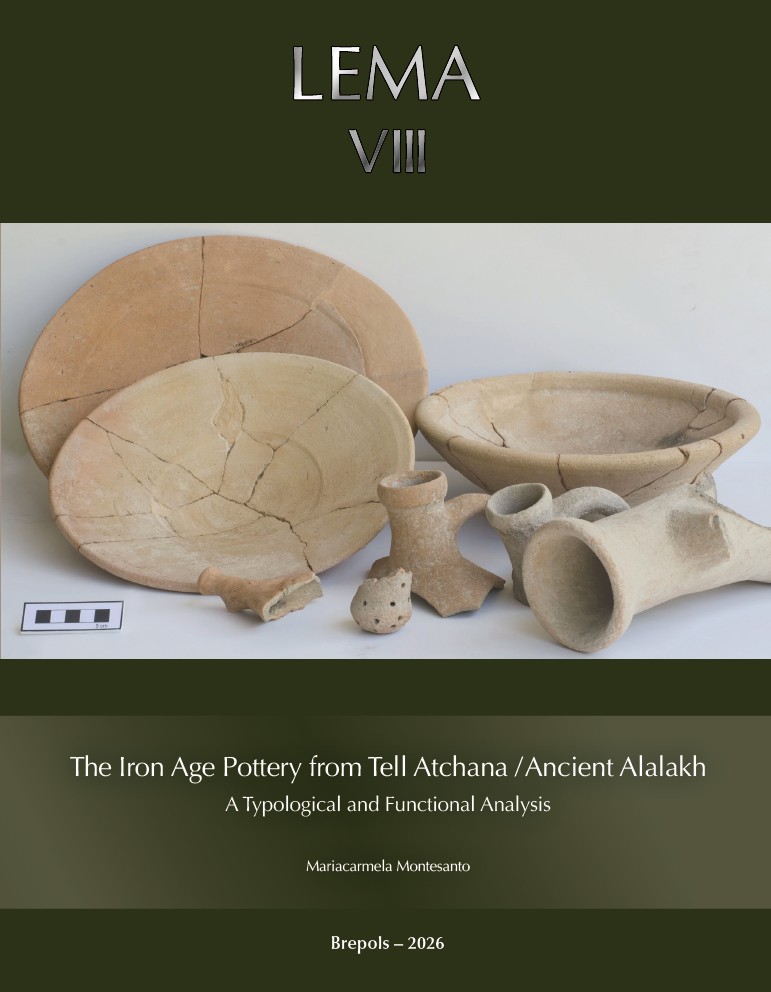 The Iron Age Pottery from Tell Atchana / Ancient Alalakh
A Typological and Functional Analysis
Volume 8
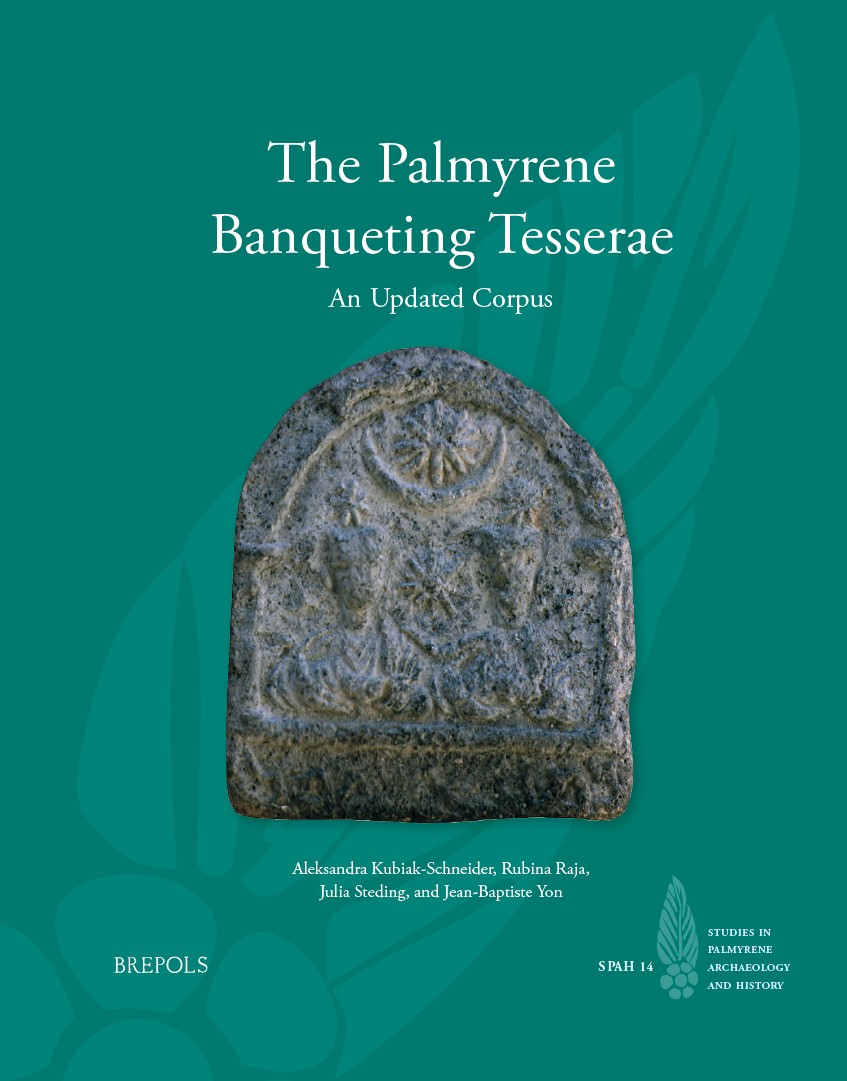


 Writing in the Church of the Nativity in Bethlehem
Inscription and Graffiti in a Multilingual and Multigraphic Perspective
Volume 45
 Zooarchaeology of Ancient Greek Sanctuaries in Southwestern Sicily
Faunal Analysis from Selinus and Akragas as Evidence of Differences in the Treatment of Animals for Ritual Purposes
 Alabaster
An Interdisciplinary Study of the Sources and Uses of Calcite Alabaster in Antiquity
Volume 5

 Echoes from the Past: Traditional Cypriot Pottery
An Exhibition at the Cyprus American Archaeological Research Institute in October 1995