
A Biography of Power: Research and Excavations at the Iron Age ‘oppidum’ of Bagendon, Gloucestershire (1979-2017)
By (author) Tom Moore

Paperback (Published)
(July 2020)
ISBN: 9781789695342
8.07 x 11.46 inches
Price: $120.00
In stock
This book explores the changing nature of power and identity from the Iron Age to the Roman period in Britain. It provides fresh insights into the origins and nature of one of the lesser-known, but perhaps most significant, Late Iron Age ‘oppida’ in Britain: Bagendon in Gloucestershire.
A Biography of Power explores the changing nature of power and identity from the Iron Age to Roman period in Britain. Presenting detailed excavation results and integrating a range of comprehensive specialist studies, the book provides fresh insights into the origins and nature of one of the lesser-known, but perhaps most significant, Late Iron Age oppida in Britain: Bagendon in Gloucestershire. Combining the results of a large-scale geophysical survey with analysis of both historic and new excavations, this volume reassesses Iron Age occupation at Bagendon. It reveals evidence for diverse artisanal activities and complex regional exchange networks that saw livestock, and people, travelling to Bagendon from west of the Severn. The results of the excavation of two morphologically unusual, banjo-like enclosures, and of one of the previously unexamined dykes, has revealed that the Bagendon oppidum had earlier origins and more complex roles than previously envisaged. The volume also provides new insights into the nature of the Iron Age and Roman landscape in which Bagendon was situated. Detailing the discovery of two, previously unknown, Roman villas at Bagendon demonstrates the continued significance of this landscape in the early Roman province. This volume redefines Bagendon as a landscape of power, offering important insights into the changing nature of societies from the Middle Iron Age to the Roman period. It calls for a radical reassessment of how we define oppida complexes and their socio-political importance at the turn of the 1st millennium BC. Contains contributions from Sophia Adams, Michael J. Allen, Sam Bithell, Cameron Clegg, Geoffrey Dannell, Lorne Elliott, Elizabeth Foulds, Freddie Foulds, Christopher Green, Darren Grocke, Derek Hamilton, Colin Haselgrove, Yvonne Inall, Tina Jakob, Mandy Jay, Sally Kellett, Robert Kenyon, Mark Landon, Edward McSloy, Janet Montgomery, J.A. Morley-Stone, Geoff Nowell, Charlotte O’Brien, Chris Ottley, Cynthia Poole, Richard Reece, Harry Robson, Ruth Shaffrey, John Shepherd, Jane Timby, Dirk Visser, D.F. Williams, Steven Willis.
Summary ;
Acknowledgements ;
Chapter 1: Research at Bagendon ;
Chapter 2: The wider Bagendon complex: remote sensing surveys 2008-2016 ;
Chapter 3: Before the ‘oppidum’: Excavations at Scrubditch and Cutham enclosures ;
Chapter 4: Revisiting Late Iron Age Bagendon ;
Chapter 5: After the ‘oppidum’. Excavations at Black Grove ;
Chapter 6: Iron Age and Roman ceramics ;
Chapter 7: Brooches ;
Chapter 8: Metalwork ;
Chapter 9: An analytical study of the Iron Age bloomery slag ;
Chapter 10: Coinage ;
Chapter 11: Coin moulds ;
Chapter 12: Miscellaneous material ;
Chapter 13: Radiocarbon dates and Bayesian analysis ;
Chapter 14: Dating the Roman fort at Cirencester ;
Chapter 15: Human Remains ;
Chapter 16: Faunal Remains ;
Chapter 17: Isotopic analysis of human and animal remains ;
Chapter 18: The plant and invertebrate remains (1979-2017) ;
Chapter 19: Putting the Bagendon complex into its landscape setting: the geoarchaeological and land snail evidence ;
Chapter 20: Viewsheds and Least Cost analysis of the Bagendon complex and its environs ;
Chapter 21: Geophysical survey at Hailey Wood Camp, Sapperton, Gloucestershire ;
Chapter 22: Geophysical survey at Stratton Meadows, Stratton, Gloucestershire ;
Chapter 23: Becoming the Dobunni? Landscape change in the Bagendon environs from the Early Iron Age to AD 150 ;
Chapter 24: The Bagendon complex: a biography ;
Chapter 25: Conclusions and future prospects ;
Bibliography
Tom Moore is an Associate Professor of Archaeology at Durham University. His research focuses on the western European Iron Age and approaches to cultural landscape management. He has published widely on Iron Age social organisation and conducted major field projects at Late Iron Age oppida in Britain and France, including at Bibracte, Burgundy. He is co-author of the textbook: Archaeology: an introduction.
- By (author) Tom Moore
'...the excavation results and then the wider discussions are synergetic and demonstrate that the Bagendon project's methodology of a landscape approach is a powerful tool in developing an understanding of the change and continuity that underlies the mechanisms of power and place in the dynamic socio-political landscape of the Late Iron Age and Early Roman interlude. This is a major personal and academic achievement for Tom Moore and for the many organisations who enabled the individual stages of the work through the 'mosaic' funding.'
— Tim Copeland
‘…this is a significant publication that adds much to our growing understanding of developing social complexity, identity and power during the Late Iron Age in Britain.’ – Oliver Davis (2022): The Prehistoric Society, March 2022
—
'..."A Biography of Power" is an exemplary template for comprehensive studies of the oppidum of Bagendon, the quality of which future research must be measured against. The accumulated expertise, good readability and the numerous high-quality illustrations will certainly contribute to the fact that this site will also attract more international attention.' – Katja Winger (2021): Germania 99
—
Similar Books


 Archaeological Excavations at Irmis Rka: An Investigation of a Multi-Layered Settlement in Southwest Georgia
Results from the 2020 Season: Early Bronze Age to Medieval Occupations


 Catuvellaunia and Rome: Economic and Political Relations during the Final Decades Pre-conquest
The Role of Grain from Southeastern Britain and Its Potential for Maintenance of the Roman Military along the Frontier on the Rhine
 Colour Concept “Secoli bui” a colori
Codici cromatici e architetture dipinte nell’età tardoantica e medievale

 Crossing Disciplines in the Study of Archaeology and Prehistoric Art: Insights from the Sahara and Mediterranean Africa
Proceedings of the XX UISPP World Congress (5–9 September 2023, Timișoara, Romania) Volume / Session 18
 Crossing Sacred Landscapes
Contacts and Continuities in the Desert Cults and Beliefs of Ancient Northern Arabia and the Arid Southern Levant
 Cuneiform Artefacts from Archaeological Contexts: New Research on Ancient Iraq
Proceedings of a Conference Held at the Bavarian Academy of Sciences and Humanities, July 4–5, 2024
Volume 2

 ENTANGLED AFRICA
Intra-African Relations Between Rain Forest and Mediterranean from Around 4,000 BCE to 1,500 CE


 Exploring Prehistoric Pottery in Japan
A Study of Organic Inclusions, Adhering Materials, and Impressions of Woven Items

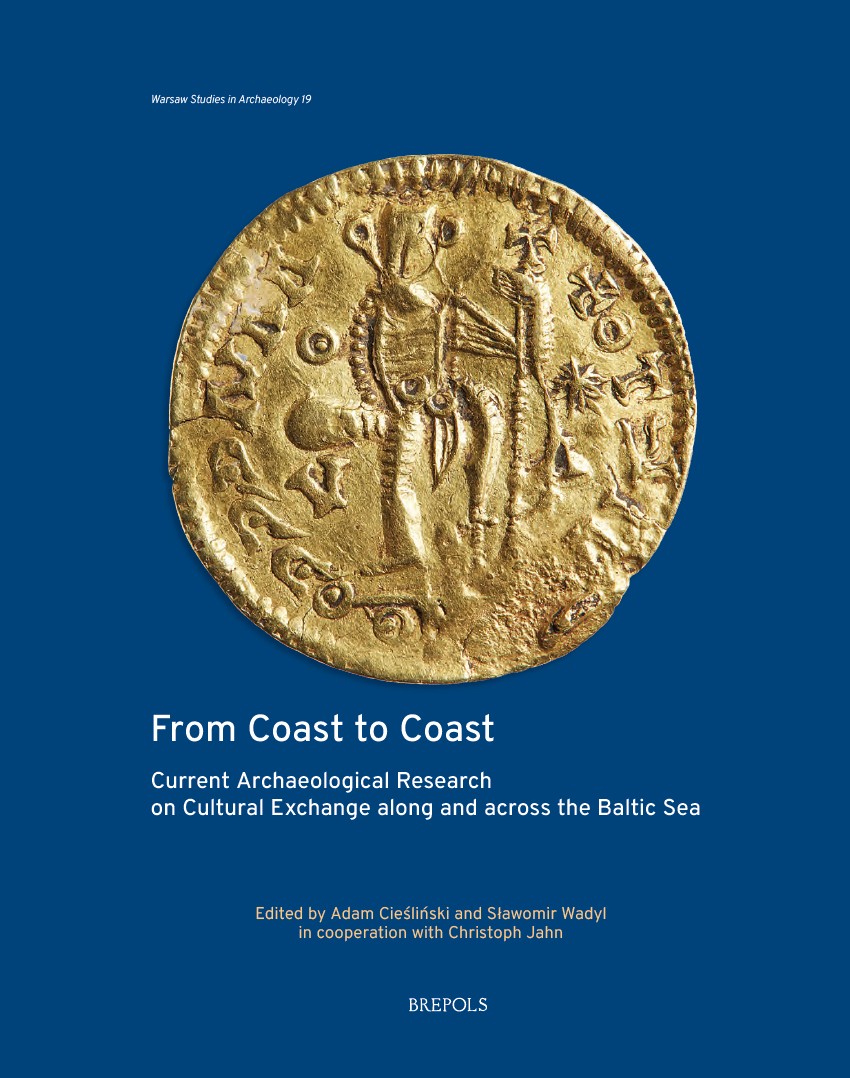 From Coast to Coast
Current Archaeological Research on Cultural Exchange along and across the Baltic Sea
Volume 19
 Frontiers of the Roman Empire: The Frontier of the Roman Province of Raetia
Grenzen des Römischen Reiches: Die Grenze der Römischen Provinz Raetien
 Gold, Silver and Glass: Power Networks, Cultural Identities, Technology Transfers and Agency across the Old World (7th Century BC – 1st Century AD)
Proceedings of a Conference Held at the British Museum, 16–18 June 2023
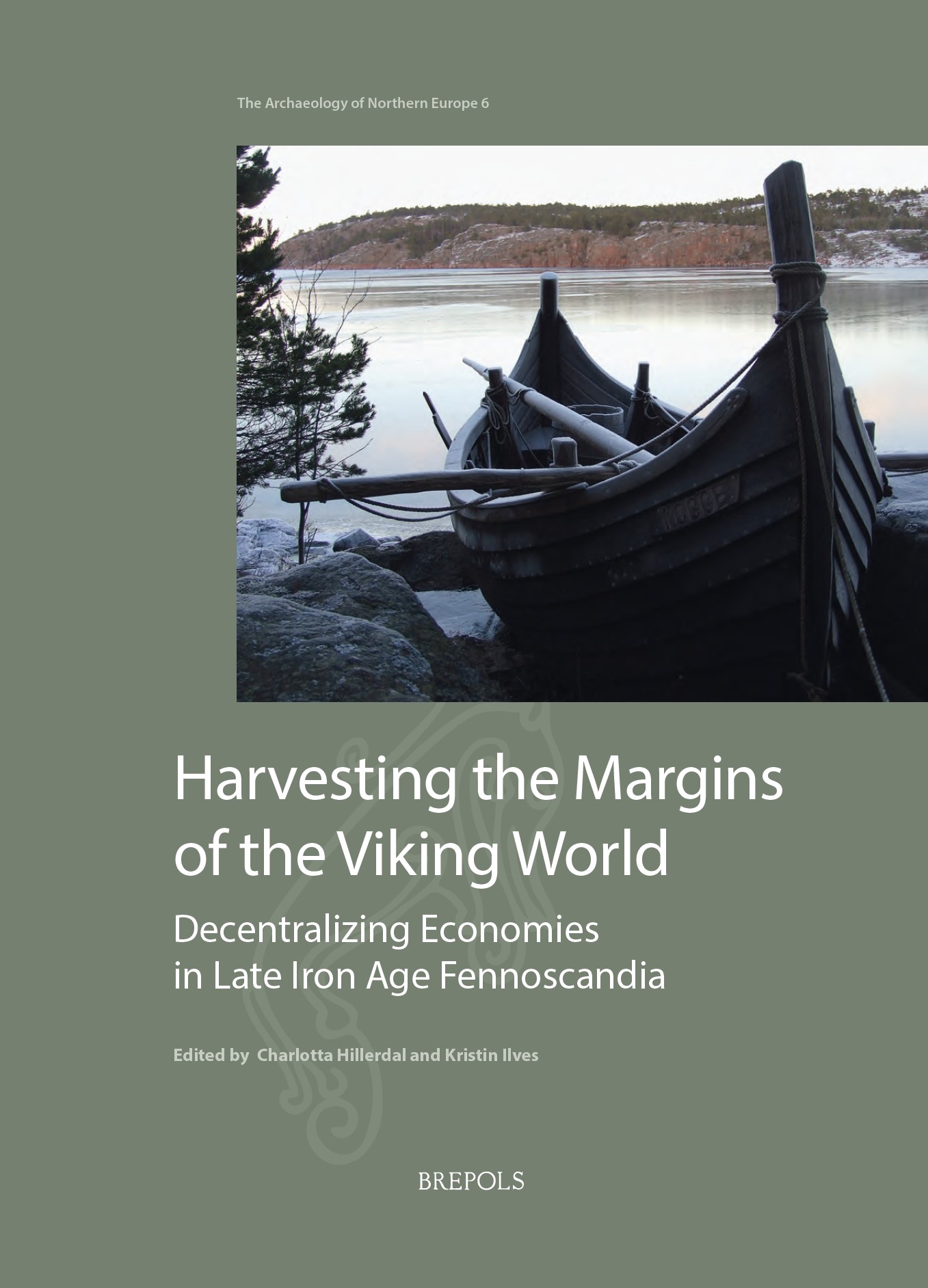 Harvesting the Margins of the Viking World
Decentralizing Economies in Late Iron Age Fennoscandia
Volume 6
 Images of Anonymous Women
A Semiotic Approach to Image-Text Relations in Interpretation of Ancient Near Eastern Art and the Hebrew Bible
Volume 310

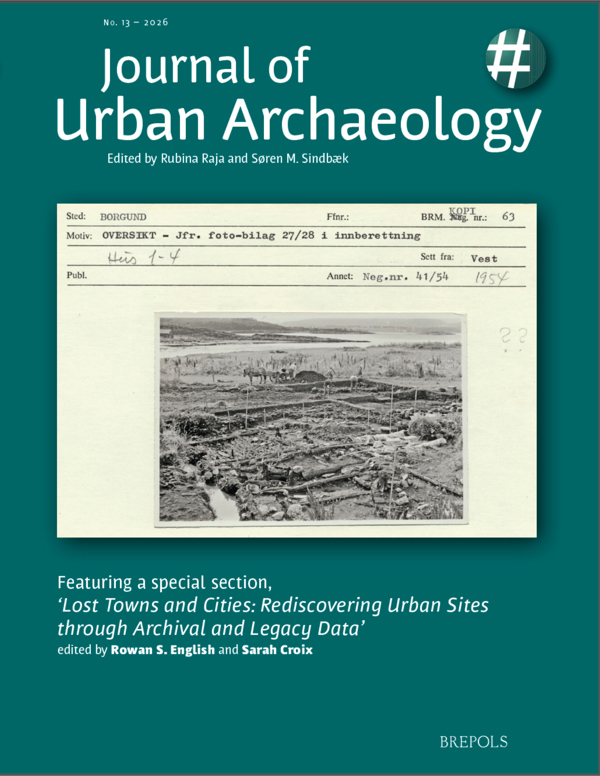 Journal of Urban Archaeology 13 (2026)
Featuring a special section, ‘Lost Towns and Cities: Rediscovering Urban Sites through Archival and Legacy Data’


 Making and Meaning in the Bronze and Iron Ages
Chronology, Landscapes and Societies across Europe. Proceedings from the METALAGES2024 Colloquium (Florence, 23 October 2024)

 Medieval Yeghegis, Armenia
History, Archaeology, Society. Local Multiplicities and Global Connections of a Rural Centre on the Silk Road(s)
 Mobility and Archaeogenetics in Central Asia
People – Goods – Ideas. 3rd International Conference on Central Asian Archaeology in Bern, 11th–13th January 2024
Volume 24


 Offa’s Dyke Journal: Volume 7 for 2025
A Journal for Linear Monuments, Frontiers and Borderlands Research


