
The Taste of Belonging: Food Practices and Ethnic Identity in the Northern Levant during Iron Age I

Paperback (Forthcoming)
(January 2027)
ISBN: 9781805833789
8.07 x 11.46 inches
Price: $56.00
This study cosiders the formation and expression of ethnic identity in the northern Levant during Iron Age I. Moving away from traditional “pots-to-people” equation and the use of archaeology to merely verify historical ethnonyms, this work employs Bourdieu’s Theory of Practice to argue that ethnic identity is a dynamic social process.
The Taste of Belonging investigates the formation and expression of ethnic identity in the northern Levant during the Iron Age I (12th–10th centuries BCE). Moving away from traditional “pots-to-people” equation and the use of archaeology to merely verify historical ethnonyms, this work employs Bourdieu’s Theory of Practice to argue that ethnic identity is a dynamic social process. Rather than being defined by fixed “ethnic markers,” identity is presented here as a product of daily habits grounded in fundamental psychological human needs. Central to this research is the role of social context and “collective trauma.” The collapse of Late Bronze Age states, maritime raids, and economic pressures disrupted established social realities, prompting groups to redefine themselves through shared practical behaviours. The author focuses on food-related practices—cooking, consumption, storage, and transport—as the primary lens for analysis. Through a comparative study of ceramic assemblages and built installations across several sites in the northern Levant region, the research identifies distinct patterns of homogeneity or differentiation and continuity or disruption. Ultimately, this book demonstrates that the interaction of daily practices—rather than the mere presence of specific objects—formed the mechanism for social resilience through the formation of ethnic identities, providing a new framework for understanding their social realization in the ancient Near East and Eastern Mediterranean.
Similar Books


 Archaeological Excavations at Irmis Rka: An Investigation of a Multi-Layered Settlement in Southwest Georgia
Results from the 2020 Season: Early Bronze Age to Medieval Occupations


 Catuvellaunia and Rome: Economic and Political Relations during the Final Decades Pre-conquest
The Role of Grain from Southeastern Britain and Its Potential for Maintenance of the Roman Military along the Frontier on the Rhine
 Colour Concept “Secoli bui” a colori
Codici cromatici e architetture dipinte nell’età tardoantica e medievale

 Crossing Disciplines in the Study of Archaeology and Prehistoric Art: Insights from the Sahara and Mediterranean Africa
Proceedings of the XX UISPP World Congress (5–9 September 2023, Timișoara, Romania) Volume / Session 18
 Crossing Sacred Landscapes
Contacts and Continuities in the Desert Cults and Beliefs of Ancient Northern Arabia and the Arid Southern Levant
 Cuneiform Artefacts from Archaeological Contexts: New Research on Ancient Iraq
Proceedings of a Conference Held at the Bavarian Academy of Sciences and Humanities, July 4–5, 2024
Volume 2

 ENTANGLED AFRICA
Intra-African Relations Between Rain Forest and Mediterranean from Around 4,000 BCE to 1,500 CE


 Exploring Prehistoric Pottery in Japan
A Study of Organic Inclusions, Adhering Materials, and Impressions of Woven Items

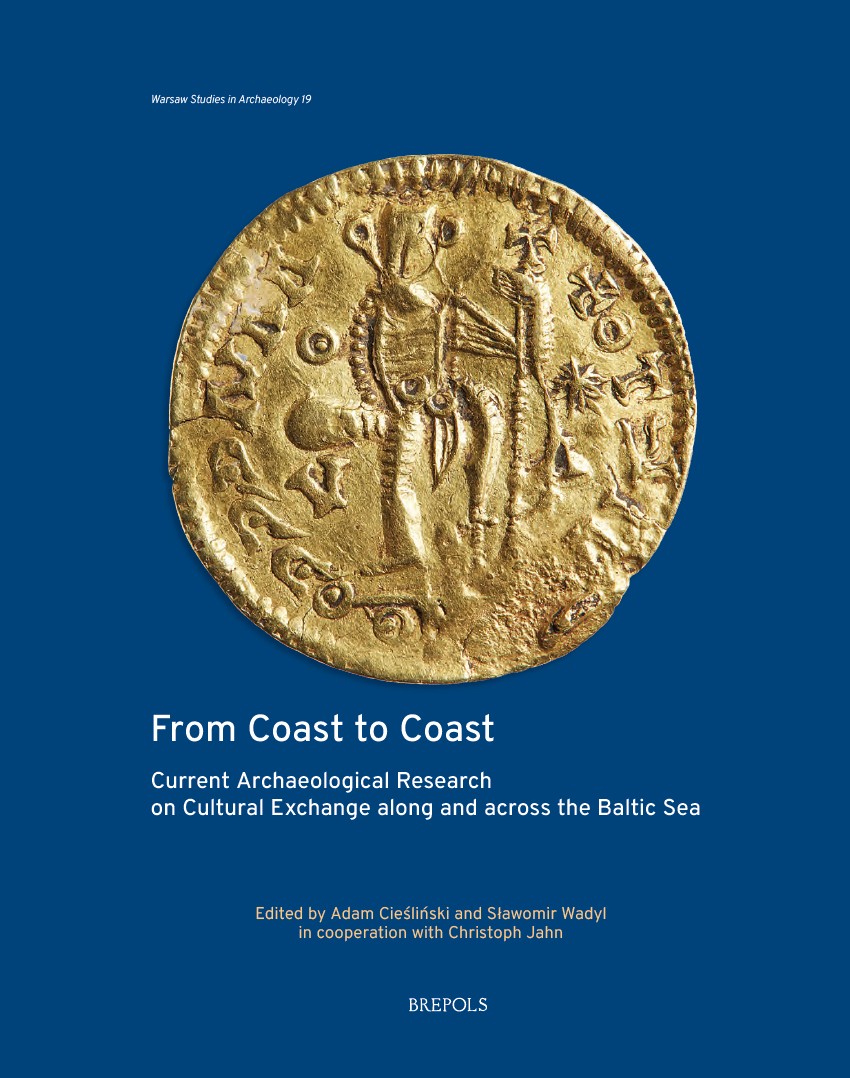 From Coast to Coast
Current Archaeological Research on Cultural Exchange along and across the Baltic Sea
Volume 19
 Frontiers of the Roman Empire: The Frontier of the Roman Province of Raetia
Grenzen des Römischen Reiches: Die Grenze der Römischen Provinz Raetien
 Gold, Silver and Glass: Power Networks, Cultural Identities, Technology Transfers and Agency across the Old World (7th Century BC – 1st Century AD)
Proceedings of a Conference Held at the British Museum, 16–18 June 2023
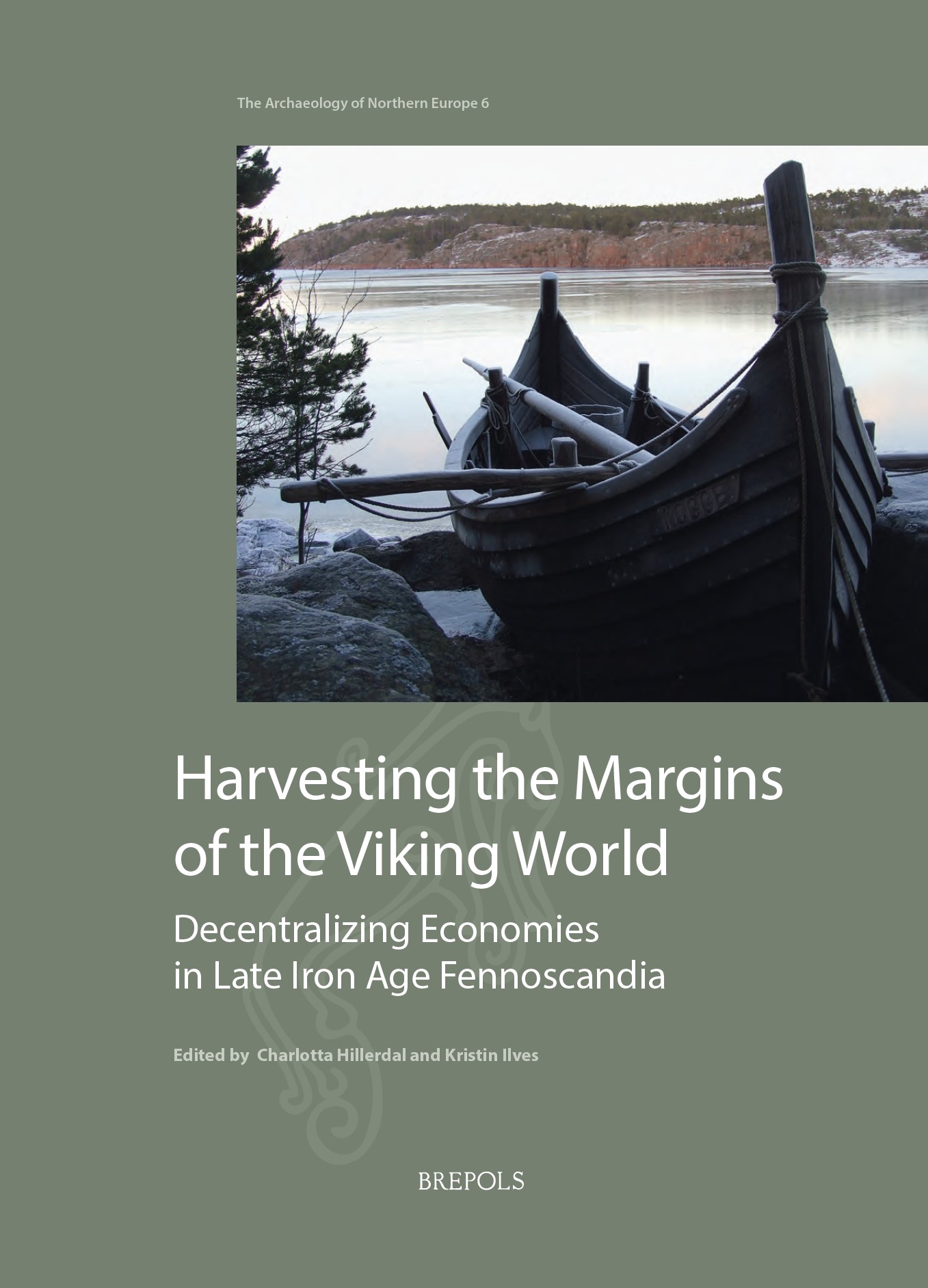 Harvesting the Margins of the Viking World
Decentralizing Economies in Late Iron Age Fennoscandia
Volume 6
 Images of Anonymous Women
A Semiotic Approach to Image-Text Relations in Interpretation of Ancient Near Eastern Art and the Hebrew Bible
Volume 310

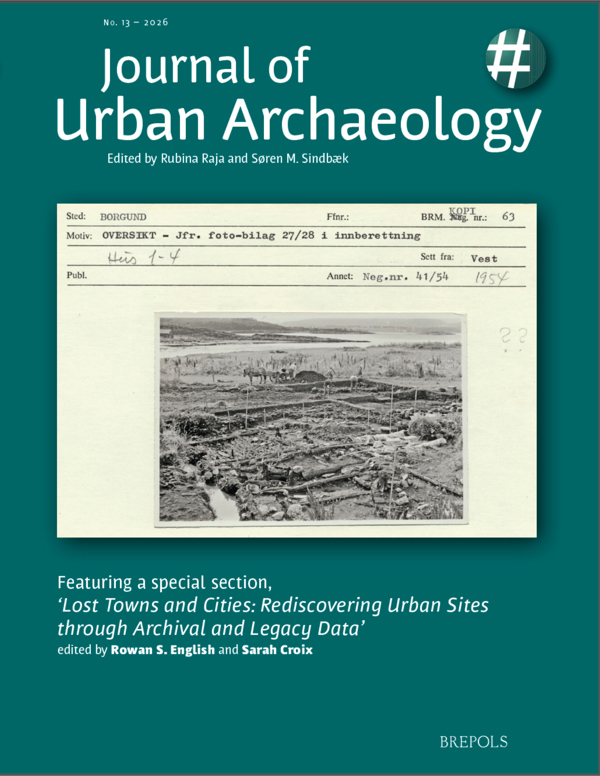 Journal of Urban Archaeology 13 (2026)
Featuring a special section, ‘Lost Towns and Cities: Rediscovering Urban Sites through Archival and Legacy Data’


 Making and Meaning in the Bronze and Iron Ages
Chronology, Landscapes and Societies across Europe. Proceedings from the METALAGES2024 Colloquium (Florence, 23 October 2024)

 Medieval Yeghegis, Armenia
History, Archaeology, Society. Local Multiplicities and Global Connections of a Rural Centre on the Silk Road(s)
 Mobility and Archaeogenetics in Central Asia
People – Goods – Ideas. 3rd International Conference on Central Asian Archaeology in Bern, 11th–13th January 2024
Volume 24


 Offa’s Dyke Journal: Volume 7 for 2025
A Journal for Linear Monuments, Frontiers and Borderlands Research


