
Christian Identity in the North
The Cult of St Olaf across Space and Time

Hardback (Forthcoming)
(February 2027)
ISBN: 9782503622637
Price: $182.00
According to tradition, in 1024 the Norwegian King Olaf Haraldsson introduced Christian laws to Norway at the assembly, or thing, held at Moster. That year is often regarded as an emblematic moment marking the beginning of a major cultural transformation in the country, facilitated by the new faith. Olaf died six years later, at the Battle of Stiklestad in 1030, but a cult quickly grew up around him, and as a royal saint, he was widely venerated, acquiring the status of ‘Eternal King’. As a saint, his cult also spread far beyond his own dominion, shaping the religious life of many other societies in Northern Europe in the centuries before the Reformation. The recently celebrated 1000th anniversary of the Moster thing, combined with the millennium since Olaf’s death, provide an occasion to present fresh insights into the many issues surrounding the veneration of St Olaf and to summarize our current knowledge of the topic. Drawing together diverse aspects of his cult, this volume explores the importance of St Olaf across both different regions and different time periods to offer a truly comparative approach to our understanding of this royal saint.
According to tradition, in 1024 the Norwegian King Olaf Haraldsson introduced Christian laws to Norway at the assembly, or thing, held at Moster. That year is often regarded as an emblematic moment marking the beginning of a major cultural transformation in the country, facilitated by the new faith. Olaf died six years later, at the Battle of Stiklestad in 1030, but a cult quickly grew up around him, and as a royal saint, he was widely venerated, acquiring the status of ‘Eternal King’. As a saint, his cult also spread far beyond his own dominion, shaping the religious life of many other societies in Northern Europe in the centuries before the Reformation. The recently celebrated 1000th anniversary of the Moster thing, combined with the millennium since Olaf’s death, provide an occasion to present fresh insights into the many issues surrounding the veneration of St Olaf and to summarize our current knowledge of the topic. Drawing together diverse aspects of his cult, this volume explores the importance of St Olaf across both different regions and different time periods to offer a truly comparative approach to our understanding of this royal saint.
Other Titles in this Series


Similar Books

 A Companion to Christianity and Sport in Europe and North America (19th-21st centuries)
Volume 1: Western and Eastern Europe
 A Connecting Polemic in the Medieval Mediterranean
The Correspondence of Leo III and ʿUmar II
Volume 6





 Ars Prophetica
Theology in the Poetry of Twentieth-Century Hebrew Poets Avraham Halfi, Shin Shalom, Amir Gilboa, and T. Carmi
 As Messianism Turns to Heresy
The Regenstein Chair Lectures On Lurianic Kabbalah and Shabbatai Tzevi at Hebrew Union College - Cincinnati


 Creating the Woman in Antiquity
Proceedings of the 16th Melammu Workshop, Innsbruck, 2–3 June 2022
Volume 13
 Cultic Kisses
Fruitful Encounters Between Deities and Humans. Festschrift for Angelika Berlejung on the Occasion of Her 65th Birthday
 De/colonizing Theologies
Glocal Histories, Contemporary Challenges, Theoretical Reflections
Volume 4
 Drunk the Potion, No Whit Charmed
The Doctrine of Pure and Perfect Souls from Iamblichus to Damascius






 Extracanonical Traditions and the Holy Land
Texts, Rituals, and Material Culture in Late Antique Palestine
 Fear, Fear of God, God-Fearers
Philological and Historical Perspectives on the World of Ancient Judaism and Christianity


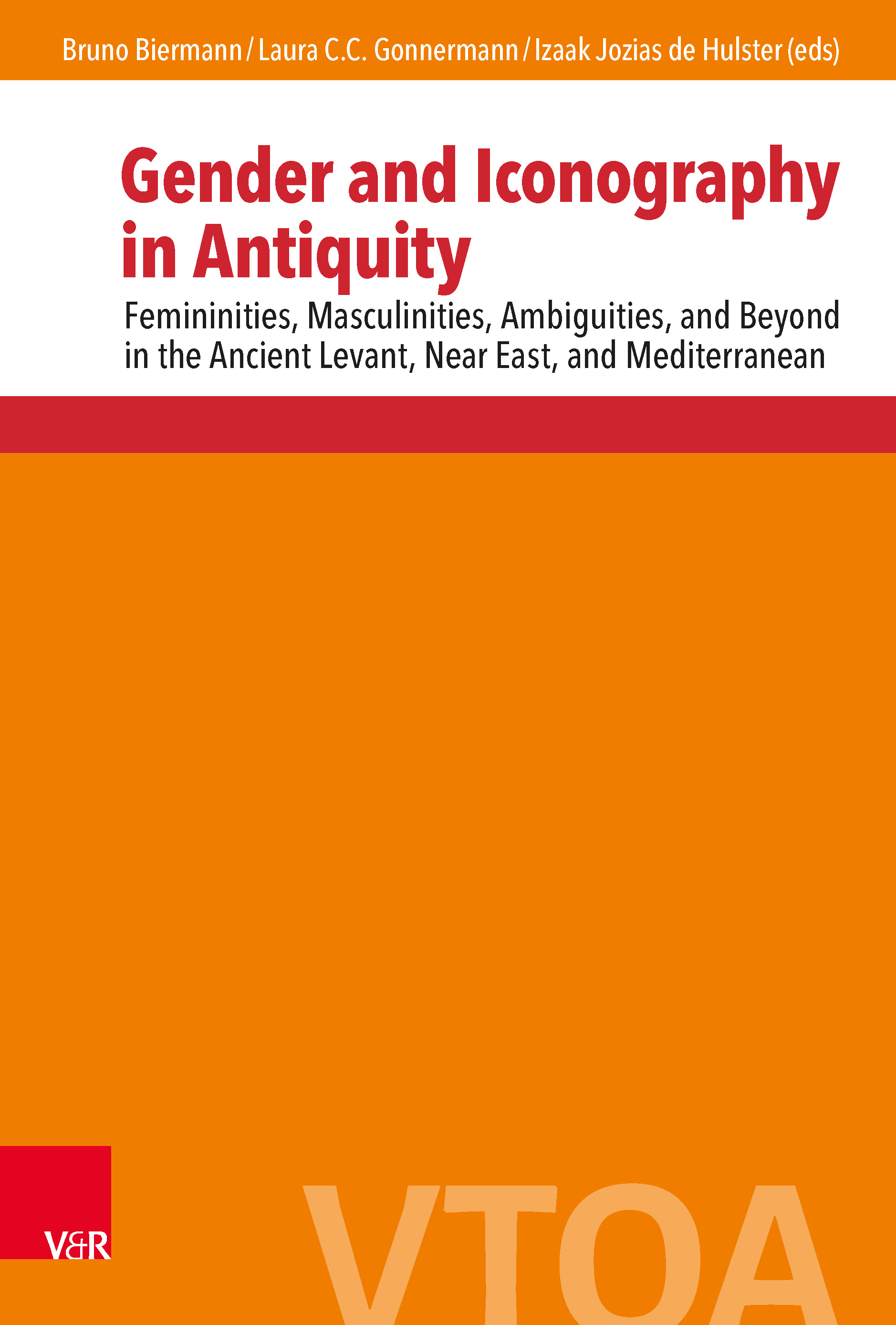 Gender and Iconography in Antiquity
Femininities, Masculinities, Ambiguities, and Beyond in the Ancient Levant, Near East, and Mediterranean