
Digging into Pottery: Scientific Approaches to Archaeological Ceramic Analysis Around the World
Edited by Maja Miše Edited by Andrea Martínez-Carrasco

Paperback (Published)
(September 2026)
ISBN: 9781805831990
8.07 x 11.46 inches
Price: $42.00
In stock
Digging into Pottery explores how scientific analysis of ceramics and related materials reveals ancient production methods, provenance, technology and exchange. Spanning diverse regions and periods, it demonstrates the value of interdisciplinary approaches for understanding past societies and material culture.
Digging into Pottery brings together studies on the scientific analysis of archaeological ceramics and related materials from a wide range of regions and periods. Inspired by the Annual Meeting of the Ceramic Petrology Group (London, CPG 2023), it highlights how petrography, geochemistry, and complementary analytical techniques reveal production technologies, craft practices, provenance, and patterns of material circulation.
Covering the Neolithic, Bronze, and Iron Ages, as well as Roman and medieval periods across regions from East Asia and Mediterranean Europe to pre-colonial and colonial contexts in the Americas, the volume explores both local craft traditions and broader trajectories of technological innovation and cultural interaction. By integrating laboratory analyses with archaeological context, the contributions show how scientific approaches illuminate production organisation, standardisation, exchange networks, and regional diversity in material culture.
Alongside ceramics, several studies examine other inorganic materials, such as plaster, underscoring the versatility of analytical methods across different material types and archaeological settings. Collectively, the chapters demonstrate the value of interdisciplinary, multi-analytical research for producing reproducible datasets and linking scientific results to broader cultural and social interpretations.
Introduction
Preface – Patrick Quinn
Tracing Traditions: A Comprehensive Review of Neolithic Ceramics in Northern Greece – Archontoula Barouda
Investigating Pottery Technology in the Late to Final Neolithic Southeast Asia: A Case Study from North Taiwan – Che-Hsien Tsai, I-Ting Chen, Wei-Hsun Lin and Shao-Pu Tsai
Similar yet Distinct: A Comparative Study of Plaster of Architectural Features and Plaster Containers from Neolithic Tell Sabi Abyad, Syria – Bonnie Nilhamn and Merel L. Brüning
Lime and Gypsum Binders through the Lenses – Paola Pizzo and Jan Válek
Silo: An Early Iron Age Ceramic Form in the Area of Western Slovenia – Manca Vinazza, Doris Potočnik, Nives Ogrinc, Aleš Šoster, Matej Dolenec and Nastja Rogan Šmuc
Tracing Pottery Consumption and Regional Interactions at Sant Genís de Rocafort Priory (Martorell, Barcelona, Spain), 12th to 16th Centuries – Esther Travé Allepuz, Josep Socorregut Domènech, Rosario Navarro Sáez and Montserrat Farreny Agràs
Interweaving Traditions: Ceramic Production at Cartagena de Indias, Colombia, before and after the European Conquest – Roberta Mentesana, Jaume Buxeda i Garrigós, Marisol Madrid i Fernández, Juan Guillermo Martín and Monika Therrien
Made in Singapore (?): Petrographic Analysis of 14th-16th Century AD Coarse Earthenware Sherds from Empress Place (EMP), Singapore – Alvin Sern Hao Chua
Maja Miše is an archaeologist specialising in Mediterranean archaeology and archaeological materials science. Her research focuses on ceramic technology, provenance, and innovation in the Adriatic and Central Italy during the last millennium BCE, integrating archaeological and archaeometric approaches to examine networks of knowledge and production. She has published widely in leading journals, led and co-organised several international collaborative projects, and serves on the scientific committees of the Methodology and Archaeometry conference. Her monograph on Gnathia Ware is a seminal reference in Adriatic ceramic studies.
Andrea Martínez-Carrasco is an archaeologist whose work investigates state control over Inka-style pottery production in Central Chile, at the southern frontier of the Inka Empire. She has participated in archaeological research across the southern Andes, examining Inka interactions with local communities. Andrea applies macroscopic and archaeometric techniques to study ceramic technology, and the preliminary results of her doctoral research received the 2025 Charles C. Kolb Award for Archaeological Ceramics from the Society for Archaeological Sciences.
- Edited by Maja Miše
- Edited by Andrea Martínez-Carrasco
Similar Books


 Archaeological Excavations at Irmis Rka: An Investigation of a Multi-Layered Settlement in Southwest Georgia
Results from the 2020 Season: Early Bronze Age to Medieval Occupations


 Catuvellaunia and Rome: Economic and Political Relations during the Final Decades Pre-conquest
The Role of Grain from Southeastern Britain and Its Potential for Maintenance of the Roman Military along the Frontier on the Rhine
 Colour Concept “Secoli bui” a colori
Codici cromatici e architetture dipinte nell’età tardoantica e medievale

 Crossing Disciplines in the Study of Archaeology and Prehistoric Art: Insights from the Sahara and Mediterranean Africa
Proceedings of the XX UISPP World Congress (5–9 September 2023, Timișoara, Romania) Volume / Session 18
 Crossing Sacred Landscapes
Contacts and Continuities in the Desert Cults and Beliefs of Ancient Northern Arabia and the Arid Southern Levant
 Cuneiform Artefacts from Archaeological Contexts: New Research on Ancient Iraq
Proceedings of a Conference Held at the Bavarian Academy of Sciences and Humanities, July 4–5, 2024
Volume 2
 ENTANGLED AFRICA
Intra-African Relations Between Rain Forest and Mediterranean from Around 4,000 BCE to 1,500 CE


 Exploring Prehistoric Pottery in Japan
A Study of Organic Inclusions, Adhering Materials, and Impressions of Woven Items

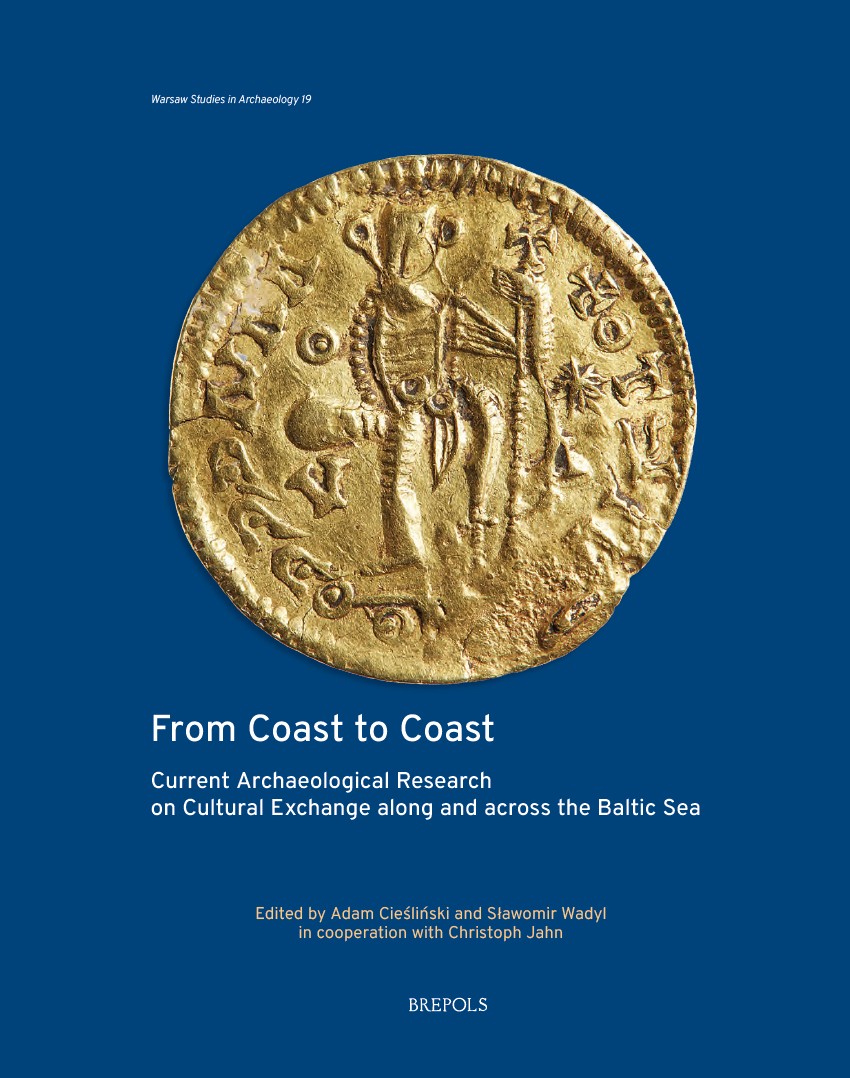 From Coast to Coast
Current Archaeological Research on Cultural Exchange along and across the Baltic Sea
Volume 19
 Frontiers of the Roman Empire: The Frontier of the Roman Province of Raetia
Grenzen des Römischen Reiches: Die Grenze der Römischen Provinz Raetien
 Gold, Silver and Glass: Power Networks, Cultural Identities, Technology Transfers and Agency across the Old World (7th Century BC – 1st Century AD)
Proceedings of a Conference Held at the British Museum, 16–18 June 2023
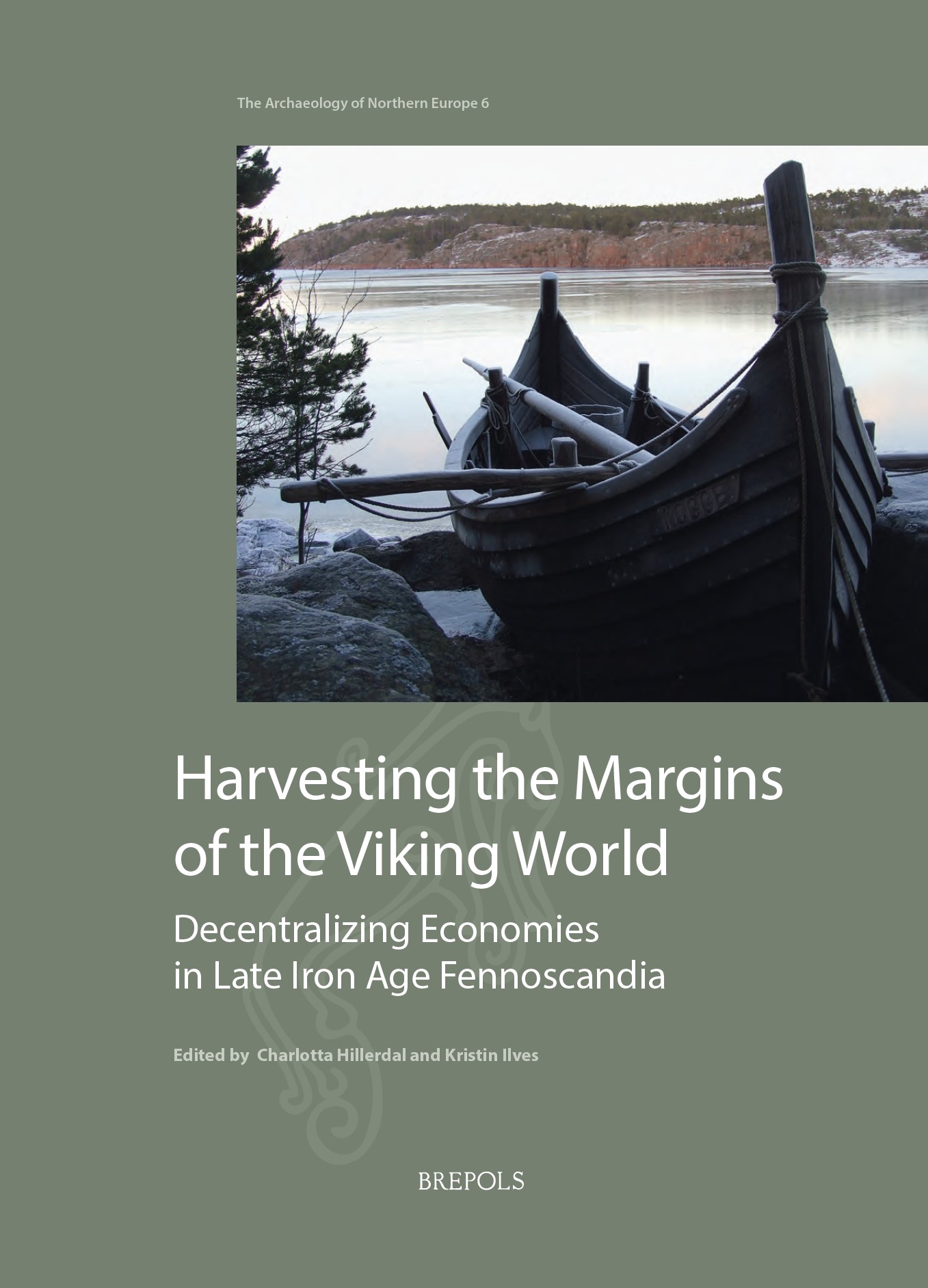 Harvesting the Margins of the Viking World
Decentralizing Economies in Late Iron Age Fennoscandia
Volume 6
 Images of Anonymous Women
A Semiotic Approach to Image-Text Relations in Interpretation of Ancient Near Eastern Art and the Hebrew Bible
Volume 310

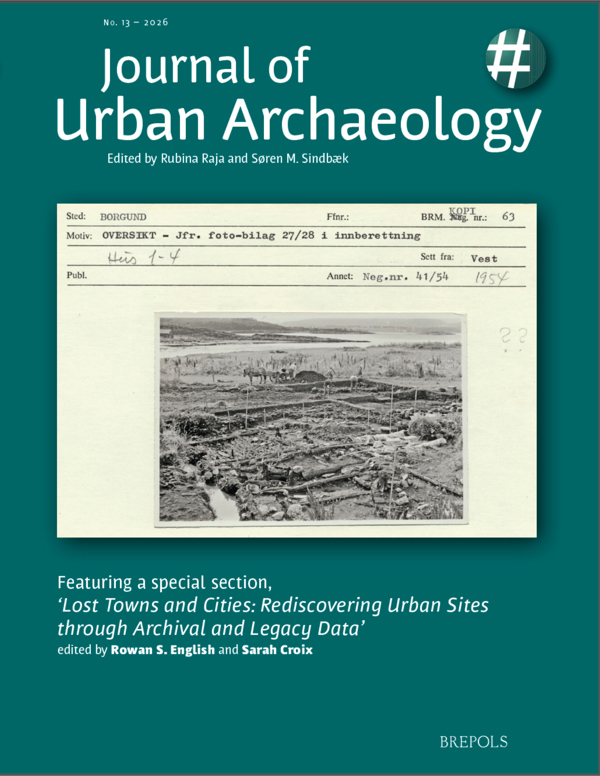 Journal of Urban Archaeology 13 (2026)
Featuring a special section, ‘Lost Towns and Cities: Rediscovering Urban Sites through Archival and Legacy Data’


 Making and Meaning in the Bronze and Iron Ages
Chronology, Landscapes and Societies across Europe. Proceedings from the METALAGES2024 Colloquium (Florence, 23 October 2024)

 Medieval Yeghegis, Armenia
History, Archaeology, Society. Local Multiplicities and Global Connections of a Rural Centre on the Silk Road(s)
 Mobility and Archaeogenetics in Central Asia
People – Goods – Ideas. 3rd International Conference on Central Asian Archaeology in Bern, 11th–13th January 2024
Volume 24


 Offa’s Dyke Journal: Volume 7 for 2025
A Journal for Linear Monuments, Frontiers and Borderlands Research


 Prehistoric, Ancient and Medieval Medicine
New Perspectives and Challenges for the Twenty-First Century