
La Palestine a l’epoque romaine
by Caroline Arnould-Behar

Paperback (Out of print)
(November 2017)
ISBN: 9782251410364
Price: $25.00
On back order
La Palestine a l’epoque romaine n’est pas une terre comme les autres : elle a connu le pouvoir d’Herode le Grand, entendu le message de Jesus, subi la destruction du Temple, vu se developper le judaisme rabbinique…
English summary: This small and somewhat poor province on the outskirts of the Roman Empire was the birthplace of schools of thought and spiritual ideas which had a significant impact on the history of humanity. During the period extending from the first century BC until the end of the third century AD, the territory – which the assumed the name of Palestine – underwent extensive political, cultural and religious upheavals. The latter included the assumption of power by Herod the Great (a king subject to Roman authority), two rebellions spearheaded by Jews against the Roman Empire, the destruction of the Temple, etc. Our knowledge of this period stems from numerous contemporary written sources, primarily from the works of Flavius Josephus, the New Testament, from data derived from the Epigraphy, studies on the Qumran manuscripts, and recent major archaeological discoveries. All of these findings help us to grasp the complexity of Roman Palestine’s civilisation. French description: La Palestine a l’epoque romaine n’est pas une terre comme les autres : elle a connu le pouvoir d’Herode le Grand, entendu le message de Jesus, subi la destruction du Temple, vu se developper le judaisme rabbinique, abrite la premiere communaute chretienne… Soumise a l’autorite de Rome, elle a nourri une civilisation a l’activite spirituelle intense, refletee par de nombreux ecrits, comme les Manuscrits de la mer Morte. Les decouvertes et les recherches recentes en offrent aujourd’hui une image plus pregnante.
- By (author) Caroline Arnould-Behar
Other Titles in this Series


Similar Books


 Connecting the Dots: Counting, Writing, and the Beginnings of Civilization
The Secret Lives of Clay Tokens: A Memoir

 Exploring Gender Dynamics across the Ancient Near East
Collected Essays of Gender and Methodology in the Ancient Near East (GeMANE) 4 and 5
Volume 7


 Ḫattušaš utnē išḫameški
Hittite and Other Ancient Near Eastern Studies Presented to Piotr Taracha on the Occasion of His 65th Birthday

 New Research on Old Collections in Southwest Asian Archaeology
Proceedings of the Workshop Held at the British Museum, London, 31 July – 2 August, 2023
 Old Aramaic Inscriptions and their Contexts
An Epigraphic, Archaeological, and Historical Synthesis
Volume 63

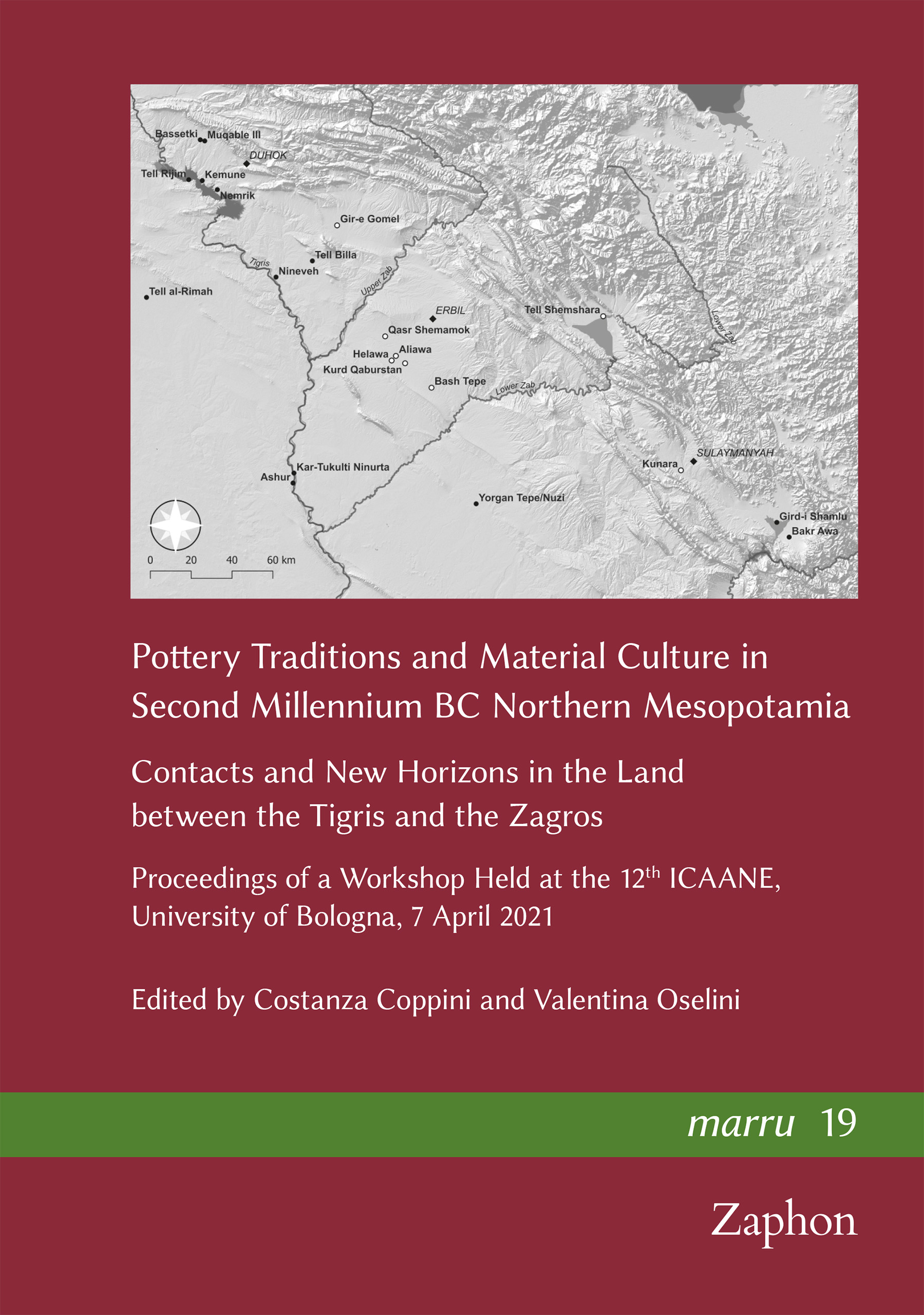 Pottery Traditions and Material Culture in Second Millennium BC Northern Mesopotamia
Contacts and New Horizons in the Land between the Tigris and the Zagros. Proceedings of a Workshop Held at the 12th ICAANE, University of Bologna, 7 April 2021
Volume 19
 Punning in Odd or Elegant Constructions in Jeremiah
The Convergence of Linguistics, Rhetoric, and Textuality in the Hebrew Text of Jeremiah
 Shame in the Worlds of the Hebrew Bible and Akkadian Texts
A Linguistic Study and Its Implications
Volume 33
 Telling Contexts
Archaeological and Textual Studies in Honor of Elizabeth Bloch-Smith and Mark S. Smith
 The Body
Lived, Cultured, Adorned: Essays on Dress and the Body in the Bible and Ancient Near East in Honor of Nili S. Fox
 The Discourse of Rites
Shaping and Reshaping the (Counter-)Priestly Rituals Conducted Outside the Tabernacle
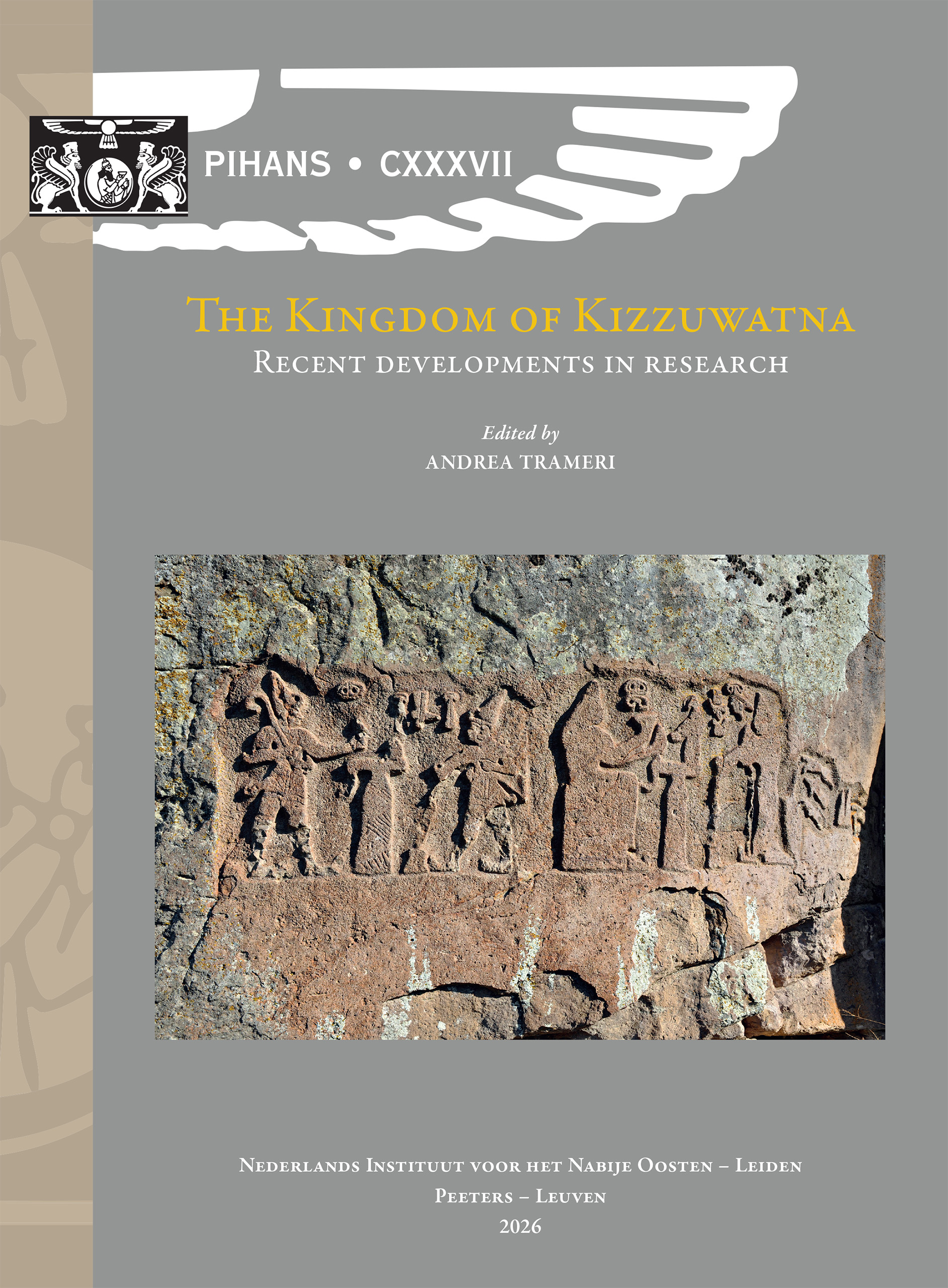 The Kingdom of Kizzuwatna: Recent Developments in Research
Proceedings of the Third NINO Postdoctoral Research Fellow Annual Conference, Leiden, 23rd-25th March 2023
Volume 137


 Die Entwicklung erdbebensicherer Bautechniken in der Frühen und Mittleren Eisenzeit in Ostanatolien
Volume 11
 Die JHWH-Religion und die Vorstellung göttlicher Gesetzgebung
Überschneidungen zwischen der Rechtsentwicklung und der Sphäre der Religion in der Geschichte des antiken Israel und Juda

 Kultur – Kontakt – Kultur
Beiträge anlässlich der 66. Rencontre Assyriologique Internationale in Frankfurt/Main und Mainz, 25.–29. Juli 2022
Volume 35
 Menschenwürde und Menschenrechte im Altem Orient, Israel und Hellas. Band 1
Human Dignity and Human Rights in the Ancient Near East, Ancient Israel, and Hellas. Volume 1
Volume 311
 Ptolemaiou Procheiroi Kanones. Les «Tables Faciles» de Ptolemée. Volume 2a: Tables A3-A13
Édition critique, Transcription
 Sprachwissenschaftliche und kulturhistorische Reflexionen
Festschrift zu Ehren von Jörg Klinger
Volume 31

 Vom Mädchen zur Frau
Weihgaben als Indikatoren rituellen und kommunikativen Handelns von Frauen in griechischen Kulten
Volume 188
 Von der Symmachie zur Arché und zurück
Die Entwicklungsphasen des Ersten Attischen Seebundes (478/7–404 v. Chr.)