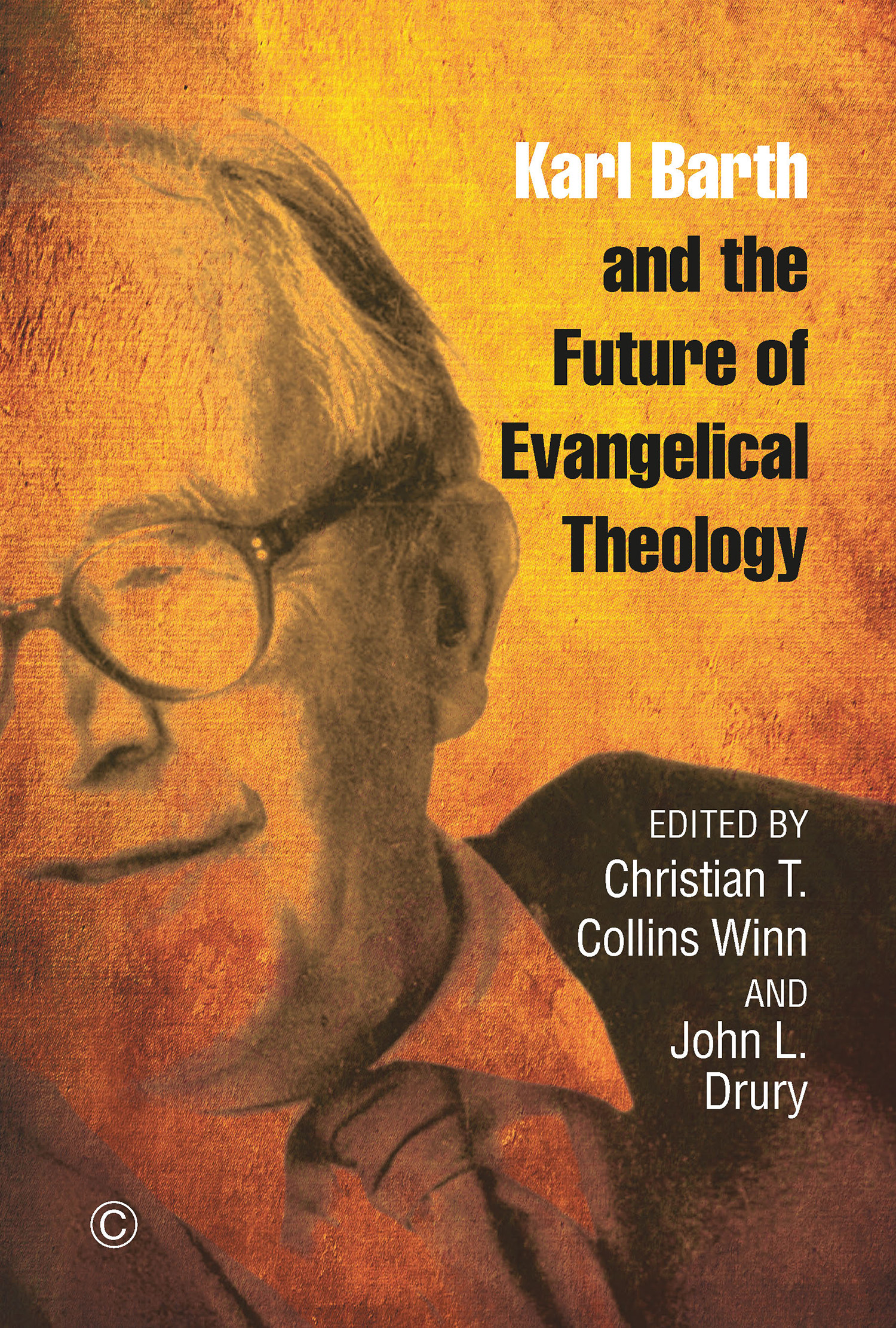
Karl Barth and the Future of Evangelical Theology
edited by Christian T. Collins Winn and John L. Drury
Paperback (No longer our product)
(September 2017)
ISBN: 9780227176658
5.98 x 9.02 inches
Price: $50.00
In stock
A collection of essays that seek to advance the dialogue between evangelical theologians and the legacy of Karl Barth.
The theology of Karl Barth has often been a productive dialogue partner for evangelical theology, but for too long the dialogue has been dominated by questions of orthodoxy. Karl Barth and the Future of Evangelical Theology contributes to the conversation through a creative reconfiguration of both partners in the conversation, neither of whom can be rightly understood as preservers of Protestant orthodoxy. Rather, American evangelicalism is identified with the revivalist forms of Protestantism that arose in the post-Reformation era, while Barth is revisited as a theologian attuned both to divine and human agency. In the ensuing conversation, questions of orthodoxy are not eliminated but subordinated to a concern for the life of God and God’s people. By offering an alternative to the dominant constraints, this book opens up new avenues for fruitful conversation on Barth and the future of evangelical theology.
- By (author) Christian T Collins Winn
- By (author) John L Drury
"Evangelical orthodoxy is regenerated in this volume by a long-awaited development: an orthopraxic and orthopathic interpretation of and engagement with the legacy of Karl Barth. ... this constructive trajectory derives especially from a ferment of contemporary pietist, Wesleyan, and Pentecostal interfaces with what has been predominantly a Reformed playground. The landscape where Barth studies intersect with evangelical theology, and the nature of both conversations, has been permanently altered"Amos Yong, Professor of Theology & Mission, Fuller Seminary, Pasadena, CA"In this outstanding collection of essays, the contours of a more hopeful and thoroughly theological approach to the evangelical tradition come clearly into view. This vision provides yet another demonstration of the rehabilitation of Karl Barth among evangelicals and the vibrancy of his thought for the future of evangelical theology and witness."John R. Franke, Professor of Missional Theology, Yellowstone Theological Institute, Bozeman, MT
—
Similar Books
 ‘For You I Study, For You I Work, For You I Live, For You I Am Ready To Even Give My Life’
Essays in Honour of Francis (Frank) J Moloney, SDB
 A Connecting Polemic in the Medieval Mediterranean
The Correspondence of Leo III and ʿUmar II
Volume 6





 Cultic Kisses
Fruitful Encounters Between Deities and Humans. Festschrift for Angelika Berlejung on the Occasion of Her 65th Birthday




 Extracanonical Traditions and the Holy Land
Texts, Rituals, and Material Culture in Late Antique Palestine
 Fear, Fear of God, God-Fearers
Philological and Historical Perspectives on the World of Ancient Judaism and Christianity


 Hoghe minne es deen vor dander
Essays on the Christian Mystical Tradition in Honour of Rob Faesen SJ
Volume 122

 Liturgia semper reformanda
Adaptations and accommodations in the liturgy in light of canon 838 of the Code of Canon Law


 On Becoming a Theologian of the Cross
Revisiting Luther’s theologus crucis from the Heidelberg Disputation to the Genesis Lectures

 Pre-Christian Religions, Rituals, and Beliefs in Central and Northern Europe
Interdisciplinary Investigations
Volume 5

 Reforming Good Works in Geneva
Bénédict Pictet’s Doctrine of Good Works and His Place in Late Reformed Orthodoxy
Volume 85