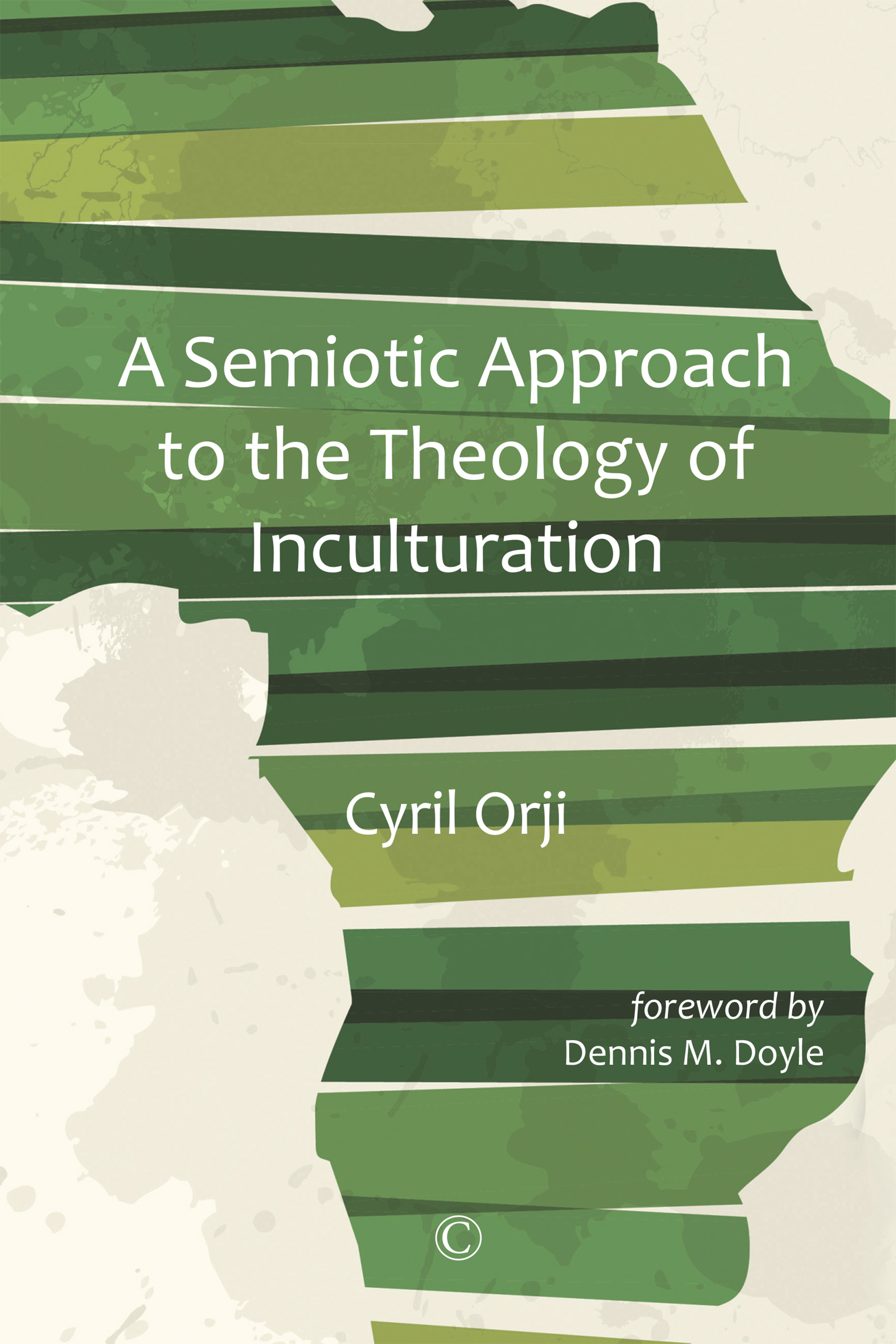
Semiotic Approach to the Theology of Inculturation
by Cyril Orji
Paperback (No longer our product)
(August 2017)
ISBN: 9780227176610
5.98 x 9.02 inches
Price: $37.00
On back order
An exploration of the applicability of semiotics to the theological and cultural challenges involved in spreading the gospel in an African context.
A Semiotic Approach to the Theology of Inculturation argues that though it is a difficult and delicate task, inculturation is still a requisite demand of a World Church and that without it the Church is unrecognisable and unsustainable. The book also suggests that the past failures of inculturation experiments in Africa can be overcome only by critically applying the science of semiotics, which can serve as an antidote to the nature of human knowing and reductionism that characterised earlier attempts to make Christianity African to the African. Drawing from the semiotic works of C.S. Peirce, Clifford Geertz, and Bernard Lonergan, Cyril Orji shows why semiotics is best suited to an African theology of inculturation and offers ten pinpointed precepts, identified as ‘Habits’, which underline the attentiveness, reasonableness, and responsibility required in a semiotic approach to a theology of inculturation. The ‘Habits’ are also akin to the imperatives inherent in the notion of catholicity – that catholicity is not identified with uniformity but with reconciled diversity, and also that catholicity demands different forms in different places, times, and cultural settings.
- By (author) Cyril Orji
"This book is the first of its kind to take Lonergan's critique of classicist culture as a context and apply it concretely towards a method for theological reflection in an African context. He transposes Lonergan's critique into ten principles for the constructive engagement between theology and culture. It promises to become a handbook for contextual theologians."-John D. Dadosky, Associate Professor, Regis College/University of Toronto"Cyril Orji has written an important book on the theology of Inculturation. His argument that a semiotic approach to spreading the gospel in non-western societies is refreshing and consistent with new directions of research in the humanities disciplines. While Christianity has made major strides in postcolonial Africa, Orji argues that it must continuously look for ways to include in the delivery of the gospel African traditions, values, and history in order to remain relevant in the continent. It should attract a wide readership in African studies."-Julius A. Amin, Professor, University of Dayton
—
Similar Books
 ‘For You I Study, For You I Work, For You I Live, For You I Am Ready To Even Give My Life’
Essays in Honour of Francis (Frank) J Moloney, SDB
 A Connecting Polemic in the Medieval Mediterranean
The Correspondence of Leo III and ʿUmar II
Volume 6





 Cultic Kisses
Fruitful Encounters Between Deities and Humans. Festschrift for Angelika Berlejung on the Occasion of Her 65th Birthday




 Extracanonical Traditions and the Holy Land
Texts, Rituals, and Material Culture in Late Antique Palestine
 Fear, Fear of God, God-Fearers
Philological and Historical Perspectives on the World of Ancient Judaism and Christianity


 Hoghe minne es deen vor dander
Essays on the Christian Mystical Tradition in Honour of Rob Faesen SJ
Volume 122
 Liturgia semper reformanda
Adaptations and accommodations in the liturgy in light of canon 838 of the Code of Canon Law


 On Becoming a Theologian of the Cross
Revisiting Luther’s theologus crucis from the Heidelberg Disputation to the Genesis Lectures

 Pre-Christian Religions, Rituals, and Beliefs in Central and Northern Europe
Interdisciplinary Investigations
Volume 5

 Reforming Good Works in Geneva
Bénédict Pictet’s Doctrine of Good Works and His Place in Late Reformed Orthodoxy
Volume 85