Daoist perspectives on knowing the future
Selections from the Scripture on Great Peace (Taiping jing)
by Barbara Hendrischke

In China, in the first centuries of the Common Era, prognostication was a widely used tool of political decision making, of cultural and ideological expression and, increasingly, also of popular resistance. The Scripture on Great Peace originated in this environment. It contains warnings of a universal cataclysm and suggests a radical social and religious reorientation as means of salvation. Thereby, it connects insights and ideas of the empire’s academic establishment to experiences and concerns of the population at large. It belongs to the earliest textual sources for Daoism, that is, for China’s indigenous religion that took shape when the imperial government and with it the empire fell apart in the second century CE. The present volume documents the Scripture’s doctrinal and stylistic diversity. The selected materials stem from different parts of the long text. Some focus on eschatological scenarios, others, in contrast, on utopian hopes for the reform of humankind and its future under the auspices of “Great Peace”. Still others design schemes for personal immortality. In this study, these materials are translated into a Western language for the first time. The translations are accompanied by extensive explanatory annotations.
In China, in the first centuries of the Common Era, prognostication was a widely used tool of political decision making, of cultural and ideological expression and, increasingly, also of popular resistance. The Scripture on Great Peace originated in this environment. It contains warnings of a universal cataclysm and suggests a radical social and religious reorientation as means of salvation. Thereby, it connects insights and ideas of the empire’s academic establishment to experiences and concerns of the population at large. It belongs to the earliest textual sources for Daoism, that is, for China’s indigenous religion that took shape when the imperial government and with it the empire fell apart in the second century CE. The present volume documents the Scripture’s doctrinal and stylistic diversity. The selected materials stem from different parts of the long text. Some focus on eschatological scenarios, others, in contrast, on utopian hopes for the reform of humankind and its future under the auspices of “Great Peace”. Still others design schemes for personal immortality. In this study, these materials are translated into a Western language for the first time. The translations are accompanied by extensive explanatory annotations.
- By (author) Barbara Hendrischke
Other Titles in this Series
 The Rhetorical Fabric of the Traditional Arabic Qasida in Its Formative Stages
A Comparative Study of the Rhetoric in Two Traditional Poems by 'Alqama l-Fahl and Bashshar b. Burd
Volume 98
 Islamic Art and Architecture in the European Periphery
Crimea, Caucasus, and the Volga-Ural Region
Volume 63

 Founders of Western Indology
August Wilhelm von Schlegel and Henry Thomas Colebrooke in Correspondence 1820-1837
Volume 84


 Early Ibadi Literature
Abu l-Mundhir Bashir b. Muhammad b. Mahbub. Kitab al-Rasf fi l-Tawhid, Kitab al-Muharaba and Sira. Introduced and edited by Abdulrahman al-Salimi and Wilferd Madelung
Volume 75
 Arabische Kerzendichtung des 10.-15. Jahrhunderts
Eine Studie zur arabischen ekphrastischen Poesie
Volume 131
 Schriftliche mandschurische Quellen zur Geschichte und Kultur des Qing-Reiches des 17. und 18. Jahrhunderts
Aus dem Russischen ubersetzt, bearbeitet und herausgegeben von Giovanni Stary und Hartmut Walravens
Volume 100


 Die Traume der Schulweisheit
Leben und Werk des 'Ali b. Muhammad al-Gurgani (gest. 816/1413)
Volume 86
 Poetae docti. Grammatische Verse in der arabischen Poesie des 9.-14. Jahrhunderts
Eine poetische Grammatik
Volume 135


 Spirit-Writing Cults in the Chaozhou Region between 1860 and 1949
Local Religion and Translocal Religious Movements
Volume 125

 Wolfram Eberhard (1909-1989). Sinologe, Ethnologe, Soziologe und Folklorist
Schriftenverzeichnis zusammengestellt mit einer biografischen Einleitung von Hartmut Walravens
Volume 65


 Joseph Francis Rock (1884-1962). Travel diaries of a botanist and ethnographer from Lanzhou to Koko Nor (Qinghai) 1925 and from Chone to Songpan 1927 (Eastern Tibet / West China)
Edited from Rock's revised manuscripts by Hartmut Walravens
Volume 136

 Erzahlen im alten Japan
Geschichtsschreibung, Mythen und narrative Dichtung in den ersten beiden Man'yoshu-Banden
Volume 132


 Language and Textuality in Byzantine Karaism
Grammatical Concepts, Biblical Text Traditions, and Hermeneutic Aspects in the Constantinople Center (Late 11th-First Half of 14th Centuries)
Volume 116


 Die ‘Risala fi l-Hawass’ des Ibn al-Gazzar
Die arabische Vorlage des Albertus Magnus zugeschriebenen Traktats 'De mirabilibus mundi'
Volume 79

Similar Books
 ‘For You I Study, For You I Work, For You I Live, For You I Am Ready To Even Give My Life’
Essays in Honour of Francis (Frank) J Moloney, SDB




 Ars Prophetica
Theology in the Poetry of Twentieth-Century Hebrew Poets Avraham Halfi, Shin Shalom, Amir Gilboa, and T. Carmi
 As Messianism Turns to Heresy
The Regenstein Chair Lectures On Lurianic Kabbalah and Shabbatai Tzevi at Hebrew Union College - Cincinnati


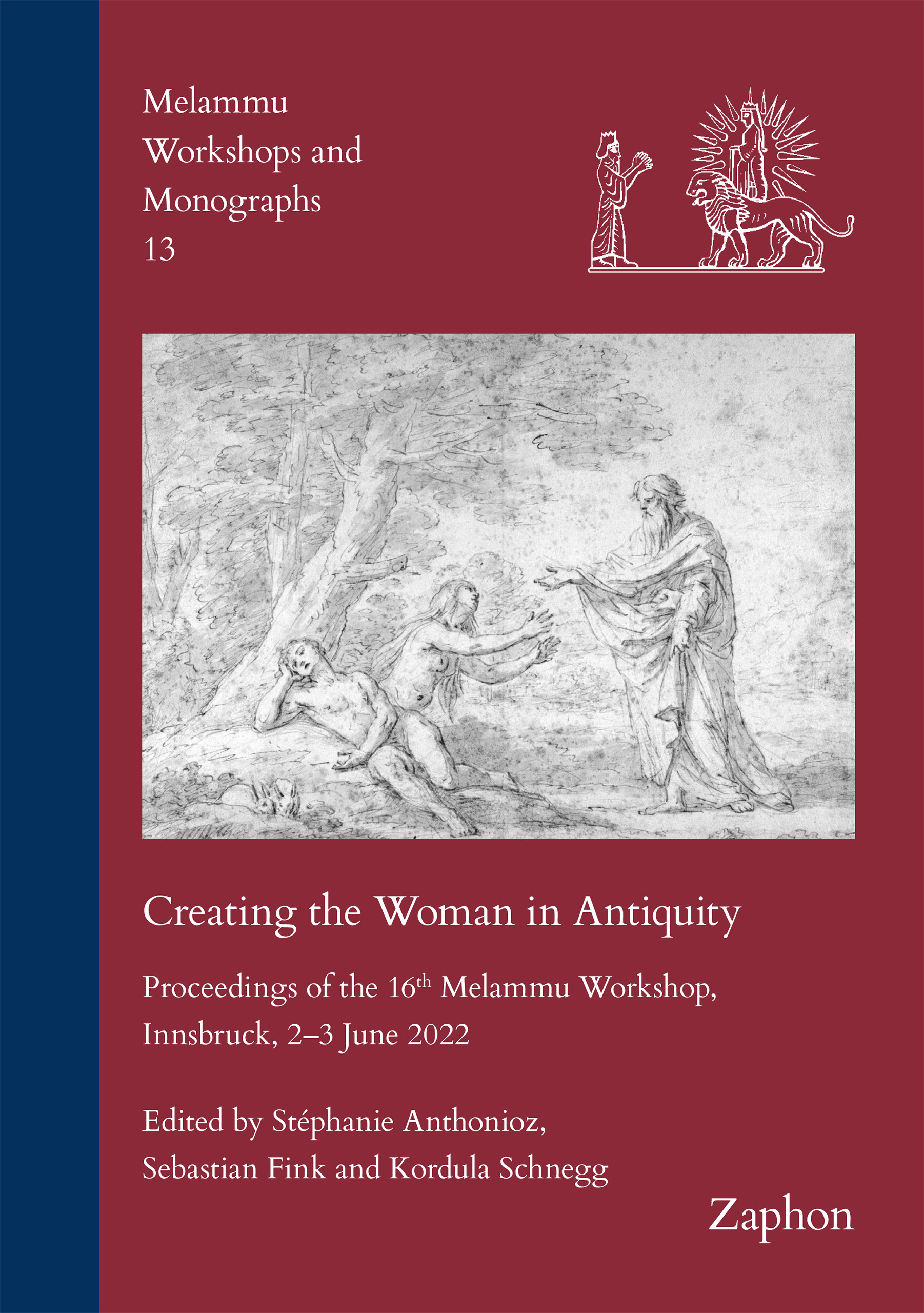 Creating the Woman in Antiquity
Proceedings of the 16th Melammu Workshop, Innsbruck, 2–3 June 2022
Volume 13


 Drunk the Potion, No Whit Charmed
The Doctrine of Pure and Perfect Souls from Iamblichus to Damascius



 Extracanonical Traditions and the Holy Land
Texts, Rituals, and Material Culture in Late Antique Palestine
 Fear, Fear of God, God-Fearers
Philological and Historical Perspectives on the World of Ancient Judaism and Christianity