
Creative and Imaginative Powers in the Pictorial Art of El Greco
Edited by Livia Stoenescu

This volume presents an innovative art-historical outlook on the prevalent interpretations and theoretical analyses of El Greco’s paintings. Discussing the role of El Greco in early modern art history, Fernando Marias sheds light on unexplored aspects of El Greco’s translation of the religious thought of the conversos into his work, and Miriam Cera investigates the stream of humanist sources from Salazar de Mendoza’s library in Toledo that influenced El Greco’s artistic development. These two introductory studies set the framework for subsequent essays on El Greco’s collaboration with Spain’s humanist circles and the late sixteenth-century culture of the Italian Renaissance. Jose Riello offers an original interpretation of El Greco’s paintings by re-examining the importance of Reformation thought in his work made in Toledo. Tackling the critical impact of Michelangelo’s draftsmanship on El Greco, Karin Hellwig explores the complexity of El Greco’s relationship with the Italian Renaissance master. Livia Stoenescu demonstrates that El Greco crafted a unique historical style by drawing on an antique culture of religious artifacts, relics, and icons while remodeling the old within modern painting. Enrico Maria dal Pozzolo’s exploration of a fluid continuity between El Greco’s models and an entire Italian tradition of Marian painting, resulting in works which El Greco grounded in Renaissance devotional content and which were circulated in the medium of prints and engravings, directs our attention towards new stylistic concerns and potential discussions.
This volume presents an innovative art-historical outlook on the prevalent interpretations and theoretical analyses of El Greco’s paintings. Discussing the role of El Greco in early modern art history, Fernando Marias sheds light on unexplored aspects of El Greco’s translation of the religious thought of the conversos into his work, and Miriam Cera investigates the stream of humanist sources from Salazar de Mendoza’s library in Toledo that influenced El Greco’s artistic development. These two introductory studies set the framework for subsequent essays on El Greco’s collaboration with Spain’s humanist circles and the late sixteenth-century culture of the Italian Renaissance. Jose Riello offers an original interpretation of El Greco’s paintings by re-examining the importance of Reformation thought in his work made in Toledo. Tackling the critical impact of Michelangelo’s draftsmanship on El Greco, Karin Hellwig explores the complexity of El Greco’s relationship with the Italian Renaissance master. Livia Stoenescu demonstrates that El Greco crafted a unique historical style by drawing on an antique culture of religious artifacts, relics, and icons while remodeling the old within modern painting. Enrico Maria dal Pozzolo’s exploration of a fluid continuity between El Greco’s models and an entire Italian tradition of Marian painting, resulting in works which El Greco grounded in Renaissance devotional content and which were circulated in the medium of prints and engravings, directs our attention towards new stylistic concerns and potential discussions.
- Edited by Livia Stoenescu
Other Titles in this Series


 The Age of Rubens
Diplomacy, Dynastic Politics and the Visual Arts in Early Seventeenth-Century Europe
Volume 26


 Recent Developments in the Technical Examination of Early Netherlandish Painting
Methodology, Limitations and Perspectives
Volume 10


Similar Books
 A Collaborative Tapestry in Honour of Shirley Ann Brown / Une fresque brodée en l’honneur de Shirley Ann Brown
The Bayeux Tapestry Seen by her Colleagues and Friends / La Tapisserie de Bayeux vue par ses collègues et amis


 Balthasar Caymox of Nuremberg
Early Modern German Print Publishers: Popular Prints of the Seventeenth Century
 Beyond Sovereign Courts
Agents and Practices in Early Modern Spanish and Habsburg Diplomacy
Volume 3

 Circulation, Use, Impact
The Consumption of Architectural Books in the Early Modern Eastern Adriatic
Volume 1


 Councils, Conflicts, Correspondence
Urban Diplomacy in Reval (Tallinn) and Lübeck (c. 1470–1570)
Volume 67


 Innovationes Lovanienses: Arts, Law and Theology at the University of Louvain (1425–1797)
Studium Lovaniense: Learning across Borders, 2
Volume 18
 Legal Visuality
Exegesis, Ambiguity, and Dissimulation of the Donation of Constantine in the Early Modern Period
 Monastic Manuscripts from the Eastern Mediterranean (Sinai, Jerusalem, Antioch)
Production, Use, and Contexts

 Naples as Laboratory / Laboratorium Neapel
Style Options, Artistic Rivalry and Self Fashioning in Neapolitan Baroque Painting / Plurale Stilbildung, Kunstlerkonkurrenz und Self Fashioning in der neapolitanischen Barockmalerei
 Nurturing the Elite
Representations of Drinking, Eating, and Religious Vessels in Palmyrene Funerary Iconography
Volume 13


 Portraying the Individual in the Roman East
Local–Imperial Entanglements in Sculpture, Mosaics, and Paintings (First–Fourth Centuries AD)
Volume 18
 Power and Women in Southeast and Central Europe in Late Medieval and Early Modern Period (1300-1600)
Volume 10



 Staging the Spectacle of Majesty
Ceremonial, Courtly Space, and Collecting under the Spanish Habsburgs
Volume 9
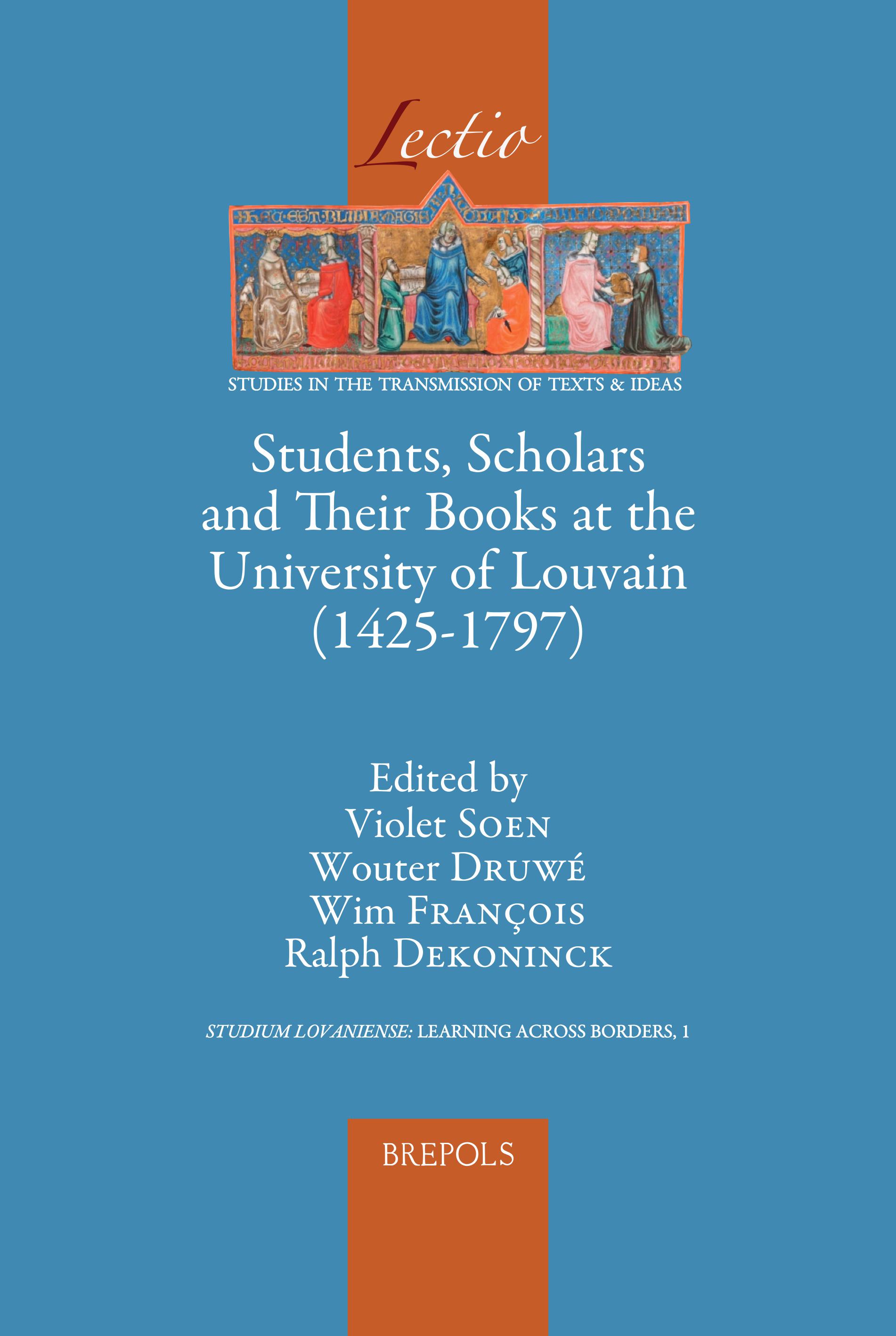 Students, Scholars and Their Books at the University of Louvain (1425-1797)
Studium Lovaniense: Learning across Borders, 1
Volume 17


 Technical Studies of Asian Art
Proceedings of the Seventh Forbes Symposium at the Freer Gallery of Art

