
Architectures of Fire: Processes, Space and Agency in Pyrotechnologies
Edited by Dragoş Gheorghiu

Paperback (Published)
(October 2019)
ISBN: 9781789693676
7.99 x 10.91 inches
Price: $42.00
In stock
Papers presented here originate from a session held during the 2015 Annual Meeting of the European Association of Archaeologists (Glasgow). The contributors attempt to present the entanglement between the physical phenomenon of fire, the pyro-technological instrument that it is, its material supports, and the human being.
Architectures of Fire attempts to present the entanglement between the physical phenomenon of fire, the pyro-technological instrument that it is, its material supports, and the human being. In this perspective, the physical process of combustion, material culture, as well as the development of human action in space, are addressed together. Fire is located at the centre of all pre-modern architecture. It creates the living or technological space. Fire creates architectures since it imposes geometry, from the simple circles of stone or clay, which control its spread (and which are the geometrical figures of its optimal efficiency), to cone trunks, cylinders, half-spheres, half-cylinders or parallelepipeds, circular geometric figures that efficiently control the air-draught process required for combustion. All these forms involving the circle are determined by the control and conservation of thermal energy. We should not imagine that the term ‘architecture’ evokes only constructed objects that delimit human action. Architecture means not only the built space, but also the experienced space, in the present case around the pyro-instruments. Pyro-instruments involve an ergonomic, kinesthetic and visual relationship, as well as the rhythmic actions of feeding or maintaining fire at a certain technological tempo. The technological agency is structured both by the physics of the combustion phenomenon, and by the type of operation to be performed.
Introduction - Dragos Gheorghiu A Song of Space and Fire: Is There a Pyrotechnical Architecture of the African Middle Stone Age? - Silje Evjenth Bentsen and Sarah Wurz Firing the Earth. The Early Neolithic Ovens of Portonovo (Marche, Italy) - Cecilia Conati Barbaro, Chiara La Marca, Vanessa Forte, Giacomo Eramo, Italo M. Muntoni and Alberto Rossi Architectures of Fire: The Pyro-proximities of the Chalcolithic Dwelling - Dragos Gheorghiu Italian Pottery Kilns and Production Areas from the Bronze Age to the Archaic Period (2200-500 BC). A Typological Approach - Agostino Sotgia Shifting Focus: Expanding the Potential of Experimental Metallurgical Reconstructions - Jessica L. Slater Ergonomics as a Tool for Fire Structures Reconstruction. Case Study of a Kiln Located in the Garncarskie Rock Shelter in Polish Jura Chain - Michal Wojenka and Malgorzata Kot,
Dragoş Gheorghiu is an historical anthropologist/archaeologist and experimentalist whose studies focus on the process of cognition, material culture and ancient technologies. He has edited books on fire in archaeology, fire as material culture, fire as an instrument, also on ceramics, figurines and stamps. During the last two decades he has carried out experiments with the building and burning of wattle and daub houses, with kilns and with other structures involved with combustion.
- Edited by Dragoş Gheorghiu
Similar Books


 Archaeological Excavations at Irmis Rka: An Investigation of a Multi-Layered Settlement in Southwest Georgia
Results from the 2020 Season: Early Bronze Age to Medieval Occupations


 Catuvellaunia and Rome: Economic and Political Relations during the Final Decades Pre-conquest
The Role of Grain from Southeastern Britain and Its Potential for Maintenance of the Roman Military along the Frontier on the Rhine
 Colour Concept “Secoli bui” a colori
Codici cromatici e architetture dipinte nell’età tardoantica e medievale

 Crossing Disciplines in the Study of Archaeology and Prehistoric Art: Insights from the Sahara and Mediterranean Africa
Proceedings of the XX UISPP World Congress (5–9 September 2023, Timișoara, Romania) Volume / Session 18
 Crossing Sacred Landscapes
Contacts and Continuities in the Desert Cults and Beliefs of Ancient Northern Arabia and the Arid Southern Levant
 Cuneiform Artefacts from Archaeological Contexts: New Research on Ancient Iraq
Proceedings of a Conference Held at the Bavarian Academy of Sciences and Humanities, July 4–5, 2024
Volume 2

 ENTANGLED AFRICA
Intra-African Relations Between Rain Forest and Mediterranean from Around 4,000 BCE to 1,500 CE


 Exploring Prehistoric Pottery in Japan
A Study of Organic Inclusions, Adhering Materials, and Impressions of Woven Items

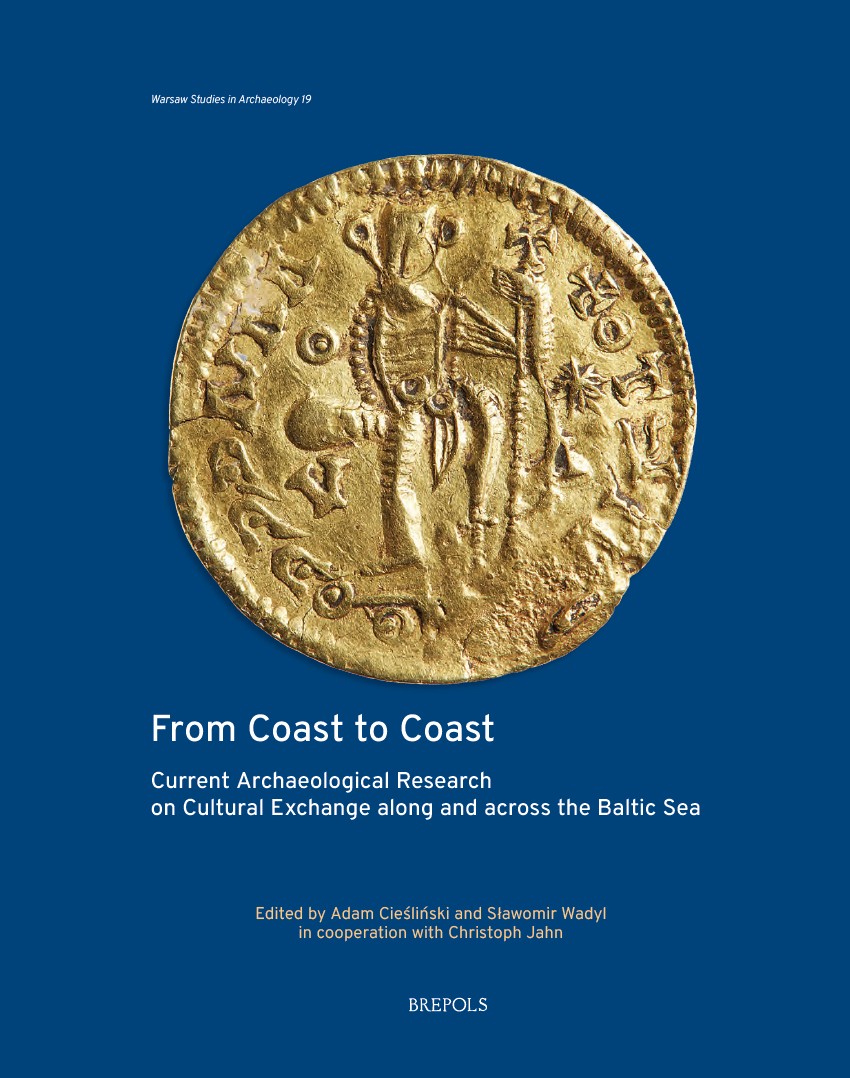 From Coast to Coast
Current Archaeological Research on Cultural Exchange along and across the Baltic Sea
Volume 19
 Frontiers of the Roman Empire: The Frontier of the Roman Province of Raetia
Grenzen des Römischen Reiches: Die Grenze der Römischen Provinz Raetien
 Gold, Silver and Glass: Power Networks, Cultural Identities, Technology Transfers and Agency across the Old World (7th Century BC – 1st Century AD)
Proceedings of a Conference Held at the British Museum, 16–18 June 2023
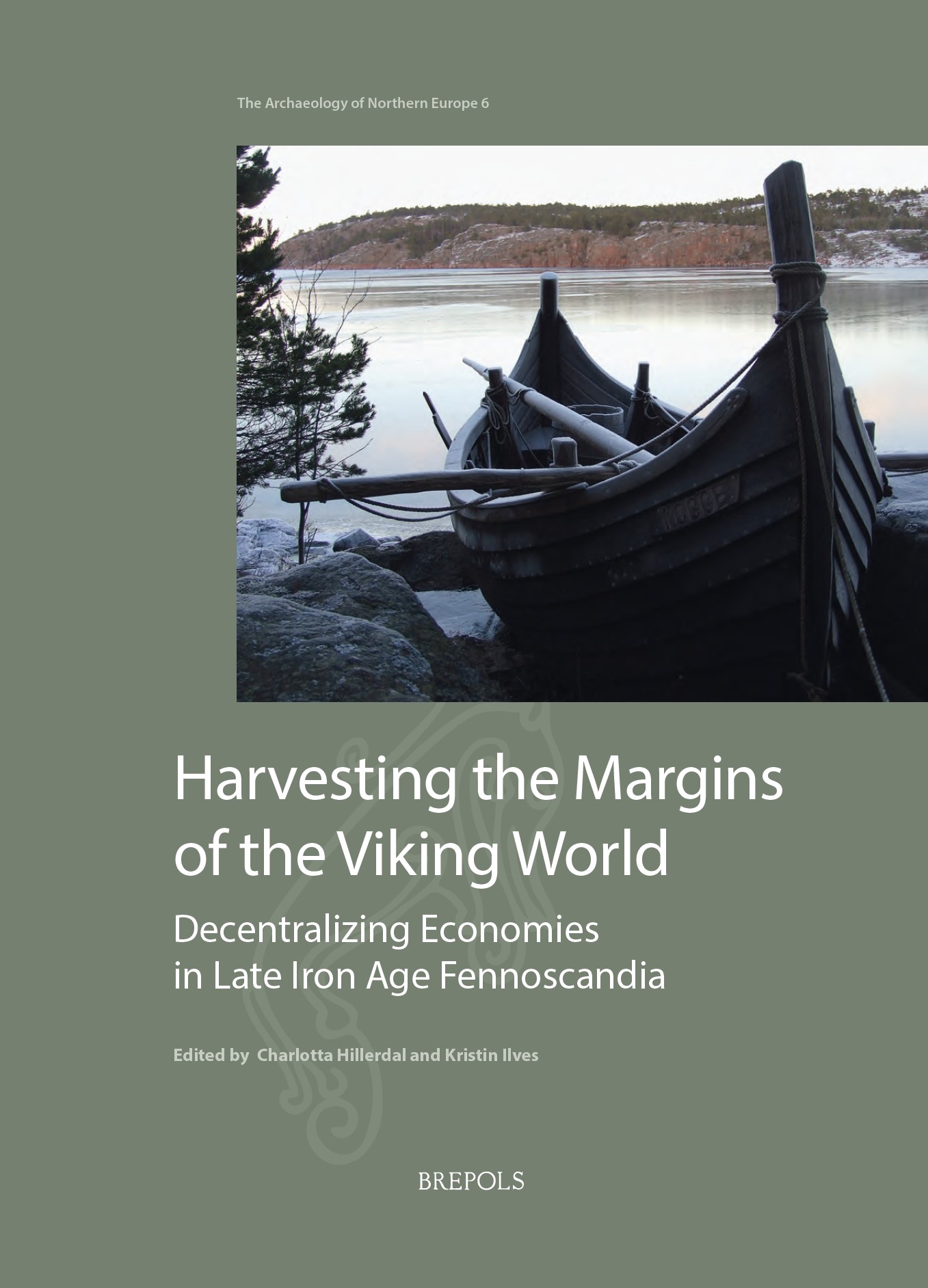 Harvesting the Margins of the Viking World
Decentralizing Economies in Late Iron Age Fennoscandia
Volume 6
 Images of Anonymous Women
A Semiotic Approach to Image-Text Relations in Interpretation of Ancient Near Eastern Art and the Hebrew Bible
Volume 310

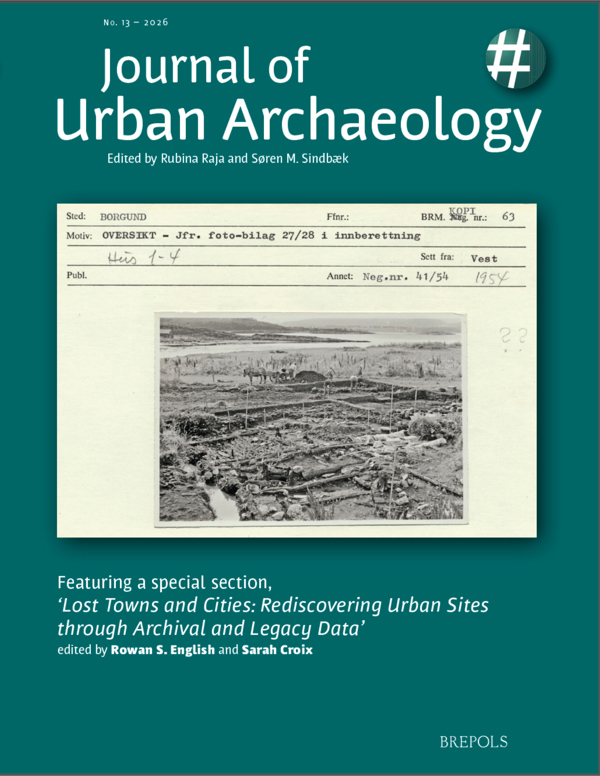 Journal of Urban Archaeology 13 (2026)
Featuring a special section, ‘Lost Towns and Cities: Rediscovering Urban Sites through Archival and Legacy Data’


 Making and Meaning in the Bronze and Iron Ages
Chronology, Landscapes and Societies across Europe. Proceedings from the METALAGES2024 Colloquium (Florence, 23 October 2024)

 Medieval Yeghegis, Armenia
History, Archaeology, Society. Local Multiplicities and Global Connections of a Rural Centre on the Silk Road(s)
 Mobility and Archaeogenetics in Central Asia
People – Goods – Ideas. 3rd International Conference on Central Asian Archaeology in Bern, 11th–13th January 2024
Volume 24


 Offa’s Dyke Journal: Volume 7 for 2025
A Journal for Linear Monuments, Frontiers and Borderlands Research


