
The Hydraulic System of Uxul
Origins, functions, and social setting
By (author) Nicolaus Seefeld

Paperback (Published)
(September 2018)
ISBN: 9781784919290
8.07 x 11.42 inches
Price: $150.00
On back order
This research seeks to close an essential research gap – the understanding of the water management strategies of the Maya in pre-Hispanic times. It focuses on the archaeological investigation of the hydraulic system of Uxul, a medium-sized Maya centre in the south of the state of Campeche, Mexico.
Since the inception of Maya studies, the issue of water supply in Classic Maya society has been a matter of controversial debate. Due to the annually recurring dry seasons the availability of water during this period is and has always been problematic. In the light of these conditions, the fact that the pre-Hispanic Maya were able to establish, developed and maintain prosperous urban centres over long periods is hard to explain. In order to resolve this open issue, this book aims to explain the water management strategies of the Maya in pre-Hispanic times. To this end, this volume analyses the intricate relationship between the natural environment and the adaptation strategies of the pre-Hispanic population, whose physical remains were documented in the form of hydraulic features. A large section of this book discusses the different forms, functions, and the geographic distribution of the published hydraulic features. The main body of this monograph focuses on the archaeological investigation of the hydraulic system of Uxul, a medium-sized Maya centre in the south of the state of Campeche, Mexico. As many open research questions could be addressed and studied in this site, the hydraulic system of Uxul acted as a central point of reference for the evaluation of the socio-political relevance of water management in the Maya Lowlands. This book identifies both the natural causes for water scarcities and the cultural adaptation strategies that were designed to overcome them. Due to this comprehensive approach, the present book is the most extensive and exhaustive account on the hydraulic features of the Maya Lowlands and thus enables representative statements on the sociopolitical relevance of water management in Classic Maya society.
Foreword
Preface
1 Introduction
2 Geomorphology of the Maya Lowlands
3 History of research on the hydrology of the Maya Lowlands
4 Climate history and landscape history of the Maya Lowlands
5 Review of hydraulic features in the Maya Lowlands
6 Archaeological investigation of Uxul’s hydraulic system
7 Functional and spatial patterns of hydraulic features in the Maya Lowlands
8 Development and sociopolitical relevance of water management in Classic Maya society
9 Conclusions
10 Bibliography
- By (author) Nicolaus Seefeld
'This publication offers a fresh look at the study of water management among the pre-Hispanic Maya... and helps us to understand the underlying problems of the Yucatán Peninsula and how the pre-Hispanic population developed various strategies for the management of rainwater. The publication is commended both for its academic content and good images (more than 260, many of them in colour) as well as its printing quality. The volume contains an extensive discussion and summary of the history of research related to the management of water and land in pre-Hispanic times.' —Antonio Benavides Castillo, Estudios de Cultura Maya 54, August 2019
—
'In sum, this large volume of 517 pages provides a unique synthesis that many will find useful. Indeed, Seefeld’s book constitutes the best comprehensive study of ancient Maya water management available at this time, with no comparable work out there. The book is a very valuable addition to a Mayanist’s library because of everything it brings together on the topic of ancient Maya water management. Scholars working in water management in other regions of the world will also find a very good place to start here if they intend to look at the Maya case.' —Thomas Ruhl and Nicholas P. Dunning, Latin American Antiquity Vol. 30, No. 3, September 2019
—
Other Titles in this Series


 Obsidian Across the Americas
Compositional Studies Conducted in the Elemental Analysis Facility at the Field Museum of Natural History
 Metallurgy in Ancient Ecuador
A Study of the Collection of Archaeological Metallurgy of the Ministry of Culture, Ecuador

 Archaeological Paleography
A Proposal for Tracing the Role of Interaction in Mayan Script Innovation via Material Remains


 Wari Women from Huarmey
Bioarchaeological Interpretation of Human Remains from the Wari Elite Mausoleum at Castillo de Huarmey, Peru
Similar Books


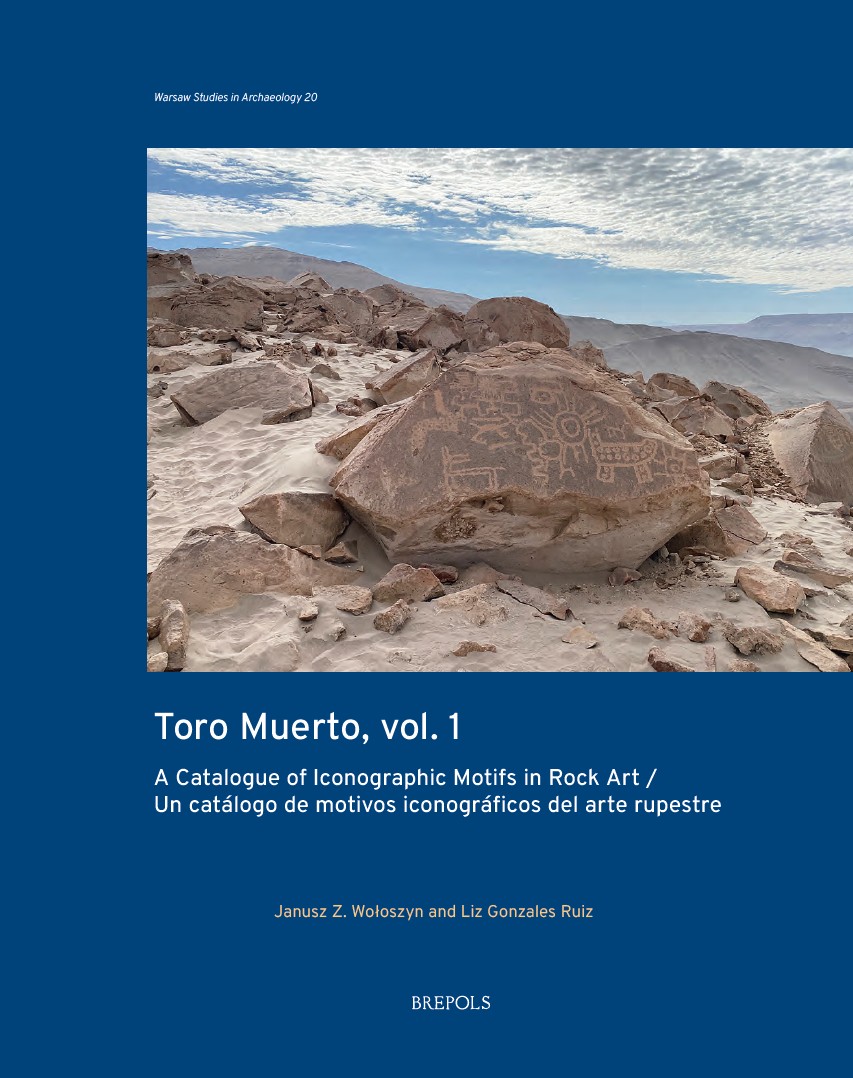 Toro Muerto, vol. I
A Catalogue of Iconographic Motifs in Rock Art / Un catálogo de motivos iconográficos del arte rupestre
Volume 20


 Patrimonio antes del patrimonio
Una genealogía del pensamiento patrimonialista y la arqueología mexicana en un amplio siglo XIX

 From Sedentarisation to the Complex Society
Settlement, Economy, Environment, Cult. Proceedings of the workshops in Lisbon, Tehran and Lima (2016 − 2019)

 Adolescente de Jalpan
Primer estudio iconográfico y esbozo de interpretación iconológica sobre una escultura huasteca en la Sierra Gorda del Noreste de México

 Archaeological Investigations in Guadalupe, Northeast Honduras
Interaction Networks during the Late Pre-Hispanic Period (AD 900-1525)
Volume 19
 Flower World – Mundo Florido
Music Archaeology of the Americas - Arqueomusicologia de las Americas
Volume 7
 Obsidian Across the Americas
Compositional Studies Conducted in the Elemental Analysis Facility at the Field Museum of Natural History


 La fábrica del prestigio en Mesoamérica
Interacciones y alteridad en el Altiplano central durante el período epiclásico (600-900 d.C.)


 El renacer de los Reyes
Imagen, contexto y significado del friso de Balamku, Campeche, Mexico
Volume 56
 El Palacio: Historiography and new perspectives on a pre-Tarascan city of northern Michoacán, Mexico


 Essai bibliographique sur l’archéologie francophone de la Mésoamérique
Bibliographical essay upon the French-speaking contributions to Mesoamerican archaeology; Ensayo bibliográfico sobre la arqueología francófona de Mesoamérica

 Sea Shells in the Mountains and Llamas on the Coast
The Economy of the Paracas Culture (800 to 200 BC) in Southern Peru
Volume 16
 Wari Women from Huarmey
Bioarchaeological Interpretation of Human Remains from the Wari Elite Mausoleum at Castillo de Huarmey, Peru
 Flower World – Mundo Florido
Music Archaeology of the Americas - Arqueomusicologia de las Americas
Volume 6