
Enemy – Stranger – Neighbour: The Image of the Other in Moche Culture
By (author) Janusz Z. Wołoszyn

Paperback (Published)
(June 2021)
ISBN: 9781789698824
8.07 x 11.46 inches
Price: $56.00
On back order
‘Enemy – Stranger – Neighbour: The Image of the Other in Moche Culture’ais dedicated to artistic renderings of the Recuay people in Moche art, in all available and preserved media. This study offers an analysis of several dozen complex, painted and bas-relief scenes and several hundred mould-pressed, sculpted depictions of foreigners in Moche art.
Enemy – Stranger – Neighbour: The Image of the Other in Moche Culture is dedicated to artistic renderings of the Recuay people in Moche art, in all available and preserved media. The Moche and the Recuay were the creators of the two main cultures of northern Peru in the Early Intermediate Period (approx. 100-750 CE). They were both illiterate and they left no written documents concerning the nature of their mutual contacts. The Moche, however, represented the Recuay quite extensively in their ceremonial art, which served as a powerful ideological tool of social influence and control. Its iconography gives an exceptional opportunity to study the mechanisms of perceiving and presenting the ‘other’ in a traditional society. This study offers an analysis of a set of several dozen complex, painted and bas-relief scenes, as well as several hundred mould-pressed, sculpted depictions of foreigners in Moche art. It tries to answer the questions of how the message regarding the ‘other’ was created and communicated, what its concept may have been and what social functions it may have served among the groups living in the Southern Moche Region. The attitude to foreigners – as reconstructed on the basis of Moche iconography – was not unidimensional. It was characterized by a combination of extreme feelings and emotions such as fear and admiration, resentment and interest, repulsion and fascination. It has many features of a typical approach to all ‘others’ studied by specialists of different disciplines in various contexts and cultures. The observations made in this book will prove of interest not only to Moche scholars, Andean archaeologists or, people interested in the pre-Columbian cultures of South America, but also – if only as an analogy – to historians, art historians, sociologists and anthropologists dealing with the issue of alterity.
Introduction Acknowledgements Chapter 1: How to Represent an Enemy? Foreign warriors Foreign captives Foreigners and large felines Chapter 2: How to Represent a Stranger? Coca takers The 'sleeping' Bearded men 'Siamese twins' Chapter 3: How to Represent a Neighbour? 'Salesmen' Burden bearers Owners of pack animals Final Remarks Appendix 1: Glossary of Terms
Appendix 2: Online Catalogues of Moche Art Collections Appendix 3: Representations of Foreigners in Fineline Painted Scenes in the Moche Archive References, Introduction ;
Acknowledgements ;
Chapter 1: How to Represent an Enemy? ;
Foreign warriorsForeign captivesForeigners and large felines Chapter 2: How to Represent a Stranger? ;
Coca takersThe ‘sleeping’Bearded men‘Siamese twins’ Chapter 3: How to Represent a Neighbour? ;
‘Salesmen’Burden bearersOwners of pack animals Final Remarks ;
Appendix 1: Glossary of Terms ;
Appendix 2: Online Catalogues of Moche Art Collections ;
Appendix 3: Representations of Foreigners in Fineline Painted Scenes in the Moche Archive ;
References
Janusz Z. Wołoszyn is Associate Professor of Archaeology at the University of Warsaw. He is author of four books and numerous articles on the archaeology and iconography of Pre-Columbian Andean cultures.
- By (author) Janusz Z. Wołoszyn
Other Titles in this Series


 Obsidian Across the Americas
Compositional Studies Conducted in the Elemental Analysis Facility at the Field Museum of Natural History
 Metallurgy in Ancient Ecuador
A Study of the Collection of Archaeological Metallurgy of the Ministry of Culture, Ecuador

 Archaeological Paleography
A Proposal for Tracing the Role of Interaction in Mayan Script Innovation via Material Remains


 Wari Women from Huarmey
Bioarchaeological Interpretation of Human Remains from the Wari Elite Mausoleum at Castillo de Huarmey, Peru


Similar Books


 Adolescente de Jalpan
Primer estudio iconográfico y esbozo de interpretación iconológica sobre una escultura huasteca en la Sierra Gorda del Noreste de México


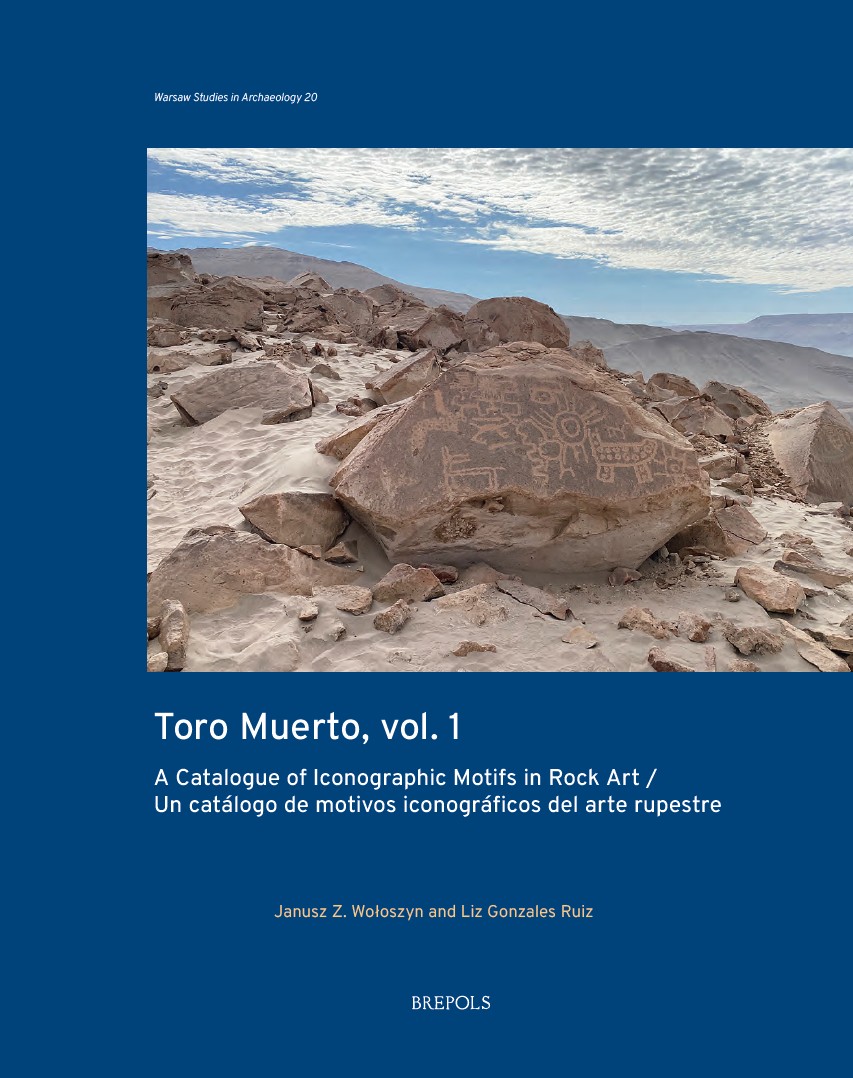 Toro Muerto, vol. I
A Catalogue of Iconographic Motifs in Rock Art / Un catálogo de motivos iconográficos del arte rupestre
Volume 20
Obsidian Across the Americas
Compositional Studies Conducted in the Elemental Analysis Facility at the Field Museum of Natural History


 La fábrica del prestigio en Mesoamérica
Interacciones y alteridad en el Altiplano central durante el período epiclásico (600-900 d.C.)

 El renacer de los Reyes
Imagen, contexto y significado del friso de Balamku, Campeche, Mexico
Volume 56
 El Palacio: Historiography and new perspectives on a pre-Tarascan city of northern Michoacán, Mexico


 Essai bibliographique sur l’archéologie francophone de la Mésoamérique
Bibliographical essay upon the French-speaking contributions to Mesoamerican archaeology; Ensayo bibliográfico sobre la arqueología francófona de Mesoamérica

 Sea Shells in the Mountains and Llamas on the Coast
The Economy of the Paracas Culture (800 to 200 BC) in Southern Peru
Volume 16
 Wari Women from Huarmey
Bioarchaeological Interpretation of Human Remains from the Wari Elite Mausoleum at Castillo de Huarmey, Peru
 Paisajes en un sector de la Quebrada de Humahuaca durante la Etapa Agroalfarera
Arqueología de Tumbaya (Jujuy, Argentina)
 Peintures et gravures rupestres des Amériques: Empreintes culturelles et territoriales
Proceedings of the XVIII UISPP World Congress (4-9 June 2018, Paris, France) Volume 2, Session XXV-3


