
Aigeira 2. Die osterreichischen Ausgrabungen von Aigeira in Achaia
Die mykenische Akropolis. Grabungen 1975-1980: Stratigraphie und Bebauung. Unter Mitarbeit von Mario Borner. Mit einem Beitrag von Sigrid Deger-Jalkotzy
by Eva Alram-Stern

Ancient Aigeira in the Peloponnese is characterized by a Mycenaean settlement situated on the upper parts of the area. Based on its stratigraphy and findings, we reconstruct the top of this settlement, the so-called acropolis, which was built after the fall of the Mycenaean palaces, i.e. during the 12th century BC. In addition, the storage vessels and the well-preserved pottery vessels which are of importance for the reconstruction of the settlement are presented for the first time. From examining the layout of the rooms, courts and alleys, the hearths and ovens, the small finds, the storage vessels and the pottery vessels found in situ, we are able to distinguish a settlement organized in house complexes. Each house is attributed to a household, which is based on family structures. These house complexes are characterized by storage, production of goods and consumption in the course of feasting. At the same time the high social status of the inhabitants is highlighted by a cult room. During its final phase the settlement is surrounded by a fortification wall which demarcates the acropolis from the houses on the lower terraces and marks it as the most important part of the settlement area.
- By (author) Eva Alram-Stern
Other Titles in this Series

Similar Books


 Caesar’s Visions and Impact on the Roman Empire
Revisiting the Archaeological and Historical Record of the 40s BC
Volume 2

 Construction Processes in Historical Western Societies (5th c. BC – 10th c. AD)
Case Studies on Techniques, Models, and Costs


 Etruscan and Roman Hellenistic Anatomical ex votos
Reassessing Popular Religious Expressions in Central Italy
Volume 8




 Invisible Labour in Antiquity
Visualizing Obscure Work in the Ancient Mediterannean and West Asia
Volume 1

 Late Antique villae in the Balkans (3rd–7th c. AD): Current Research Questions and Perspectives
HAEMUS Companion to the Late Antique Balkans 1
Volume 4





 Portraying the Individual in the Roman East
Local–Imperial Entanglements in Sculpture, Mosaics, and Paintings (First–Fourth Centuries AD)
Volume 18


 Roman Copies, Collecting, and Culture in the Bay of Naples and Beyond
Papers in Honor of Eugene J. Dwyer
 Small Worlds and Relational Agencies: Local Societies in Early Medieval Iberia
Pequeños mundos y Agencias relacionales: Sociedades locales altomedievales en la Península Ibérica
 SOMA 2023: Proceedings of the 24th Symposium on Mediterranean Archaeology
Ideas that Travelled by the Sea, Udine, 2-4 February, 2023


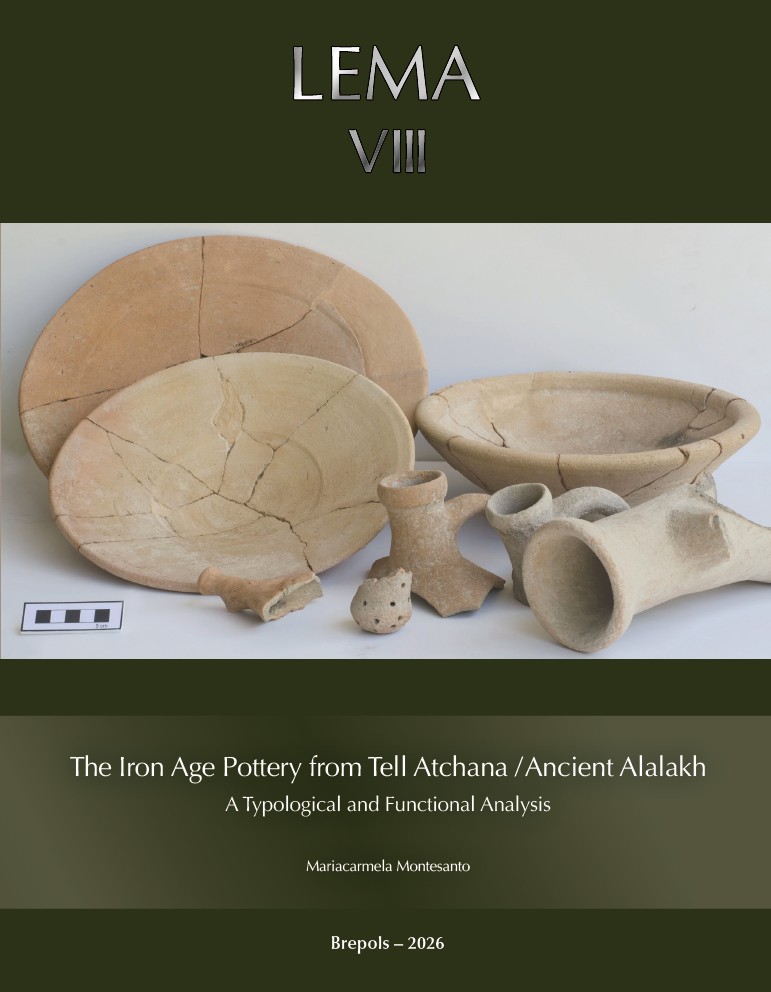 The Iron Age Pottery from Tell Atchana / Ancient Alalakh
A Typological and Functional Analysis
Volume 8


 Writing in the Church of the Nativity in Bethlehem
Inscription and Graffiti in a Multilingual and Multigraphic Perspective
Volume 45
 Zooarchaeology of Ancient Greek Sanctuaries in Southwestern Sicily
Faunal Analysis from Selinus and Akragas as Evidence of Differences in the Treatment of Animals for Ritual Purposes
 Alabaster
An Interdisciplinary Study of the Sources and Uses of Calcite Alabaster in Antiquity
Volume 5

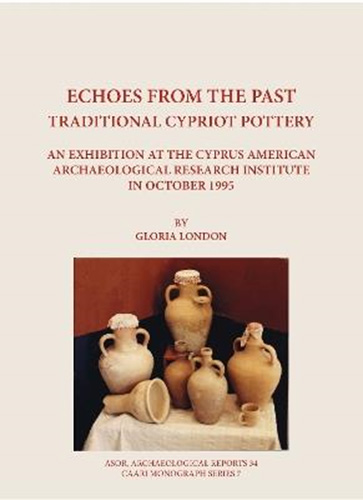 Echoes from the Past: Traditional Cypriot Pottery
An Exhibition at the Cyprus American Archaeological Research Institute in October 1995