
Le miroir en Égée à l’âge du Bronze récent
Formes, fonctions, usages et trajectoires entre le XVIe et le XIe siècle
By (author) L.E. Alvarez
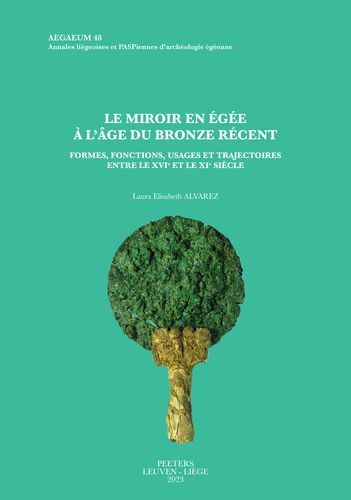
Qu’a reflete jadis ce miroir minoen ou mycenien a la surface boursouflee d’oxydes verts, encore mele de la terre de la sepulture dans laquelle il fut depose ? Ancien luxe de commodite, fruit d’une precision technique et artistique, et de materiaux importes a grands frais, ne pouvait avoir un miroir en metal qui veut : il y a plus de trente siecles, l’usage commun est celui du plan d’eau, du bol d’huile, qui offrent apres tout un reflet suffisant en reponse a d’autres besoins. Qu’a-t-on recherche, des lors, au travers de son eclat brillant aux reflets cuivres ? S’agissait-il d’impressionner par un nouveau mode de vie fait de choses superflues, d’imiter les codes hierarchiques des cours lointaines orientales raffinees, de rivaliser de prestige et d’innovation avec les pouvoirs voisins ? Et quelles furent les interpretations merveilleuses de ses proprietes optiques ? C’est par ces questions que ce livre tente de reviser l’image deprimee d’ornement banal qui a longtemps prevalu sur le miroir egeen ancien, dont les premieres apparitions et l’evolution, au cours du deuxieme millenaire avant notre ere, ont ete portees par de nouveaux flux ideologiques, sociaux et politiques, mais aussi commerciaux, entre les rives grecques et celles du pourtour mediterraneen. Plus d’un tiers du corpus archeologique, estime a environ 200 pieces, a ete etudie, photographie et dessine dans les reserves des musees helleniques. Les exemplaires les mieux conserves, a manche finement ouvre, font souvent partie des pieces maitresses de leurs collections. Objets, contextes archeologiques, et sources de nature et de provenances diverses (iconographiques, litteraires, ethnographiques), sont associes pour offrir un regard actualise sur un pan de l’histoire du miroir ancien, avec ses acteurs, ses processus, et ses trajectoires. La sequence d’evenements ainsi reconstituee montre que l’apparition du miroir en metal dans les societes egeennes, plutot que d’etre le simple corollaire de changements culturels, sociaux, ou politiques, en est egalement le catalyseur.
- By (author) L.E. Alvarez
Other Titles in this Series
 Physis
L'environnement naturel et la relation homme-milieu dans le monde égéen protohistorique
Volume 37
 Zoia. Animal-Human Interactions in the Aegean Middle and Late BronzeAge
Proceedings of the 18th International Aegean Conference, originally tobe held at the Program in Aegean Scripts and Prehistory, in the Departmentof Classics, the University of Texas at Austin, May 28-31, 2020
Volume 45

 MNHMH / MNEME. Past and Memory in the Aegean Bronze Age
Proceedings of the 17th International Aegean Conference, University of Udine, Department of Humanities and Cultural Heritage, Ca' Foscari University of Venice, Department of Humanities, 17-21 April 2018
Volume 43

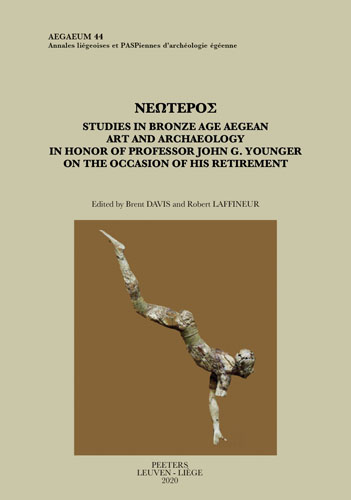 Neôteros
Studies in Bronze Age Aegean Art and Archaeology in Honor of ProfessorJohn G. Younger on the Occasion of his Retirement
Volume 44



 Hesperos. The Aegean Seen from the West
Proceedings of the 16th International Aegean Conference
Volume 41
 Kosmos. Jewellery, Adornment and Textiles in the Aegean Bronze Age
Proceedings of the 13th International Aegean Conference / 13e Rencontre égéenne internationale, University of Copenhagen, Danish National Research Foundation's Centre for Textile Research, 21-26 April 2010
Volume 33
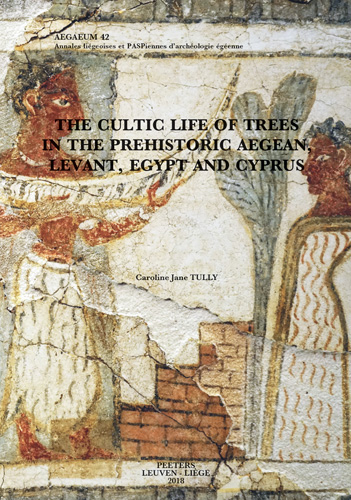
 HYDOR. Water Resources and Management in the Aegean Bronze Age
Proceedings of the 20th Rencontre égéenne internationale/International Aegean Conference, University of Amsterdam, Amsterdam Centre for Ancient Studies & Archaeology, 11-16 June, 2024
Volume 50
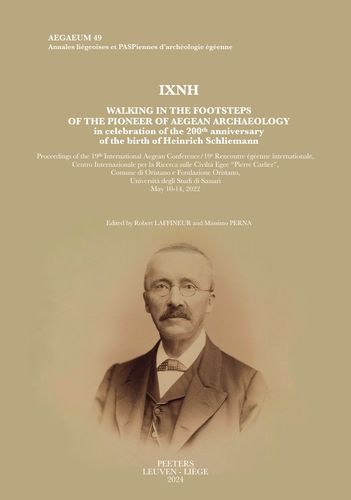 IXNH. Walking in the Footsteps of the Pioneer of Aegean Archaeology in celebration of the 200th anniversary of the birth of Heinrich Schliemann
Proceedings of the 19th International Aegean Conference/19e Rencontre égéenne internationale, Centro Internazionale per la Ricerca sulle Civiltà Egee “Pierre Carlier”, Comune di Oristano e Fondazione Oristano, Università degli Studi di Sassari, May 1
Volume 49
Similar Books


 Caesar’s Visions and Impact on the Roman Empire
Revisiting the Archaeological and Historical Record of the 40s BC
Volume 2

 Construction Processes in Historical Western Societies (5th c. BC – 10th c. AD)
Case Studies on Techniques, Models, and Costs


 Etruscan and Roman Hellenistic Anatomical ex votos
Reassessing Popular Religious Expressions in Central Italy
Volume 8




 Invisible Labour in Antiquity
Visualizing Obscure Work in the Ancient Mediterannean and West Asia
Volume 1

 Late Antique villae in the Balkans (3rd–7th c. AD): Current Research Questions and Perspectives
HAEMUS Companion to the Late Antique Balkans 1
Volume 4





 Portraying the Individual in the Roman East
Local–Imperial Entanglements in Sculpture, Mosaics, and Paintings (First–Fourth Centuries AD)
Volume 18


 Roman Copies, Collecting, and Culture in the Bay of Naples and Beyond
Papers in Honor of Eugene J. Dwyer
 Small Worlds and Relational Agencies: Local Societies in Early Medieval Iberia
Pequeños mundos y Agencias relacionales: Sociedades locales altomedievales en la Península Ibérica
 SOMA 2023: Proceedings of the 24th Symposium on Mediterranean Archaeology
Ideas that Travelled by the Sea, Udine, 2-4 February, 2023


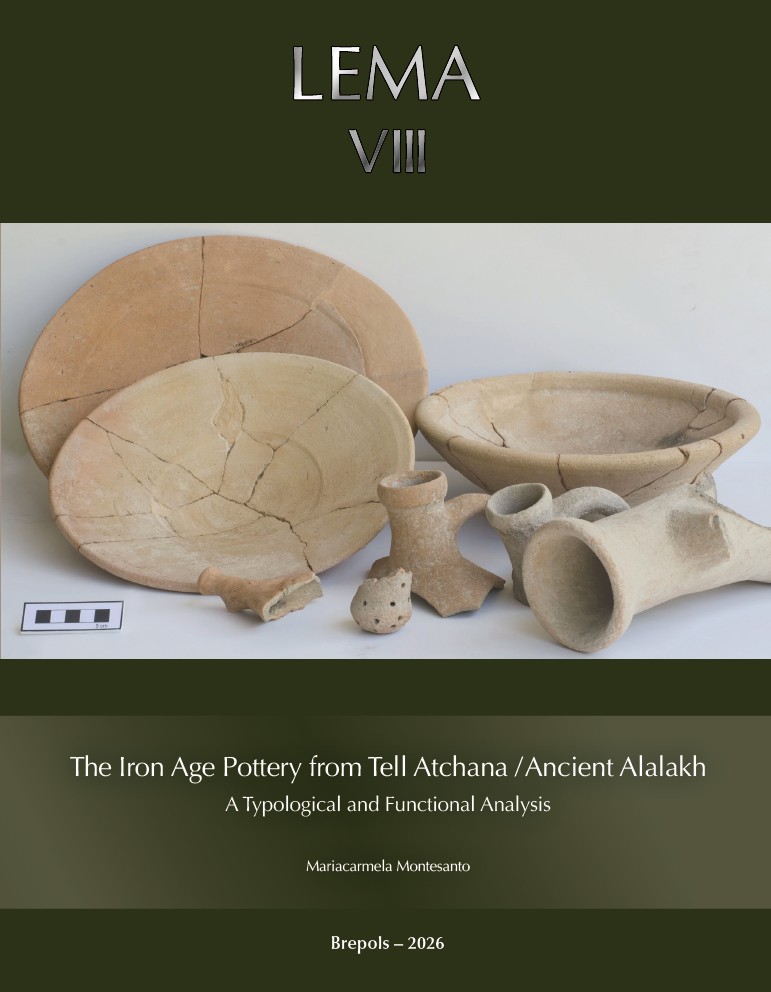 The Iron Age Pottery from Tell Atchana / Ancient Alalakh
A Typological and Functional Analysis
Volume 8


 Writing in the Church of the Nativity in Bethlehem
Inscription and Graffiti in a Multilingual and Multigraphic Perspective
Volume 45
 Zooarchaeology of Ancient Greek Sanctuaries in Southwestern Sicily
Faunal Analysis from Selinus and Akragas as Evidence of Differences in the Treatment of Animals for Ritual Purposes
 Alabaster
An Interdisciplinary Study of the Sources and Uses of Calcite Alabaster in Antiquity
Volume 5

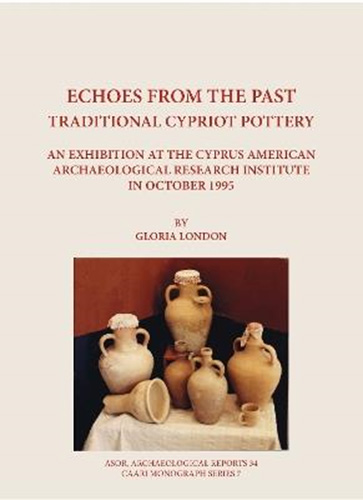 Echoes from the Past: Traditional Cypriot Pottery
An Exhibition at the Cyprus American Archaeological Research Institute in October 1995