
Sublime Community
Reflections on Eco-Theology and Laudato Si'
by Anthony J. Kelly
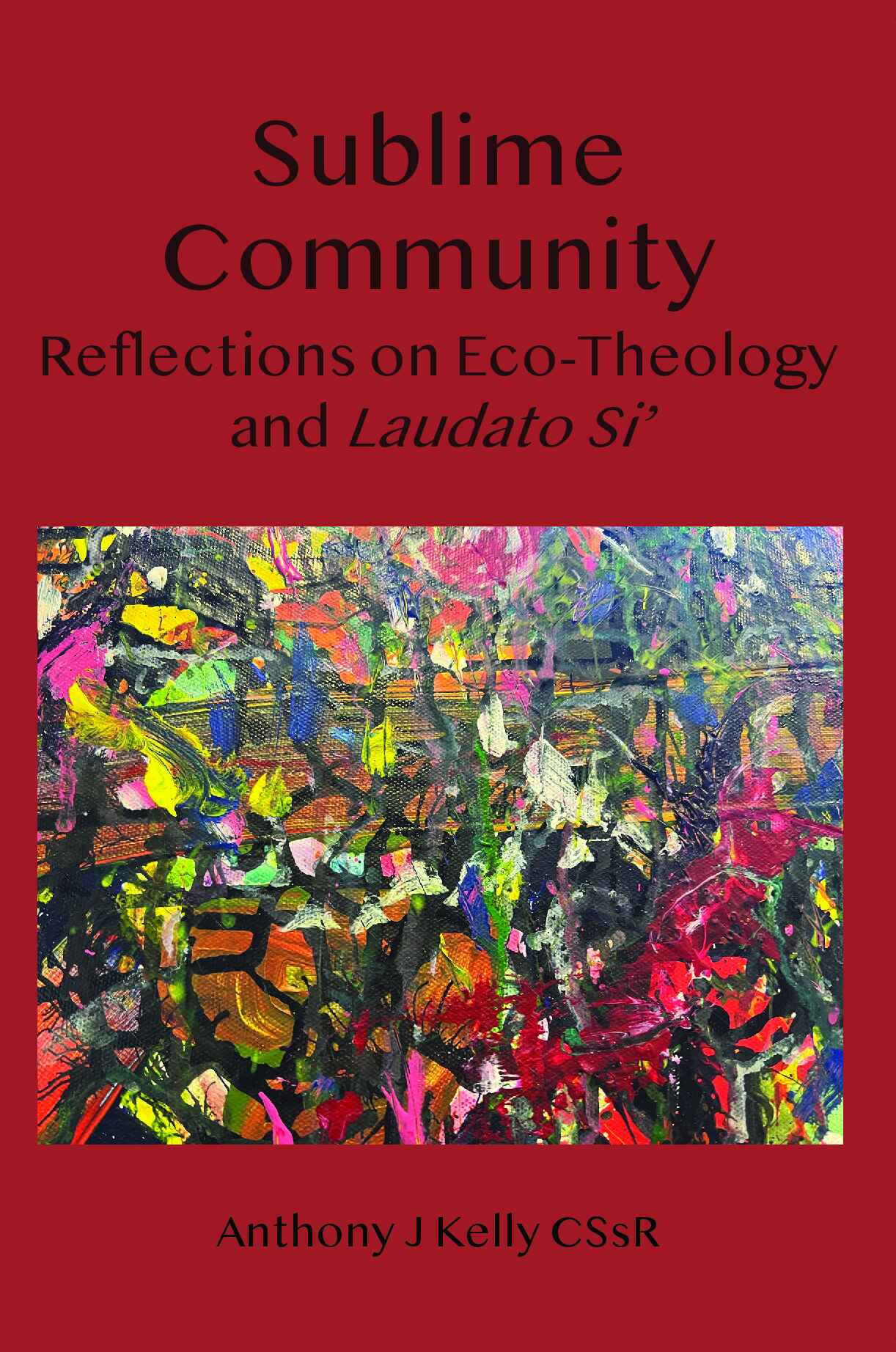
Paperback (Published)
(August 2023)
ISBN: 9781923006584
Price: $34.95
On back order
On Pentecost Sunday, 24 May 2015, when Pope Francis issued Laudato Si’: On Care for our Common Home. It broadened and deepened Catholic awareness and identity, encouraged dialogue with many sciences and disciplines while stimulating ecumenical and even interreligious collaboration and communication. This volume of essays looks at many aspects of an eco-theology and examines Pope Francis’ Encyclical Laudato Si’. As the author writes: ‘A fundamental sense of community is the first requirement of any effective ecological commitment and communion. But it is precisely on this level of community that increasing alienation has been most obvious. The distancing and disaffection of the human from nature, along with the violence and antagonism of human beings among themselves has long been the cause of alarm. Alliances have been formed along political, economic, racial, sexual, cultural, and religious lines. Political, economic, and social superstructures have evolved to serve an alienating situation; the common good is at best understood as a compromise amongst competing groups of self-interest and greed. In such a context, ecology can easily restrict its aims to environmentalism and merely landscaping areas of poisoned earth.’ ‘How might the Eucharist shape an ecological vision? It brings nature and culture together in a unique way, bringing together what is too often kept apart in referring to, say, nature and culture, person and community, creation and the Creator. ‘ ‘The Eucharist as holy communion also brings together many gifts and many forms of giving. From nature’s giving we have the grain and the grapes. From the giving expressed in human work and skill, we have the gifts of bread and wine. From the generous giving of family and friends flow the gifts of good meals and festive celebrations. From Jesus’ self-giving at the Last Supper, the disciples were given his “body and blood”, the food and drink to nourish life in him. After his resurrection, his giving continues as he breathes into his disciples his Holy Spirit. And working in and through all these gifts and kinds of giving, there is the gift of the Father who so loved the world.’
On Pentecost Sunday, 24 May 2015, when Pope Francis issued Laudato Si’: On Care for our Common Home. It broadened and deepened Catholic awareness and identity, encouraged dialogue with many sciences and disciplines while stimulating ecumenical and even interreligious collaboration and communication. This volume of essays looks at many aspects of an eco-theology and examines Pope Francis’ Encyclical Laudato Si’. As the author writes: ‘A fundamental sense of community is the first requirement of any effective ecological commitment and communion. But it is precisely on this level of community that increasing alienation has been most obvious. The distancing and disaffection of the human from nature, along with the violence and antagonism of human beings among themselves has long been the cause of alarm. Alliances have been formed along political, economic, racial, sexual, cultural, and religious lines. Political, economic, and social superstructures have evolved to serve an alienating situation; the common good is at best understood as a compromise amongst competing groups of self-interest and greed. In such a context, ecology can easily restrict its aims to environmentalism and merely landscaping areas of poisoned earth.’ ‘How might the Eucharist shape an ecological vision? It brings nature and culture together in a unique way, bringing together what is too often kept apart in referring to, say, nature and culture, person and community, creation and the Creator. ‘ ‘The Eucharist as holy communion also brings together many gifts and many forms of giving. From nature’s giving we have the grain and the grapes. From the giving expressed in human work and skill, we have the gifts of bread and wine. From the generous giving of family and friends flow the gifts of good meals and festive celebrations. From Jesus’ self-giving at the Last Supper, the disciples were given his “body and blood”, the food and drink to nourish life in him. After his resurrection, his giving continues as he breathes into his disciples his Holy Spirit. And working in and through all these gifts and kinds of giving, there is the gift of the Father who so loved the world.’
- By (author) Anthony J. Kelly
Similar Books

 A Companion to Christianity and Sport in Europe and North America (19th-21st centuries)
Volume 1: Western and Eastern Europe
 A Connecting Polemic in the Medieval Mediterranean
The Correspondence of Leo III and ʿUmar II
Volume 6





 Ars Prophetica
Theology in the Poetry of Twentieth-Century Hebrew Poets Avraham Halfi, Shin Shalom, Amir Gilboa, and T. Carmi
 As Messianism Turns to Heresy
The Regenstein Chair Lectures On Lurianic Kabbalah and Shabbatai Tzevi at Hebrew Union College - Cincinnati


 Creating the Woman in Antiquity
Proceedings of the 16th Melammu Workshop, Innsbruck, 2–3 June 2022
Volume 13
 Cultic Kisses
Fruitful Encounters Between Deities and Humans. Festschrift for Angelika Berlejung on the Occasion of Her 65th Birthday
 De/colonizing Theologies
Glocal Histories, Contemporary Challenges, Theoretical Reflections
Volume 4
 Drunk the Potion, No Whit Charmed
The Doctrine of Pure and Perfect Souls from Iamblichus to Damascius






 Extracanonical Traditions and the Holy Land
Texts, Rituals, and Material Culture in Late Antique Palestine
 Fear, Fear of God, God-Fearers
Philological and Historical Perspectives on the World of Ancient Judaism and Christianity


 Gender and Iconography in Antiquity
Femininities, Masculinities, Ambiguities, and Beyond in the Ancient Levant, Near East, and Mediterranean