
Instrumentum navis. Le àncore litiche e plumbee della Soprintendenza del Mare della Regione Siciliana
By (author) Valentina Purpura

Paperback (Published)
(March 2025)
ISBN: 9781803279374
7.99 x 10.91 inches
Price: $56.00
In stock
This study, in collaboration with the Superintendency of the Sea of the Sicilian Region, catalogs lithic, leaden, and metal anchors from Sicily’s underwater environment. It includes historical research on anchor types, navigation, and ports, and lays the foundations to create a digital map of findings using GIS for future research.
Instrumentum navis: Le ancore litiche e plumbee della Soprintendenza del Mare della Regione Siciliana is the result of a study carried out in collaboration with the Sicilian Region’s Superintendency of the Sea. It concerns the study of all the lithic, lead and metal anchors from the Sicilian underwater environment, deposited in the rooms of the Arsenal of the Royal Navy in Palermo, in the warehouse of the former Roosevelt Institute in Addaura, and in the courtyard of Palazzetto Mirto in Palermo, the headquarters of the Superintendency of the Sea. The study on the anchors was conducted through an extensive census, documentation and archive study that offered a chance to understand the numerical consistency of the property and its value. The census and cataloguing activity continued with historical research on the types of anchors over the centuries and the impact they had on navigation, routes and ports in ancient times, as well as on the birth of the underwater collection in Sicily and the creation of the Superintendency of the Sea, which has carefully and innovatively managed the entire Sicilian underwater archaeological sector over the last twenty years. For the anchors described here, and through the entry registers and ancient publications, it was possible to trace the data on the places where the anchors were found, which covered the entire coastline of Sicily, including the smaller islands, thus providing the starting point for the creation of a digital mapping of the finds through the G.I.S. (Geographic Information System) and providing a guideline for future research.
Presentazione
Premessa
Parte I: Introduzione
Le àncore in antico: verso una definizione
Le àncore litiche e plumbee: storia degli studi
Parte II: Intorno a una collezione
La Sicilia, l’archeologia subacquea e la nascita della Soprintendenza del Mare
La normativa di riferimento sui beni archeologici subacquei
Al Museo e nei depositi: la costituzione della collezione subacquea di àncore
Parte III: Catalogo
Breve introduzione al catalogo
Catalogo dei materiali:
Àncore a gravità lavorate ad un foro passante
Àncore litiche o fittili a presa e a gravità con due o tre fori passanti
Àncore a presa di legno con ceppo mobile litico
Àncore di legno a presa con ceppo fisso o mobile in piombo
Àncore di legno a presa con ceppo mobile in ferro
Contromarra di àncore di legno a presa
Ricostruzioni
Fuori catalogo:
Àncore a gravità lavorate ad un foro passante
Àncore litiche a presa e a gravità con due fori passanti
Àncore di legno a presa ceppo fisso o mobile in piombo
Àncore di ferro a presa con ceppo fisso o mobile in ferro
Parte IV: Commento al catalogo
Le rotte, i porti, le condizioni di navigazione e i ‘cimiteri’ di relitti
Il G.I.S. e la distribuzione dei ritrovamenti
Conclusioni
Ringraziamenti
Valentina Purpura e un’archeologa classica specializzata presso l’Universita di Roma ‘La Sapienza’. Si occupa fin dalla laurea in Conservazione dei Beni Culturali, conseguita all’Universita degli Studi di Palermo, di archeologia romana e subacquea e di varie tematiche ad essa collegate tra cui le rotte e il commercio in antico e, anche, di archeologia del marmo. Ha partecipato a diverse campagne di scavo e di ricerca nella penisola italiana, in Sicilia e in altre isole del Mediterraneo, alla realizzazione di mostre con enti privati e pubblici e ad attivita di didattica presso diverse scuole pubbliche della provincia di Palermo. Ha all’attivo pubblicazioni in riviste scientifiche d’alto prestigio, atti di convegno e cataloghi di mostra su tematiche inerenti all’archeologia subacquea e classica. Oggi oltre a continuare la sua ricerca come ricercatrice indipendente collabora e lavora come archeologa.
- By (author) Valentina Purpura
Similar Books


 Caesar’s Visions and Impact on the Roman Empire
Revisiting the Archaeological and Historical Record of the 40s BC
Volume 2

 Construction Processes in Historical Western Societies (5th c. BC – 10th c. AD)
Case Studies on Techniques, Models, and Costs


 Etruscan and Roman Hellenistic Anatomical ex votos
Reassessing Popular Religious Expressions in Central Italy
Volume 8




 Invisible Labour in Antiquity
Visualizing Obscure Work in the Ancient Mediterannean and West Asia
Volume 1

 Late Antique villae in the Balkans (3rd–7th c. AD): Current Research Questions and Perspectives
HAEMUS Companion to the Late Antique Balkans 1
Volume 4





 Portraying the Individual in the Roman East
Local–Imperial Entanglements in Sculpture, Mosaics, and Paintings (First–Fourth Centuries AD)
Volume 18


 Roman Copies, Collecting, and Culture in the Bay of Naples and Beyond
Papers in Honor of Eugene J. Dwyer
 Small Worlds and Relational Agencies: Local Societies in Early Medieval Iberia
Pequeños mundos y Agencias relacionales: Sociedades locales altomedievales en la Península Ibérica
 SOMA 2023: Proceedings of the 24th Symposium on Mediterranean Archaeology
Ideas that Travelled by the Sea, Udine, 2-4 February, 2023


 The Iron Age Pottery from Tell Atchana / Ancient Alalakh
A Typological and Functional Analysis
Volume 8



 Writing in the Church of the Nativity in Bethlehem
Inscription and Graffiti in a Multilingual and Multigraphic Perspective
Volume 45
 Zooarchaeology of Ancient Greek Sanctuaries in Southwestern Sicily
Faunal Analysis from Selinus and Akragas as Evidence of Differences in the Treatment of Animals for Ritual Purposes
 Alabaster
An Interdisciplinary Study of the Sources and Uses of Calcite Alabaster in Antiquity
Volume 5

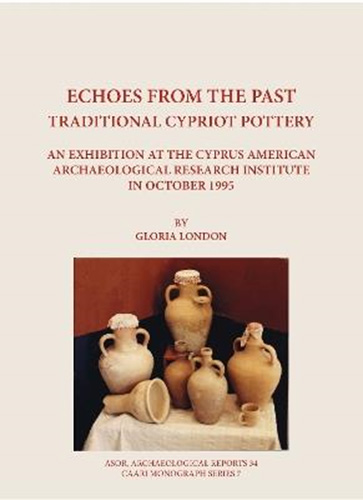 Echoes from the Past: Traditional Cypriot Pottery
An Exhibition at the Cyprus American Archaeological Research Institute in October 1995