
The Tarragona Vortex
Volume 2. Tarraco. The Ancient Heritage: Roman Hispania in Cultural Memory. 2nd c. BC - 3rd c. AD
By (author) Lawrence J. McCrank
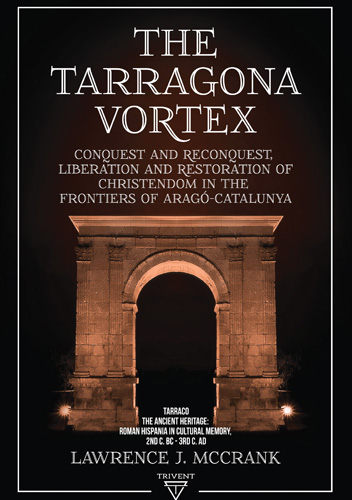
Roman Tarraco was the foundation for what came afterward at the same site in Late-Antiquity and the Islamic and Latin Christian periods, but it was an overlay on an Iberian habitation, Cissis, a coastal trading post with the Phocaean Greek partner, Kesse; a Punic counterpart on the other side of the River Tulcis; and above them all a refuge fort on the summit of Mt. Tarrakon. This history traces the amalgamation of these and their Romanization during the Punic Wars I-III, and Rome’s conversion of Tarraco into an imperial provincial capital. It was a complex of the main army base, a vast war industry, the government for the Hispania Citerior that became the Tarraconensis, a port, and trade center for the Western Mediterranean. It grew in population to become a major city with sophistication imitating everything Roman, The Hispanic Romans converted this outpost into a walled fortress and magnificent hillside municipality whose city-state encompassed the Camp de Tarragona as its territorium. Its upper tier was built into a terraformed tri-level monumental complex consisting of the temple ceremonial square, a new forum, and a circus with an amphitheater below. The hillside became its intramural residential district, and old Cissis was overbuilt with a lower forum, temple, market, and an entertainment area with a great theater, baths, gardens, and the coastal shelf consisted of a warehouse row, a manufacturing center, fishing villages and an artificial port, and waterworks for the Tulcis and harbor that demonstrated Roman advanced engineering just like the upper city showed off Roman architectural prowess and artistic tastes but also entertainment, i.e., its love of racing and games, bloodlust, and violence, and enjoyment of drama, music, and the brisque. The province would have an extensive road system, a proliferation of provincial towns, wealthy villas, and large-scale farms. The Tarraconensis was reduced in size during the re-organizations of the Empire, and the Roman Ulterior or Baetica became more urbanized as its population became more dense. The powerful northeastern capital followed the history of Rome and decline of the Empire with its interminable wars, barbarian invasions, weakened civic religion, and economic problems leading to the Visigohtic successor state in Late-Antiquity. Roman Tarraco was transformed into Tarracona but its monumental ruins and fabled history remained to be an inspiration to the medieval Restoration movement after the Islamic interlude. These are the subjects of subsequent volumes in this series.
Roman Tarraco was the foundation for what came afterward at the same site in Late-Antiquity and the Islamic and Latin Christian periods, but it was an overlay on an Iberian habitation, Cissis, a coastal trading post with the Phocaean Greek partner, Kesse; a Punic counterpart on the other side of the River Tulcis; and above them all a refuge fort on the summit of Mt. Tarrakon. This history traces the amalgamation of these and their Romanization during the Punic Wars I-III, and Rome’s conversion of Tarraco into an imperial provincial capital. It was a complex of the main army base, a vast war industry, the government for the Hispania Citerior that became the Tarraconensis, a port, and trade center for the Western Mediterranean. It grew in population to become a major city with sophistication imitating everything Roman, The Hispanic Romans converted this outpost into a walled fortress and magnificent hillside municipality whose city-state encompassed the Camp de Tarragona as its territorium. Its upper tier was built into a terraformed tri-level monumental complex consisting of the temple ceremonial square, a new forum, and a circus with an amphitheater below. The hillside became its intramural residential district, and old Cissis was overbuilt with a lower forum, temple, market, and an entertainment area with a great theater, baths, gardens, and the coastal shelf consisted of a warehouse row, a manufacturing center, fishing villages and an artificial port, and waterworks for the Tulcis and harbor that demonstrated Roman advanced engineering just like the upper city showed off Roman architectural prowess and artistic tastes but also entertainment, i.e., its love of racing and games, bloodlust, and violence, and enjoyment of drama, music, and the brisque. The province would have an extensive road system, a proliferation of provincial towns, wealthy villas, and large-scale farms. The Tarraconensis was reduced in size during the re-organizations of the Empire, and the Roman Ulterior or Baetica became more urbanized as its population became more dense. The powerful northeastern capital followed the history of Rome and decline of the Empire with its interminable wars, barbarian invasions, weakened civic religion, and economic problems leading to the Visigohtic successor state in Late-Antiquity. Roman Tarraco was transformed into Tarracona but its monumental ruins and fabled history remained to be an inspiration to the medieval Restoration movement after the Islamic interlude. These are the subjects of subsequent volumes in this series.
- By (author) Lawrence J. McCrank
Similar Books


 Caesar’s Visions and Impact on the Roman Empire
Revisiting the Archaeological and Historical Record of the 40s BC
Volume 2

 Construction Processes in Historical Western Societies (5th c. BC – 10th c. AD)
Case Studies on Techniques, Models, and Costs


 Etruscan and Roman Hellenistic Anatomical ex votos
Reassessing Popular Religious Expressions in Central Italy
Volume 8




 Invisible Labour in Antiquity
Visualizing Obscure Work in the Ancient Mediterannean and West Asia
Volume 1

 Late Antique villae in the Balkans (3rd–7th c. AD): Current Research Questions and Perspectives
HAEMUS Companion to the Late Antique Balkans 1
Volume 4





 Portraying the Individual in the Roman East
Local–Imperial Entanglements in Sculpture, Mosaics, and Paintings (First–Fourth Centuries AD)
Volume 18


 Roman Copies, Collecting, and Culture in the Bay of Naples and Beyond
Papers in Honor of Eugene J. Dwyer
 Small Worlds and Relational Agencies: Local Societies in Early Medieval Iberia
Pequeños mundos y Agencias relacionales: Sociedades locales altomedievales en la Península Ibérica
 SOMA 2023: Proceedings of the 24th Symposium on Mediterranean Archaeology
Ideas that Travelled by the Sea, Udine, 2-4 February, 2023


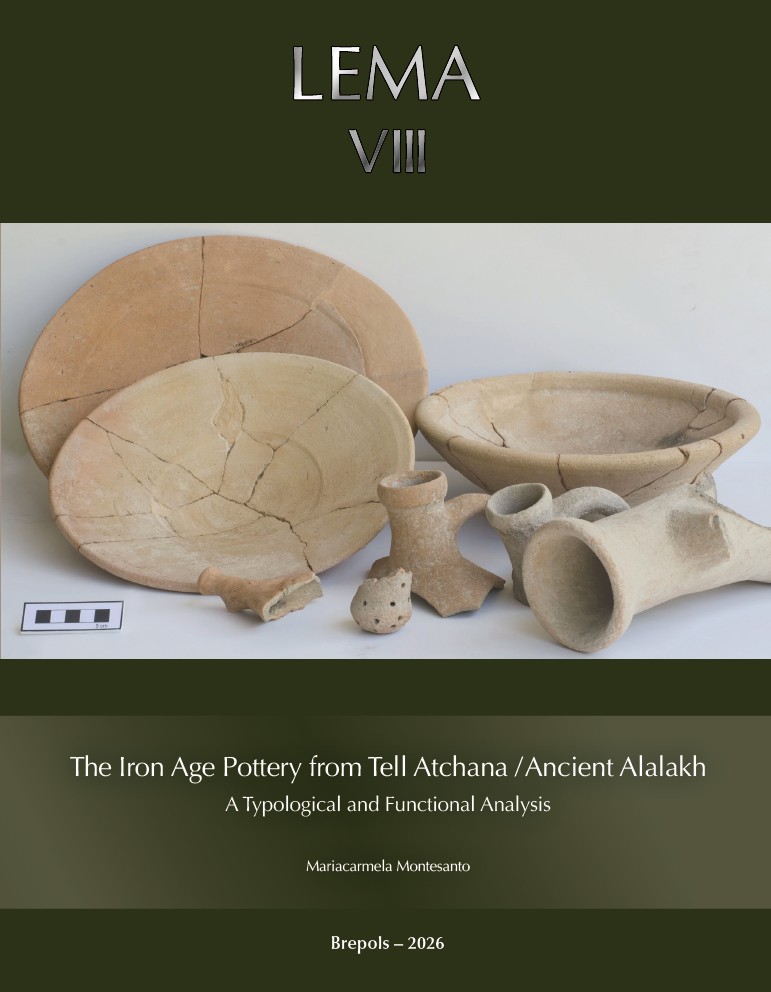 The Iron Age Pottery from Tell Atchana / Ancient Alalakh
A Typological and Functional Analysis
Volume 8
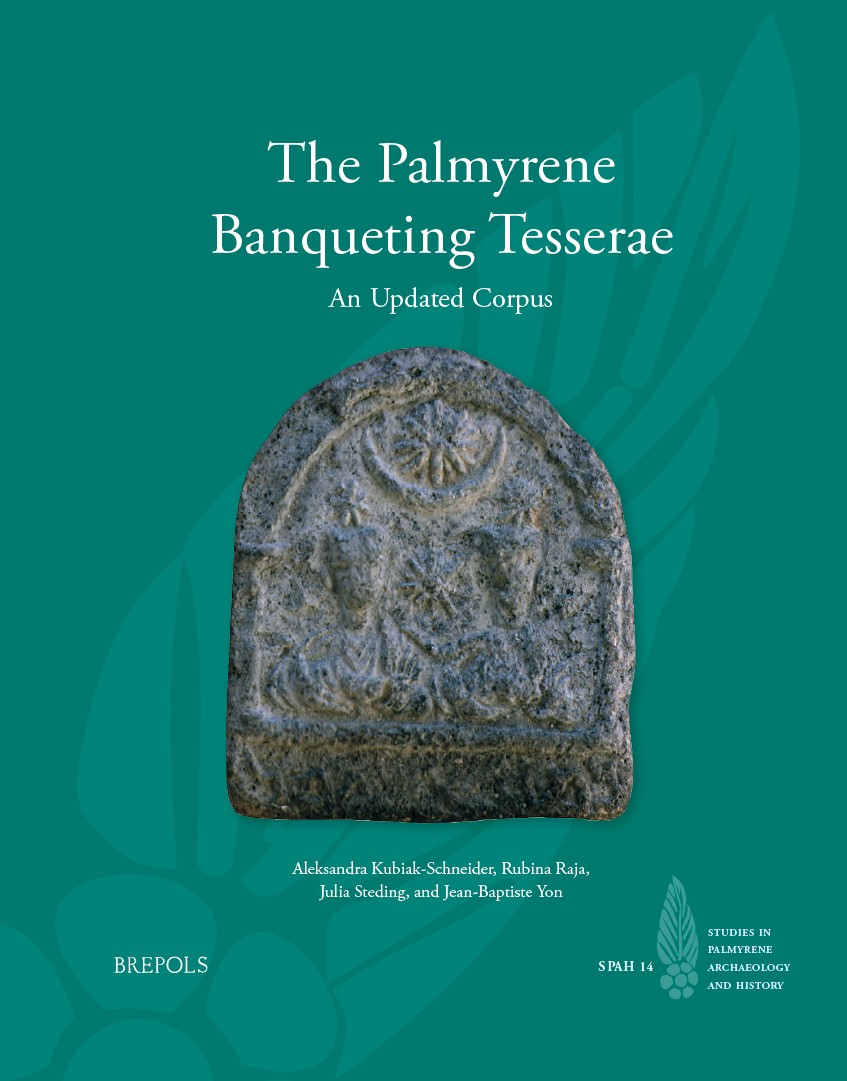


 Writing in the Church of the Nativity in Bethlehem
Inscription and Graffiti in a Multilingual and Multigraphic Perspective
Volume 45
 Zooarchaeology of Ancient Greek Sanctuaries in Southwestern Sicily
Faunal Analysis from Selinus and Akragas as Evidence of Differences in the Treatment of Animals for Ritual Purposes
 Alabaster
An Interdisciplinary Study of the Sources and Uses of Calcite Alabaster in Antiquity
Volume 5

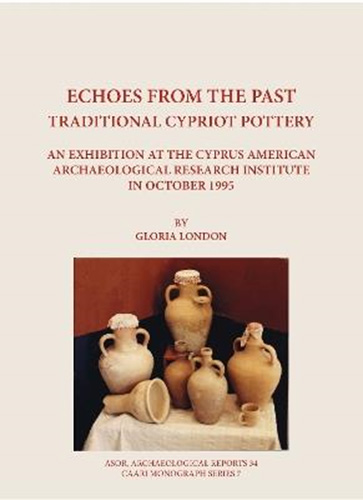 Echoes from the Past: Traditional Cypriot Pottery
An Exhibition at the Cyprus American Archaeological Research Institute in October 1995