
The Whole Body of Cookery Dissected (1682)

The restoration of King Charles II in 1660 saw many chefs and servants of the returning nobility back at their stoves cooking as if the Civil War had never occurred. William Rabisha was ‘Master Cook to many honourable Families before and since the wars began’; ‘His Broths, Pottages, to the taste and sight, would Esau-like, make some to sell their right.’ Although little is known about his life and career, he was evidently brought up in the service of a noble household, which ‘spared no cost or charge’ in his instruction and education. He left Britain during the Commonwealth and evidently worked at the Royal court while it was in exile. The text is a remarkable statement of the art of cookery as it was in the 1660s, and proved to be surprisingly influential over a very long period: there are examples of wholesale borrowing from his recipes as late as the middle of the eighteenth century. Of course, he himself took advantage of recipes from earlier authors as well as using his book for conservative, revivalist ends. Hence his recycling of a treatise on carving that started its life in the fifteenth century, and his printing of an order of feasting from that same period. All this was so ‘that thou maist see what Liberality and Hospitality there was in Antient times amongst our Progenitors: Thus hoping to see Liberality flourish amongst us once more, as in old time’. Along with Robert May, Rabisha was important in the development of seventeenth-century English cuisine. Their professional lives and publications reflected their politico-religious affinities and resulted in what Stephen Mennell calls ‘the “courtly” genre of cooking and recipe selection which catered to an affulent audience as evidenced by the use of expensive ingredients, elaborate preparations, and increased reliance on sauces, and which was often influenced by continental cookery. The book went through five editions and this is a facsimile of the edition printed by George Calvert at the Half-moon, and Ralph Simpson at the Harp, in St. Paul’s Churchyard, London, 1682. The work’s full title is The whole body of cookery dissected, taught and fully manifested, methodically, artificially, and according to the best tradition of the English, French, Italian, Dutch, &c., or, A sympathy of all varieties in natural compounds in that mystey.
Similar Books


 Balthasar Caymox of Nuremberg
Early Modern German Print Publishers: Popular Prints of the Seventeenth Century
 Beyond Sovereign Courts
Agents and Practices in Early Modern Spanish and Habsburg Diplomacy
Volume 3

 Circulation, Use, Impact
The Consumption of Architectural Books in the Early Modern Eastern Adriatic
Volume 1

 Councils, Conflicts, Correspondence
Urban Diplomacy in Reval (Tallinn) and Lübeck (c. 1470–1570)
Volume 67


 Innovationes Lovanienses: Arts, Law and Theology at the University of Louvain (1425–1797)
Studium Lovaniense: Learning across Borders, 2
Volume 18
 Legal Visuality
Exegesis, Ambiguity, and Dissimulation of the Donation of Constantine in the Early Modern Period

 Naples as Laboratory / Laboratorium Neapel
Style Options, Artistic Rivalry and Self Fashioning in Neapolitan Baroque Painting / Plurale Stilbildung, Kunstlerkonkurrenz und Self Fashioning in der neapolitanischen Barockmalerei
 Power and Women in Southeast and Central Europe in Late Medieval and Early Modern Period (1300-1600)
Volume 10




 Staging the Spectacle of Majesty
Ceremonial, Courtly Space, and Collecting under the Spanish Habsburgs
Volume 9
 Students, Scholars and Their Books at the University of Louvain (1425-1797)
Studium Lovaniense: Learning across Borders, 1
Volume 17


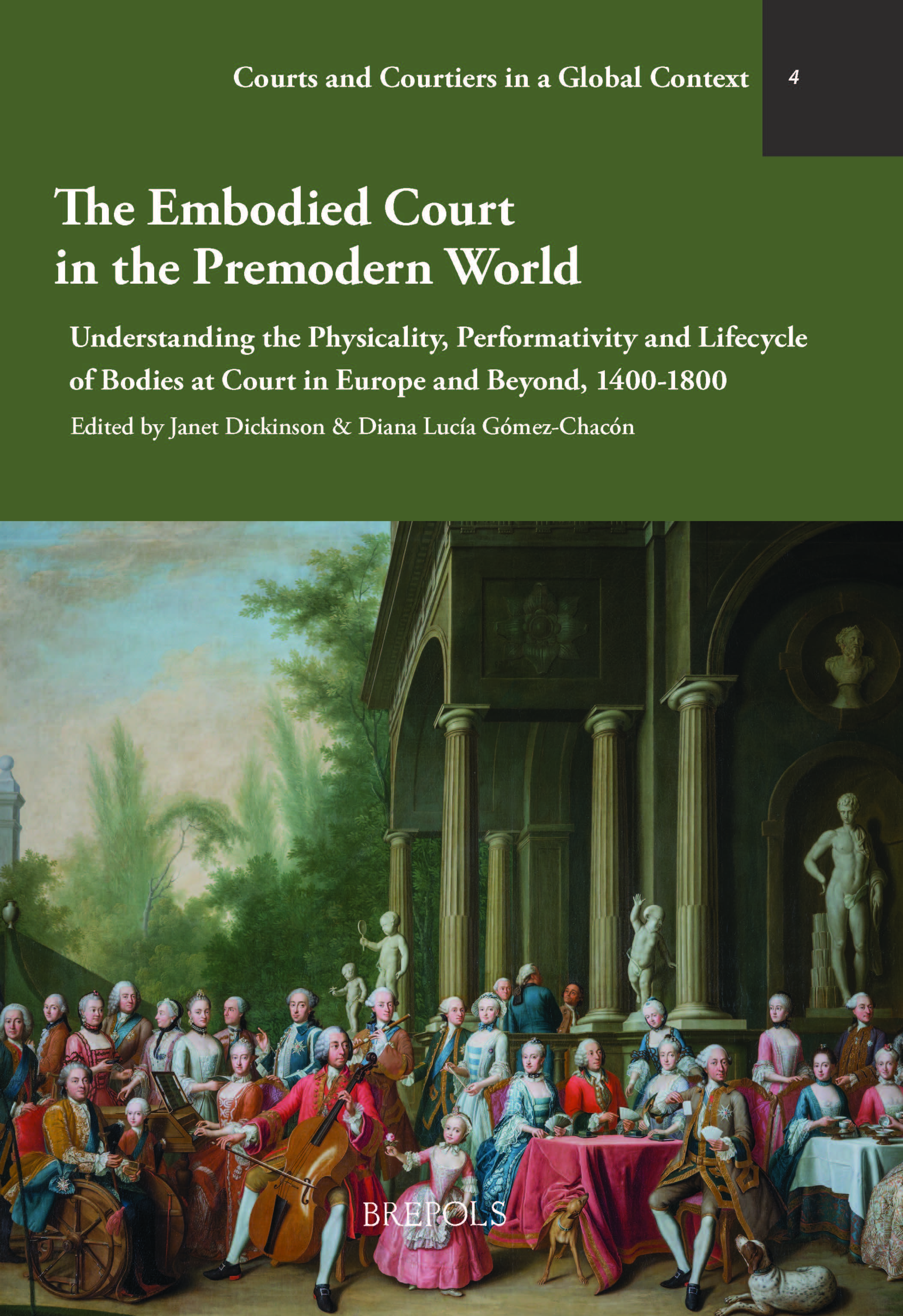 The Embodied Court in the Premodern World
Understanding the Physicality, Performativity and Lifecycle of Bodies at Court in Europe and Beyond, 1400-1800
Volume 4

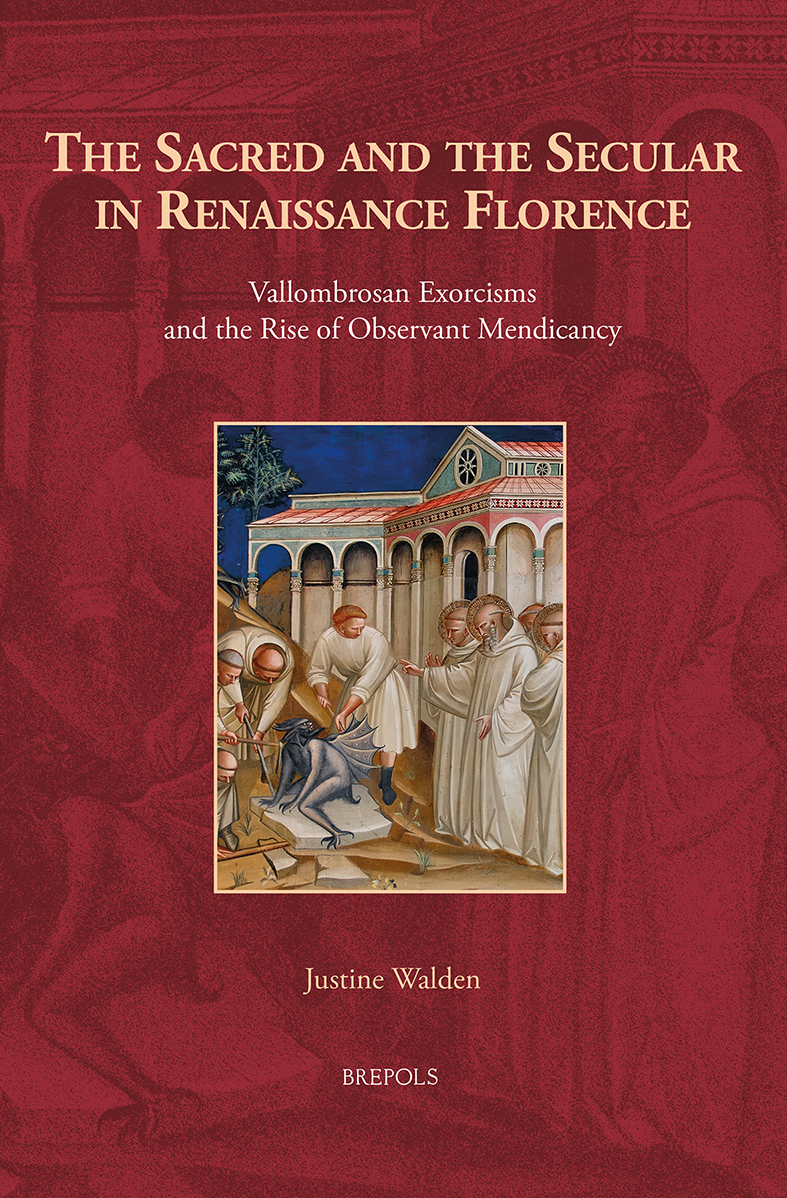 The Sacred and the Secular in Renaissance Florence
Vallombrosan Exorcisms and the Rise of Observant Mendicancy
Volume 31
 Tradition, Interpretation, and Change
Developments in the Liturgy of Medieval and Early Modern Ashkenaz


 À la recherche des normes de traduction
Textes spécialisés dans le monde hispanophone et francophone (1450–1850)

 Briefe einer Fürstin aus dem Dreißigjährigen Krieg
Die Korrespondenz der Kaiserin Maria aus den Jahren 1629 bis 1645