
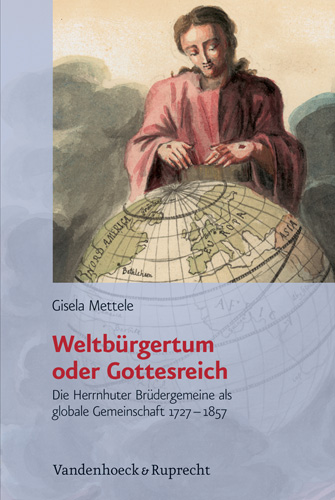
Weltbürgertum oder Gottesreich
Die Herrnhuter Brüdergemeine als globale Gemeinschaft 1727–1857
By (author) Gisela Mettele
Hardback (Out of print)
(August 2009)
ISBN: 9783525368442
6.34 x 9.33 inches
Price: $75.00
On back order
Wie die Herrnhuter Brüdergemeine zu einer weltweiten Organisation wuchs.
English summary: Using the example of the Moravian Church to examine the role that concepts of self and space play in creating a global community, Mettele traces the elaborate network of organization, communication, and collective memory that nurtured ties between settlements and missions spread around the globe. The Moravians understood themselves as a universal fellowship whose essential principle was that of the lifelong journey – a principle they applied both spiritually and literally. Soon after its foundation in 1727 in Saxony, the group organized extensive travel and missionary activities. They founded new settlements throughout Europe and North America, and set up mission stations in places as remote as Greenland, the West Indies, South Africa, and the Nicobar Islands. Moravians’ sense of communal identity was sustained not only by close institutional links between distant settlements and the group’s leadership in Saxony, but also by shared lifestyle, rituals and festivities, commonly read periodicals and devotional literature, and the regular circulation of reports from settlements and missions abroad. Over the course of the nineteenth century, the bonds linking the Moravian settlements nonetheless began to weaken despite technical advances in communication and transportation. Shifting identities and the development of rival (national) loyalties ultimately undermined the Moravians’ determination to maintain their identity as members of a global community. German text. German description: Die Herrnhuter Brudergemeine entfaltete schon bald nach ihrer Grundung 1727 eine ausgedehnte Reise- und Missionstatigkeit. Herrnhuter Prediger wanderten durch ganz Europa und bauten ein Netz von Kontakten mit Freunden und Gleichgesinnten auf. Sie grundeten neue Siedlungen und errichteten zahlreiche Missionsstationen, auch in Ubersee. Enge organisatorische Bindungen hielten diese weltweite Gemeinschaft zusammen, unterstutzt durch einen regelhaften, gemeinsamen Lebensrhythmus und einen intensiven gegenseitigen Austausch. Die Prinzipien der Organisation, die Praktiken der Interaktion und Kommunikation innerhalb der Gemeinschaft untersucht Gisela Mettele in ihrer umfassenden Studie und richtet dabei ihren Blick auch auf das 19. Jahrhundert, in dem die globalen Bindungen der Brudergemeine schwacher wurden.
- By (author) Gisela Mettele
Other Titles in this Series
 Wohlfahrtsgesellschaft und Wohlfahrtsstaat
Bürgerliche Sozialreform und Welfare State Building in den USA und in Deutschland 1880–1940



 Ethnische Gewissheiten
Die Ordnung des Regionalen im bayerischen Schwaben vom Kaiserreich bis zum NS-Regime
 Bürgerliche Netzwerke
Städtisches Vereinswesen als soziale Struktur – Halle im Deutschen Kaiserreich

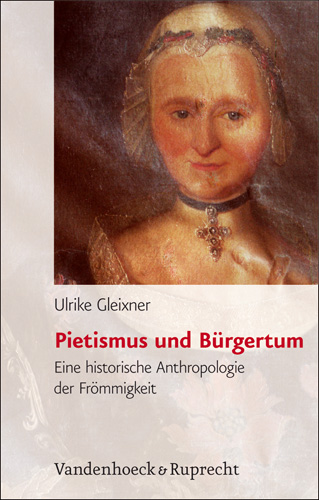 Pietismus und Bürgertum
Eine historische Anthropologie der Frömmigkeit, Württemberg 17.–19. Jahrhundert
 Jude oder preußischer Bürger?
Die Emanzipationsdebatte im Spannungsfeld von Regierungspolitik, Religion, Bürgerlichkeit und Öffentlichkeit (1780–1847)
 Ludwig Andreas Jordan und das Pfälzer Weinbürgertum
Bürgerliche Lebenswelt und liberale Politik im 19. Jahrhundert
 Liberale Honoratioren im politischen Massenmarkt
Parteiorganisation und Wählermobilisierung in Deutschland und Großbritannien, 1867–1914
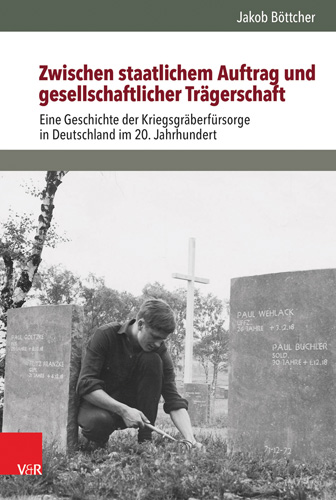 Zwischen staatlichem Auftrag und gesellschaftlicher Trägerschaft
Eine Geschichte der Kriegsgräberfürsorge in Deutschland im 20. Jahrhundert
 Auf der Suche nach der neuen Universität
Die Entstehung der »Reformuniversitäten« Konstanz und Bielefeld in den 1960er Jahren

 Bürgerliches Leben zwischen literarischem Markt und christlicher Norm
Ottilie Wildermuth (1817–1877) als Erfolgsschriftstellerin
 Die Familie Bondi und das »Jüdische«
Beziehungsgeschichte unter dem bürgerlichen Wertehimmel, 1790–1870



Similar Books

 A Companion to Christianity and Sport in Europe and North America (19th-21st centuries)
Volume 1: Western and Eastern Europe
 A Connecting Polemic in the Medieval Mediterranean
The Correspondence of Leo III and ʿUmar II
Volume 6





 Ars Prophetica
Theology in the Poetry of Twentieth-Century Hebrew Poets Avraham Halfi, Shin Shalom, Amir Gilboa, and T. Carmi
 As Messianism Turns to Heresy
The Regenstein Chair Lectures On Lurianic Kabbalah and Shabbatai Tzevi at Hebrew Union College - Cincinnati


 Creating the Woman in Antiquity
Proceedings of the 16th Melammu Workshop, Innsbruck, 2–3 June 2022
Volume 13
 Cultic Kisses
Fruitful Encounters Between Deities and Humans. Festschrift for Angelika Berlejung on the Occasion of Her 65th Birthday
 De/colonizing Theologies
Glocal Histories, Contemporary Challenges, Theoretical Reflections
Volume 4
 Drunk the Potion, No Whit Charmed
The Doctrine of Pure and Perfect Souls from Iamblichus to Damascius






 Extracanonical Traditions and the Holy Land
Texts, Rituals, and Material Culture in Late Antique Palestine
 Fear, Fear of God, God-Fearers
Philological and Historical Perspectives on the World of Ancient Judaism and Christianity


 Gender and Iconography in Antiquity
Femininities, Masculinities, Ambiguities, and Beyond in the Ancient Levant, Near East, and Mediterranean