
Bactrian Personal Names
Iranisches Personennamenbuch Band IIMitteliranische Personennamen Faszikel 7
by Nicholas Sims-Williams

Paperback (Published)
(September 2010)
ISBN: 9783700168416
Price: $77.00
On back order
Bactrian was the principal language of administration in what is now Afghanistan from the time of the Kushan empire (1st to 3rd centuries C.E.) until the early Islamic period. The surviving Bactrian inscriptions and documents, coins and countermarks, seals and sealings attest a large number of personal names, whose various linguistic origins – Persian, Sogdian, Indian, Hunnic, Turkish, and of course native Bactrian ? mirror the variety of peoples and religions which combined to form the unique culture of this region during the 1st millennium C.E. In this comprehensive study, Nicholas Sims-Williams analyses the etymology, structure and meaning of the names themselves and where possible identifies the persons who bore them. It will be of interest both to specialists in onomastics and to linguists and historians concerned with the languages and culture of pre-Islamic Afghanistan and neighbouring regions.
- By (author) Nicholas Sims-Williams
Other Titles in this Series
 Iranisches Personennamenbuch Band VII/Faszikel 2
Iranische Personennamen in der Hebraischen Bibel
Volume 14
 Iranisches Personennamenbuch Band II/Faszikel 5
Personennamen in Parthischen Epigraphischen Quellen
Volume 15

 Multilingualism and History of Knowledge, Volume I
Buddhism among the Iranian Peoples of Central Asia
Volume 11
 Multilingualism and History of Knowledge, Volume II
Linguistic Developments along the Silkroad: Archaism and Innovation in Tocharian
Volume 12
Similar Books


 Cities through Time
Glimpses into Urbanity and Community in Mediaeval to Modern West Asia and Egypt
Volume 1
 Cuneiform Artefacts from Archaeological Contexts: New Research on Ancient Iraq
Proceedings of a Conference Held at the Bavarian Academy of Sciences and Humanities, July 4–5, 2024
Volume 2
 Des mots aux actes
Traduction épistémique et littéraire. Nouvelles tendances en histoire et didactique
Volume 15


 Global Gulf
Geo-Economic, Geo-Political, and Geo-Technological Transformation in Saudi Arabia, the United Arab Emirates, and Qatar


 Ismail Hakki Bursevi’s translation of and commentary on Fusus al-Hikam By Muhyiddin Ibn ‘Arabi
Volumes 1-4


 Monastic Manuscripts from the Eastern Mediterranean (Sinai, Jerusalem, Antioch)
Production, Use, and Contexts


 Punning in Odd or Elegant Constructions in Jeremiah
The Convergence of Linguistics, Rhetoric, and Textuality in the Hebrew Text of Jeremiah
 Qatar’s Societal Security
Towards the Inclusive National Concept of ‘Baladna’ Identity, Migration and External Threats Since 2017


 The Biblical Tale of Judah and Tamar in Fourteenth-Century Iran
A Judeo-Persian Versified Account by Shāhīn with Scholarly Edition, Annotated Translation and Persian Transliteration
Volume 94, 951
 The Discourse of Rites
Shaping and Reshaping the (Counter-)Priestly Rituals Conducted Outside the Tabernacle



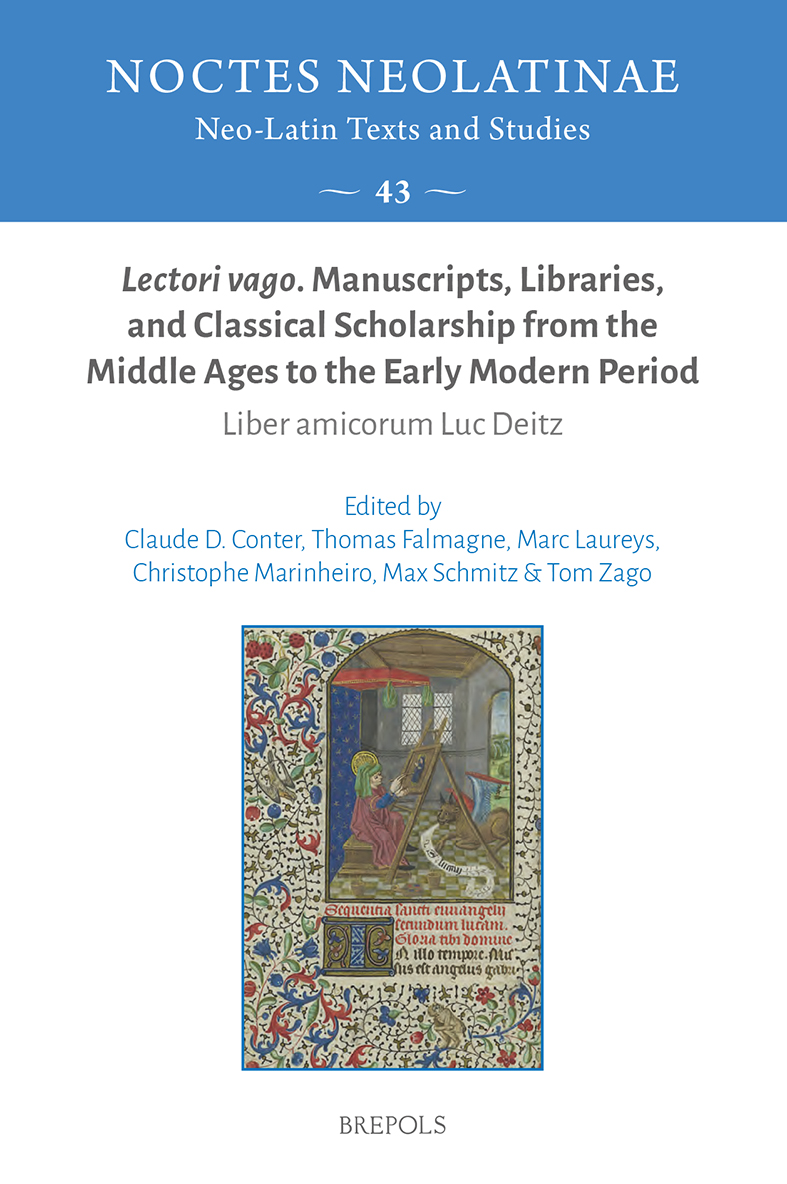 Lectori vago. Manuscripts, Libraries, and Classical Scholarship from the Middle Ages to the Early Modern Period
Liber amicorum Luc Deitz
Volume 43


 »Ein elend-schönes Land«
Gattung und Gedächtnis in Lea Goldbergs hebräischer Literatur. Aus dem Hebräischen von Rainer Wenzel

