
The Eastern part of Mons Oppius in Rome
The Sanctuary of Isis et Serapis in Regio III, the Temples of Minerva Medica, Fortuna Virgo and Dea Syria, and the Horti of Maecenas
by Christina Haeuber

The research on “The Eastern Part of the Mons Oppius in Rome” presented here has been conducted since March 1981 in close cooperation with the Musei Capitolini, the Sovraintendenza ai Beni Culturali of the Comune di Roma, now Roma Capitale, and other partners. It deals with the part of the Esquiline which in antiquity was occupied by a number of sanctuaries and the adjacent Horti of Maecenas. Since her first publications 20 years ago, the author has studied the archaeological finds from this area in depth, but in order to understand their historical contexts it became necessary to consider the topography of a much wider area. The results therefore include contributions to the ‘Esquiline Venus’, to the bust of Commodus as Hercules Romanus and the dating of the ‘Esquiline Group’, as well as a reconstruction of the Servian city wall between the ‘Auditorium of Maecenas’ and the Porta Capena. The accompanying maps, drawn by the author, are based on photogrammetric data of Roma Capitale which were generously provided by the Sovraintendente ai Beni Culturali of Roma Capitale.
Methodological approach
TOPOGRAPHY AND EXCAVATIONS: A Topographical Survey
Further results
Further hypotheses, which cannot be proved so far
Final remarks: seven major results of this study
Appendices
DISCUSSION OF SELECTED ARCHAEOLOGICALFINDS.
Chrystina Hauber studied drawing (Werkkunstschule Krefeld), art, theology and geography (Universitat Duisburg), and classical archaeology, art history and ancient history (Universitat zu Koln). She has published widely on ancient sculpture, the topography of ancient Rome and Archaeological Information Systems (AIS). Among her research projects are FORTVNA and The AIS ROMA. Since December 2010 she has been a researcher and project director at the Ludwig-Maximilians-Universitat (LMU) Munchen, Department of Geography.
- By (author) Chrystina Haeuber
Other Titles in this Series

 Il Campidoglio dalle Origini alla Fine dell’Antichita
La Carta Archeologica 1e 2. I Temi di Ricerca
Volume 26


 Dioniso Trionfatore
Percorsi ed interpretazioni del mito del trionfo indiano nelle fonti e nell'iconografia antica
Volume 21
 Ad summas tegulas
Untersuchungen zu vielgeschossigen Gebaeudebloecken mit Wohneinheiten und Insulae im Kaiserzeitlichen Rom
Volume 11

 Der Fidestempel auf dem Kapitol in Rom
Und seine Ausstattung. Ein Beitrag zu den Ausgrabungen an der Via del Mare und um das Kapitol 1926-1943
Volume 2


 Statuen des Strengen Stils in Rom
Verwendung und Wertung eines Griechischen Stils im roemischen Kontext
Volume 16
 Gli edifici dello spettacolo a Roma
Giornata di studi in ricordo di Paola Ciancio Rossetto
Volume 32

 Tuscanicae dispositiones sive opera dorica
Architetture doricizzanti in Italia centro-meridionale
Volume 29
 Il Crepuscolo degli dei d’Achaia
Religione e culti in Arcadia, Elide, laconia e messenia dalla conquista romana ad eta flavia
Volume 17


 Hermes-Thoth e Dioniso redentore
Dall'Egitto dei Tolemei al tardo-antico:Studi sul mosaico della Casa di Aion a Nea Paphos
Volume 28


Similar Books


 Caesar’s Visions and Impact on the Roman Empire
Revisiting the Archaeological and Historical Record of the 40s BC
Volume 2

 Construction Processes in Historical Western Societies (5th c. BC – 10th c. AD)
Case Studies on Techniques, Models, and Costs


 Etruscan and Roman Hellenistic Anatomical ex votos
Reassessing Popular Religious Expressions in Central Italy
Volume 8




 Invisible Labour in Antiquity
Visualizing Obscure Work in the Ancient Mediterannean and West Asia
Volume 1

 Late Antique villae in the Balkans (3rd–7th c. AD): Current Research Questions and Perspectives
HAEMUS Companion to the Late Antique Balkans 1
Volume 4





 Portraying the Individual in the Roman East
Local–Imperial Entanglements in Sculpture, Mosaics, and Paintings (First–Fourth Centuries AD)
Volume 18


 Roman Copies, Collecting, and Culture in the Bay of Naples and Beyond
Papers in Honor of Eugene J. Dwyer
 Small Worlds and Relational Agencies: Local Societies in Early Medieval Iberia
Pequeños mundos y Agencias relacionales: Sociedades locales altomedievales en la Península Ibérica
 SOMA 2023: Proceedings of the 24th Symposium on Mediterranean Archaeology
Ideas that Travelled by the Sea, Udine, 2-4 February, 2023


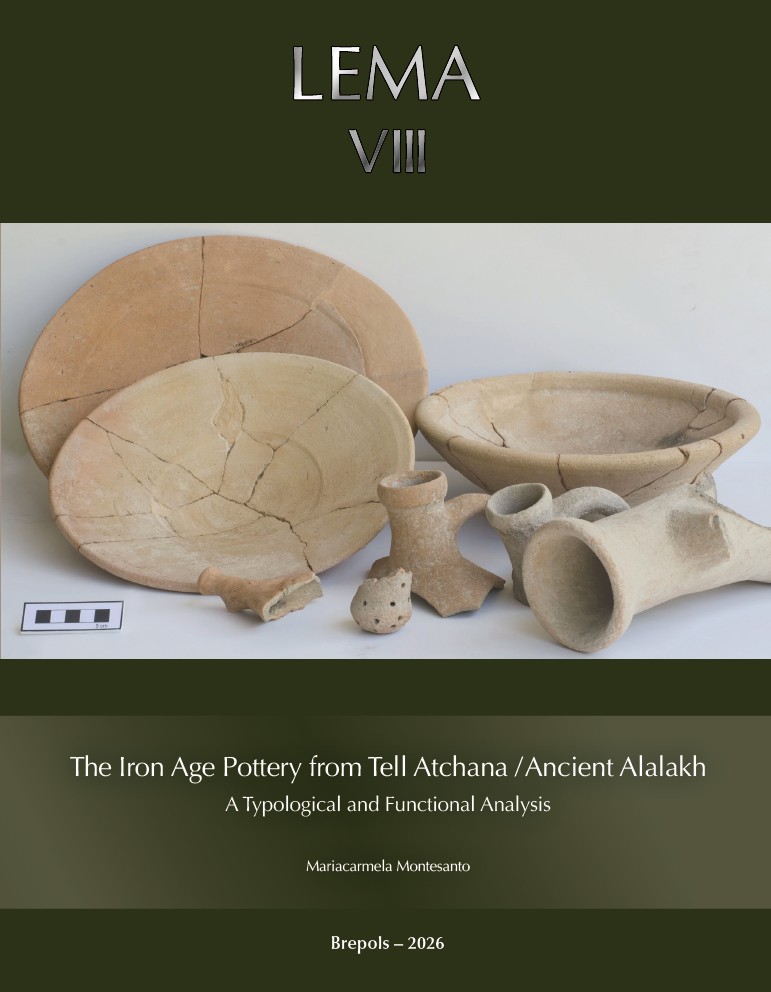 The Iron Age Pottery from Tell Atchana / Ancient Alalakh
A Typological and Functional Analysis
Volume 8
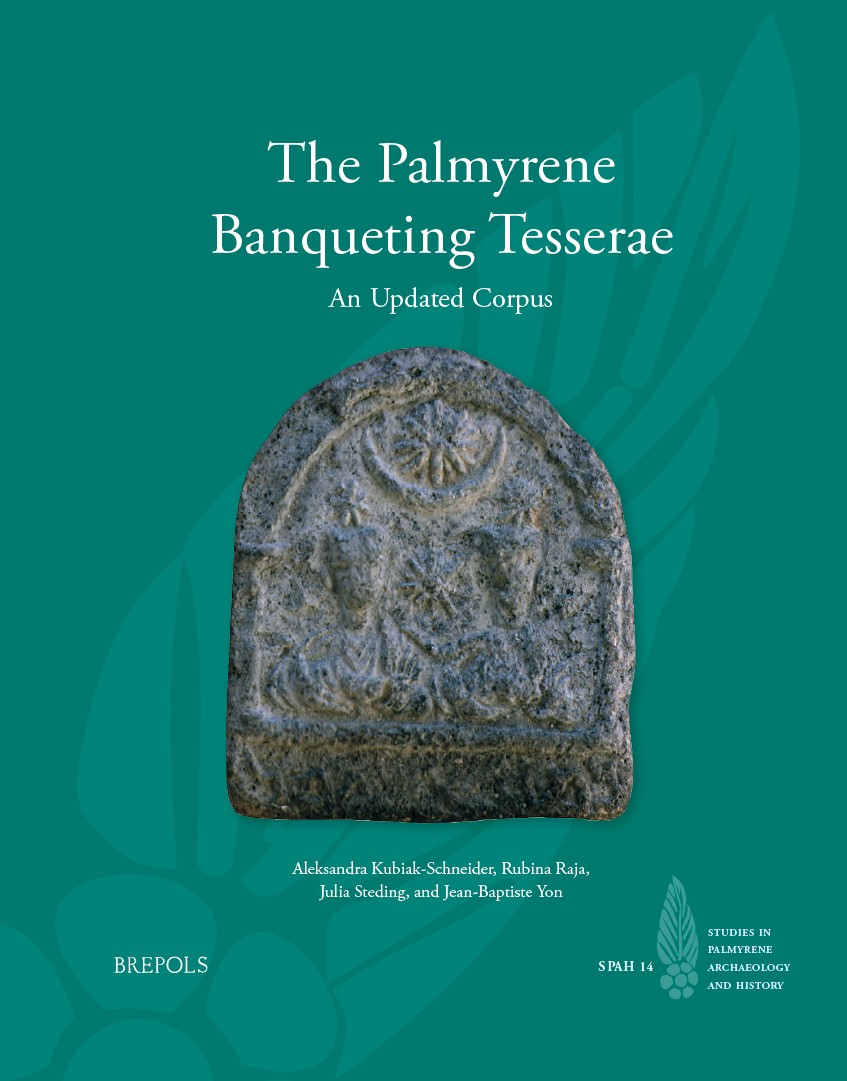


 Writing in the Church of the Nativity in Bethlehem
Inscription and Graffiti in a Multilingual and Multigraphic Perspective
Volume 45
 Zooarchaeology of Ancient Greek Sanctuaries in Southwestern Sicily
Faunal Analysis from Selinus and Akragas as Evidence of Differences in the Treatment of Animals for Ritual Purposes
 Alabaster
An Interdisciplinary Study of the Sources and Uses of Calcite Alabaster in Antiquity
Volume 5

 Echoes from the Past: Traditional Cypriot Pottery
An Exhibition at the Cyprus American Archaeological Research Institute in October 1995