
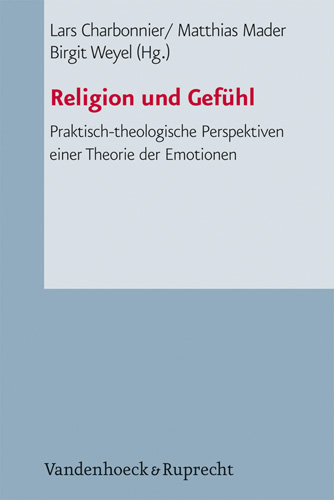
Religion und Gefühl
Praktisch-theologische Perspektiven einer Theorie der Emotionen
Contributions by Roderich Barth Contributions by Sabine A. Döring Contributions by Volker Gerhardt Contributions by Hans-Günter Heimbrock Contributions by Elisabeth Gräb-Schmidt Contributions by Dietrich Korsch Contributions by Andreas Feldtkeller Contributions by Hubert Knoblauch Contributions by Georg Northoff Contributions by Martina Kumlehn Contributions by Martin Kumlehn Contributions by Jan Hermelink Contributions by Thomas Schlag Contributions by Albrecht Grözinger Contributions by Kristian Fechtner Contributions by Hans-Martin Gutmann Contributions by Rolf Schieder Contributions by Frank Thomas Brinkmann Contributions by Jörg Herrmann Contributions by Jörg Metelmann Contributions by Kristin Merle Contributions by Ursula Roth Contributions by Friedrich Schweitzer Contributions by Anja Berninger Contributions by Regine Herbrik Contributions by Annette Haußmann Edited by Lars Charbonnier Edited by Birgit Weyel Edited by Matthias Mader
Paperback (Published)
(September 2013)
ISBN: 9783525624289
6.1 x 9.13 inches
Price: $138.00
In stock
This book documents different empirical and non-empirical attempts to theorize emotion. It is asked whether there are any emotions and feelings that are in themselves religious? If this is the case, in what way do they differ from non-religious emotions and feelings? What is the relation between a religious idea and the emotion that is connected to it? Are ideas antecedent or do feelings come first? Which ideas work as triggers of which particular religious affections? German text.
English summary: Emotionality booms. Presently feelings and emotions play a major role in many scientific fields. The same is true for contemporary endeavours to discern and describe religious phenomena within religious studies. Theology has, however, only little to offer to an interdisciplinary theory of emotion. There are few classic theological approaches to the topic of religious feelings because past and contemporary theological reflection all too often restricts itself to cognitive concepts of religion. Religion is mostly seen as an individual’s rational way of meaning-making in order to find guidelines to his or her actions. Thereby important aspects of religious practise are ignored. This book documents different empirical and non-empirical attempts to theorize emotion. It is asked whether there are any emotions and feelings that are in themselves religious? If this is the case, in what way do they differ from non-religious emotions and feelings? What is the relation between a religious idea and the emotion that is connected to it? Are ideas antecedent or do feelings come first? Which ideas work as triggers of which particular religious affections? German description: Gefuhle haben Konjunktur. Gefuhle und Emotionen bilden ein Querschnittsthema, das in vielen Wissenschaften gegenwartig eine grosse Rolle spielt. Das gilt auch fur die Wahrnehmung und Beschreibung der Religion. Im Blick auf die Religion gibt es kaum ein Phanomen von gegenwartig grosser Beachtung, das nicht durch eine herausragende Bedeutung der Dimension der Gefuhle gekennzeichnet ist. Dem grossen Stellenwert, den Gefuhle in den Religionen und offentlichen Debatten uber Religion haben, steht auf theologischer Seite ein Theoriedefizit entgegen. Zwar gibt es einzelne Ansatze, das Gefuhlsthema aufzugreifen, aber nach wie vor dominieren Konzepte, die die kognitive Dimension der Religion im Sinne eines individuellen reflexiven Deutungshandelns in den Mittelpunkt stellen. Damit geraten jedoch zentrale Aspekte religioser Praxis wie die Gefuhlsdimension in der Theologie aus dem Blick. Das vorliegende Buch will daher zur Thematisierung des Gefuhls beitragen, indem es zentrale Fragen zu klaren versucht: Sind ‘religiose Gefuhle’ Gefuhle sui generis und damit prinzipiell von anderen Gefuhlen zu unterscheiden sind? In welchem Verhaltnis stehen religiose Inhalte und die Gefuhle, die sie begleiten? Sind die Inhalte den Gefuhlen nachgeordnet oder erzeugen die Inhalte spezifische Gefuhle? Religionstheoretische Beitrage werden durch empirische Studien zu Selbstauskunften uber religiose Gefuhle erganzt.
- Contributions by Roderich Barth
- Contributions by Sabine A. Döring
- Contributions by Volker Gerhardt
- Contributions by Hans-Günter Heimbrock
- Contributions by Elisabeth Gräb-Schmidt
- Contributions by Dietrich Korsch
- Contributions by Andreas Feldtkeller
- Contributions by Hubert Knoblauch
- Contributions by Georg Northoff
- Contributions by Martina Kumlehn
- Contributions by Martin Kumlehn
- Contributions by Jan Hermelink
- Contributions by Thomas Schlag
- Contributions by Albrecht Grözinger
- Contributions by Kristian Fechtner
- Contributions by Hans-Martin Gutmann
- Contributions by Rolf Schieder
- Contributions by Frank Thomas Brinkmann
- Contributions by Jörg Herrmann
- Contributions by Jörg Metelmann
- Contributions by Kristin Merle
- Contributions by Ursula Roth
- Contributions by Friedrich Schweitzer
- Contributions by Anja Berninger
- Contributions by Regine Herbrik
- Contributions by Annette Haußmann
- Edited by Lars Charbonnier
- Edited by Birgit Weyel
- Edited by Matthias Mader
Other Titles in this Series
 »denn wenn ich schwach bin, bin ich stark«
Rezeptivität und Produktivität des Glaubenssubjektes in der Homiletik Hans Joachim Iwands
 Peccatum magnificare
Zur Wiederentdeckung des evangelischen Sündenverständnisses für die Handlungsfelder der Praktischen Theologie. Festschrift für Christian Möller zu seinem 70. Geburtstag

 Freie evangelische Gemeinden
Eine kirchentheoretische Studie im Zusammenhang mit einer empirischen Befragung
 Die Sozialtheologie Thomas Chalmers (1780–1847) und ihre Bedeutung für die Freikirchen
Eine Studie zur Diakonie der Erweckungsbewegung
 Das Wort im Spannungsfeld von Anrede und Interpretation
Erfahrungsbezug und Wirklichkeitsdeutung in der Predigt



 Preise, Jerusalem, den Herrn
Johann Sebastian Bachs Kantaten zur Ratswahl - Historische Zusammenhänge und gegenwärtige liturgische Verwendung

 Nachdenkliche Seelsorge – seelsorgliches Nachdenken
Festschrift für Christoph Morgenthaler zum 65. Geburtstag

 Christi Wesen am Markt
Eine Studie zur Rede von der Diakonie als Wesens- und Lebensäußerung der Kirche
 Der Prädikantendienst
Ehrenamtliche Verkündigung im Spannungsfeld von Allgemeinem Priestertum und ordinationsgebundenem Amt
 Einführung in die liturgische Theologie
Zur Theorie des Gottesdienstes und der christlichen Sakramente
 Eine unstete Beziehung
Die homiletische Rezeption psychologischer und psychotherapeutischer Konzepte dargestellt anhand wesentlicher Ausprägungen des 19. und 20. Jahrhunderts und weitergeführt am Beispiel hypnotherapeutischer Interventionen

 Praktische Theologie der Kirchenmitgliedschaft
Interdisziplinäre Untersuchungen zur Gestaltung kirchlicher Beteiligung
 Protestantismus – Aufklärung – Frömmigkeit
Historische, systematische und praktisch-theologische Zugänge


Similar Books

 A Companion to Christianity and Sport in Europe and North America (19th-21st centuries)
Volume 1: Western and Eastern Europe
 A Connecting Polemic in the Medieval Mediterranean
The Correspondence of Leo III and ʿUmar II
Volume 6





 Ars Prophetica
Theology in the Poetry of Twentieth-Century Hebrew Poets Avraham Halfi, Shin Shalom, Amir Gilboa, and T. Carmi
 As Messianism Turns to Heresy
The Regenstein Chair Lectures On Lurianic Kabbalah and Shabbatai Tzevi at Hebrew Union College - Cincinnati


 Creating the Woman in Antiquity
Proceedings of the 16th Melammu Workshop, Innsbruck, 2–3 June 2022
Volume 13
 Cultic Kisses
Fruitful Encounters Between Deities and Humans. Festschrift for Angelika Berlejung on the Occasion of Her 65th Birthday
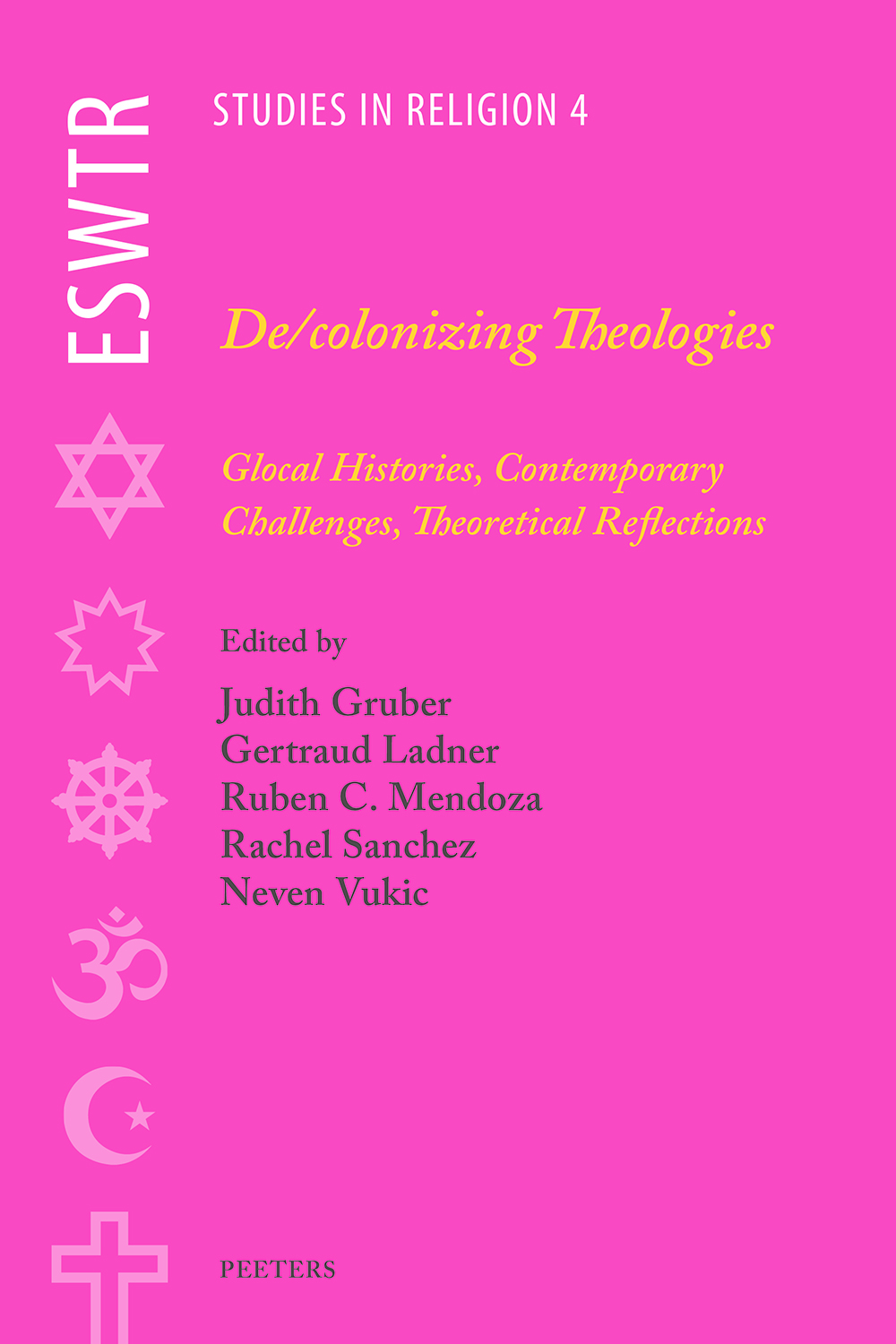 De/colonizing Theologies
Glocal Histories, Contemporary Challenges, Theoretical Reflections
Volume 4
 Drunk the Potion, No Whit Charmed
The Doctrine of Pure and Perfect Souls from Iamblichus to Damascius






 Extracanonical Traditions and the Holy Land
Texts, Rituals, and Material Culture in Late Antique Palestine
 Fear, Fear of God, God-Fearers
Philological and Historical Perspectives on the World of Ancient Judaism and Christianity

