
Zwischen Selbstverständlichkeit und Schweigen. Die Rolle der Frau im frühen Manichäismus
By (author) Jessica Schrinner

This volume analyzes the roles and responsibilities of women and men in their functions as the elect and the hearers, the status of these two groups according to Manichaean and anti-Manichaean writings and the Manichaean reception of biblical and early Christian images of women. In order to achieve this, the study evaluates Manichaean and anti-Manichaean sources of the period from the 4th to the early 7th century. Due to intensive Manichaean missionary efforts, the volume also takes more recent sources into account insofar as they contain fragments and quotations from Manichaean sources passed down directly or indirectly. German text.
English summary: Manichaeism, a word religion in Late Antiquity, was founded by the prophet Mani (216-276/277 AD) who had grown up as a member of a Jewish Christian baptismal sect in Mesopotamia. The Manichaean hierarchy, which had been established by Mani himself at an early stage, was divided into two groups: the ‘elect’ representing the clergy and the ‘hearers’ representing laypeople. This volume analyzes the roles and responsibilities of women and men in their functions as the elect and the hearers, the status of these two groups according to Manichaean and anti-Manichaean writings and the Manichaean reception of biblical and early Christian images of women. In order to achieve this, the study evaluates Manichaean and anti-Manichaean sources of the period from the 4th to the early 7th century. Due to intensive Manichaean missionary efforts, the volume also takes more recent sources into account insofar as they contain fragments and quotations from Manichaean sources passed down directly or indirectly. This dissertation was awarded the “Wissenschaftspreis der Stiftung der Universitat Augsburg” (the research prize of the foundation of the University of Augsburg). German description: Die spatantike Weltreligion des Manichaismus wurde von dem in einer judenchristlichen Taufersekte im Zweistromland aufgewachsenen Propheten Mani (216-276/277 n.Chr.) gestiftet. Die manichaische Hierarchiestruktur, die Mani selbst fruh etablierte, unterteilte sich in zwei Gruppen: die den Klerus reprasentierenden Electi und die Katechumenen, die Laien. Die Funktionen und Aufgaben der Frauen und Manner in der Rolle als Electi und Katechumenen, die Stellung dieser beiden Gruppen gemaa manichaischer und antimanichaischer Texte sowie die manichaische Rezeption der biblischen und fruhchristlichen Frauenbilder sind Gegenstand der Untersuchung. Dafur werden manichaische und antimanichaische Quellen des Zeitraums vom 4. bis ins fruhe 7. Jahrhundert ausgewertet. Aufgrund der ausgepragten manichaischen Missionsbestrebungen wurden auch spatere Quellentexte insofern herangezogen, als sie direkt und indirekt uberlieferte Fragmente und Zitate aus manichaischen Quellen enthalten. Die Dissertation wurde mit dem Wissenschaftspreis der Stiftung der Universitat Augsburg ausgezeichnet.
Jessica Kristionat studierte Koptologie, Arabistik und Islamwissenschaft und Agyptologie an der Westfalischen Wilhelms-Universitat Munster. Sie ist als Wissenschaftliche Mitarbeiterin am Lehrstuhl fur Alte Geschichte an der Universitat Augsburg tatig. Die Religionsgeschichte der Spatantike ist ihr Forschungsschwerpunkt.
- By (author) Jessica Schrinner
" (...) the first extensive, profound and weghty study on the role of women in Mani's religion. (...) Kristionat has produced a landmark study and her book will secure the author a lasting place among the Manichaeologists." Johannes van Oort, Vigiliae Christianae 70 (2016), S. 342-347
—
Other Titles in this Series
 Aneignung und Abgrenzung
Wechselnde Perspektiven auf die Antithese von 'Ost' und 'West' in der griechischen Antike


Similar Books

 A Companion to Christianity and Sport in Europe and North America (19th-21st centuries)
Volume 1: Western and Eastern Europe
 A Connecting Polemic in the Medieval Mediterranean
The Correspondence of Leo III and ʿUmar II
Volume 6









 Ars Prophetica
Theology in the Poetry of Twentieth-Century Hebrew Poets Avraham Halfi, Shin Shalom, Amir Gilboa, and T. Carmi
 As Messianism Turns to Heresy
The Regenstein Chair Lectures On Lurianic Kabbalah and Shabbatai Tzevi at Hebrew Union College - Cincinnati


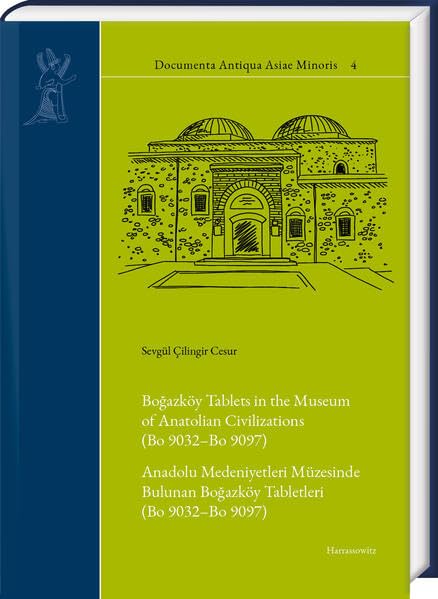 Boğazköy Tablets in the Museum of Anatolian Civilizations (Bo 9032–Bo 9097)
Anadolu Medeniyetleri Müzesinde Bulunan Boğazköy Tabletleri (Bo 9032–Bo 9097)
Volume 4




 Connecting the Dots: Counting, Writing, and the Beginnings of Civilization
The Secret Lives of Clay Tokens: A Memoir

 Creating the Woman in Antiquity
Proceedings of the 16th Melammu Workshop, Innsbruck, 2–3 June 2022
Volume 13
 Cultic Kisses
Fruitful Encounters Between Deities and Humans. Festschrift for Angelika Berlejung on the Occasion of Her 65th Birthday
 Curating the Prehistoric Past
Studies on West Asian Archaeology and Beyond in Honour of Yoshihiro Nishiaki
 De/colonizing Theologies
Glocal Histories, Contemporary Challenges, Theoretical Reflections
Volume 4