
Wissenskultur im Alten Orient
Weltanschauung, Wissenschaften, Techniken, Technologien 4. Internationales Colloquium der Deutschen Orient-Gesellschaft 20.-22. Februar 2002, Munster Im Auftrag des Vorstands der Deutschen Orient-Gesellschaft unter Mitarbeit von Susanne Paulus
edited by Hans Neumann

Based on the proceedings of the meeting of the German Oriental Society in 2002 in Munster, 22 authors follow up on questions concerning the culture of knowledge in the ancient Near East. The studies show that knowledge and its transmission as well as the development of scientific through in the ancient Near East was inseparable from the way the world was conceived of by the ancient societies and is thus bound up with a specific worldview.
English summary: Based on the proceedings of the meeting of the German Oriental Society in 2002 in Munster, 22 authors follow up on questions concerning the culture of knowledge in the ancient Near East. The studies show that knowledge and its transmission, as well as the development of scientific thought in the ancient Near East was inseparable from the way the world was conceived by the ancient societies and is thus bound up with a specific worldview. Next to the identification of the religious-ideological implications of the various knowledge and fields of knowledge is the correspondent practical relevance of knowledge, both in the space of social organization (economy, law, administration, cult) and also in the sphere of production (agricultural, crafts), making the issue of practical relevance an important methodological starting point. The subjects discussed in this publication therefore include the transfer of knowledge, traditions of learning, hermeneutics in the ancient Near East, the reflection of knowledge concerning society, science (her, math, astronomy and medicine), the practical evaluation of knowledge, the relationship between knowledge and magic, the problem of worldview and the communication of knowledge in the art and architecture of the ancient Near East, as well as the changes in knowledge and their transfer into the areas of production and technology. In this way, the book offers a complex view on the issue bound up with the concept of a culture of knowledge, and at the same time, the book also imparts innovative trends in the field of ancient Near Eastern studies as well as promoting interdisciplinary discourse in cultural studies. German description: Auf Grundlage der Beitrage zur Tagung der Deutschen Orient-Gesellschaft 2002 in Munster gehen 22 Autoren der Frage nach der Wissenskultur im Alten Orient nach. Die Studien zeigen, dass Wissen und Wissenstradierung sowie die Entwicklung des wissenschaftlichen Denkens im Alten Orient untrennbar mit der Anschauung von der Welt, also mit einem bestimmten Weltbild verbunden sind. Neben der Kennzeichnung der religios-ideologischen Implikationen der verschiedenen Wissens- und Wissenschaftsbereiche ist der jeweilige Praxisbezug von Wissen sowohl im Rahmen der Gesellschaftsorganisation (Wirtschaft, Recht, Verwaltung, Kult) als auch in der Produktionssphare (Landwirtschaft, Handwerk) ein wichtiger methodischer Ansatzpunkt. Schwerpunkte der Publikation sind daher Wissensvermittlung, Gelehrtentradition und Hermeneutik im Alten Orient, die Reflexion von Wissen uber Gesellschaft, die Wissenschaften (hier Mathematik, Astronomie und Medizin), die praktische Anwendung von Wissen, das Verhaltnis von Wissen und Magie, das Problem von Weltanschauung und Wissensvermittlung in Architektur und Kunst des Alten Orients sowie Wissensanwendung und der -transfer im Rahmen von Produktionstechniken und Technologien. Auf diese Weise wird eine komplexe Sicht auf die sich mit dem Begriff Wissenskultur verbindenden Sachverhalte vermittelt, anhand derer der Band sowohl im Rahmen der Altorientalistik innovative Impulse vermittelt als auch zugleich den interdisziplinaren kulturwissenschaftlichen Diskurs befordert.
- Edited by Hans Neumann
Other Titles in this Series
 Tempel im Alten Orient
7. Internationales Colloquium der Deutschen Orient-Gesellschaft, 11.-13. Oktober 2009, Munchen Im Auftrag der Deutschen Orient-Gesellschaft herausgegeben von Kai Kaniuth, Anne Lohnert, Jared L. Miller, Adelheid Otto, Michael Roaf und Walther Sallaber
Volume 7
 Assur – Gott, Stadt und Land
5. Internationales Colloquium der Deutschen Orient-Gesellschaft 18. - 21. Februar 2004 in Berlin
Volume 5
 Hattusa-Bogazkoy
Das Hethiterreich im Spannungsfeld des Alten Orients. 6. Internationales Colloquium der Deutschen Orient-Gesellschaft 22.-24.Marz 2006 in Wurzburg
Volume 6
 Der altorientalische Mensch in seiner Umwelt
11. Internationales Colloquium der Deutschen Orientgesellschaft, 16.-19. Juni 2022 in Leipzig
Volume 11
 Elam und seine Nachbarn
10. Internationales Colloquium der Deutschen Orient-Gesellschaft, 8.–10. April 2019, Mainz
Volume 10
 Uruk – Altorientalische Metropole und Kulturzentrum
Beitrage zum 8. Internationalen Colloquium der Deutschen Orient-Gesellschaft, 25. und 26. April 2013, Berlin
Volume 8
 Der Palast im antiken und islamischen Orient
9. Internationales Colloquium der Deutschen Orient-Gesellschaft 30. Marz - 1. April 2016, Frankfurt am Main
Volume 9
Similar Books


 Connecting the Dots: Counting, Writing, and the Beginnings of Civilization
The Secret Lives of Clay Tokens: A Memoir

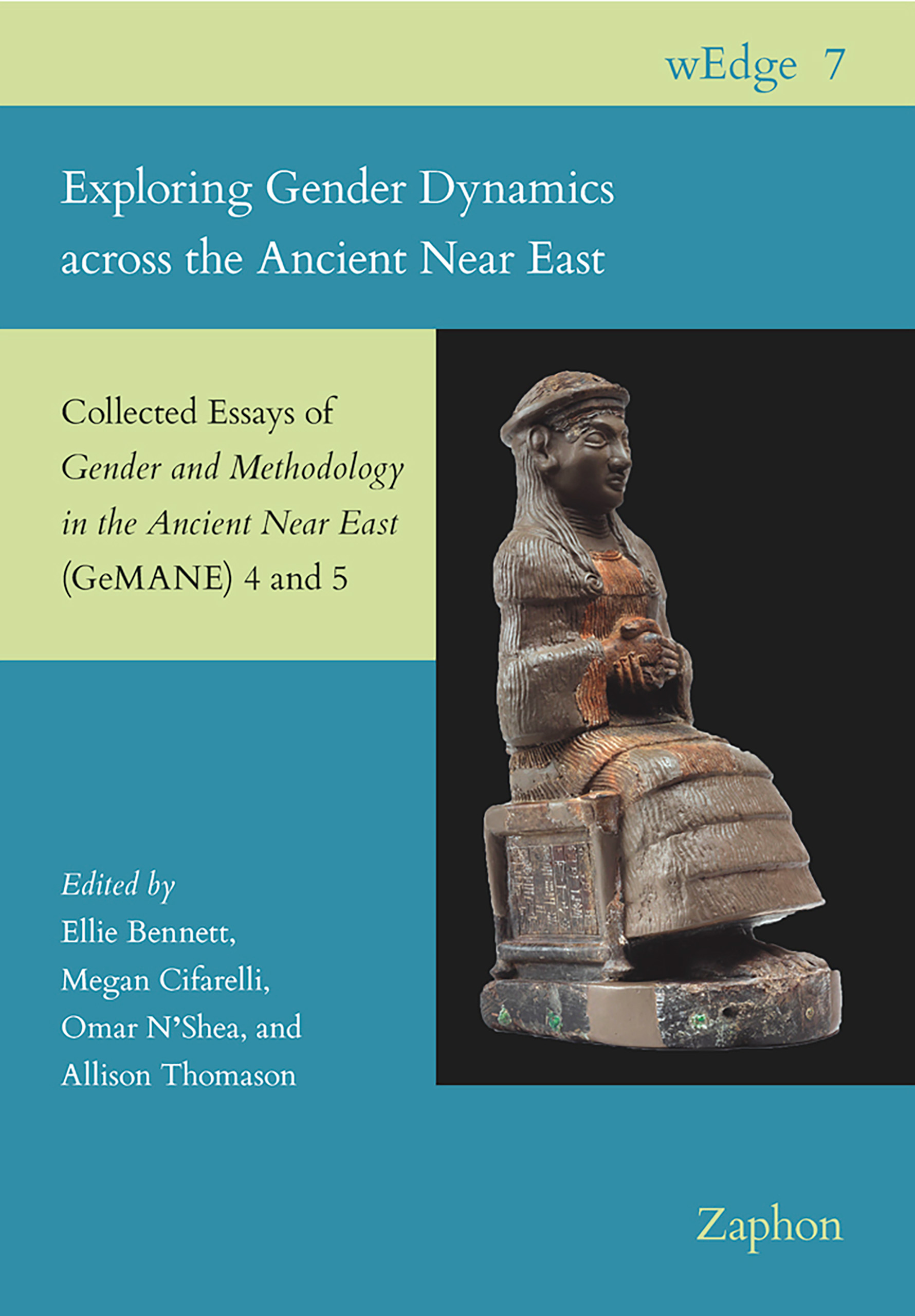 Exploring Gender Dynamics across the Ancient Near East
Collected Essays of Gender and Methodology in the Ancient Near East (GeMANE) 4 and 5
Volume 7


 Ḫattušaš utnē išḫameški
Hittite and Other Ancient Near Eastern Studies Presented to Piotr Taracha on the Occasion of His 65th Birthday

 New Research on Old Collections in Southwest Asian Archaeology
Proceedings of the Workshop Held at the British Museum, London, 31 July – 2 August, 2023
 Old Aramaic Inscriptions and their Contexts
An Epigraphic, Archaeological, and Historical Synthesis
Volume 63

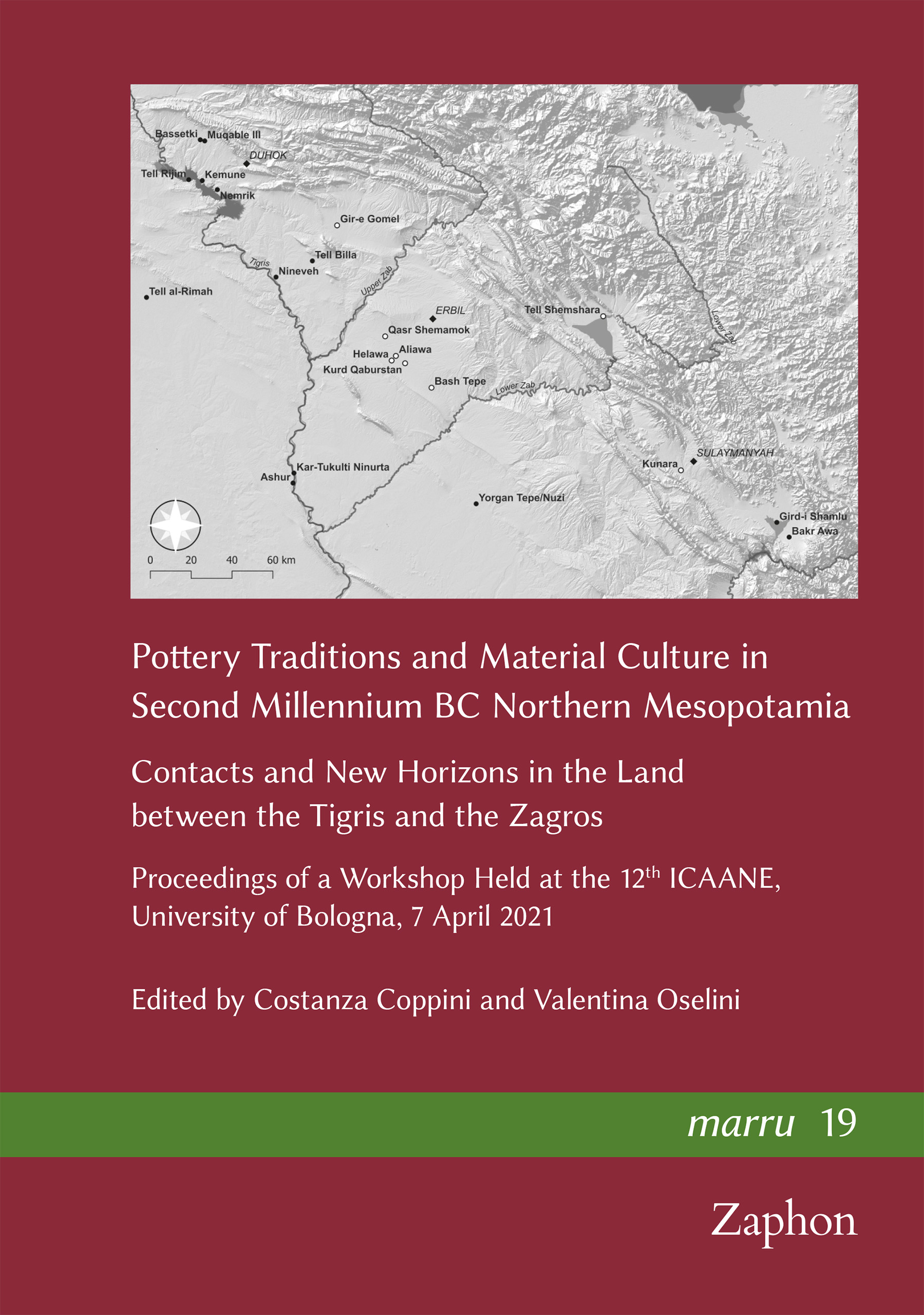 Pottery Traditions and Material Culture in Second Millennium BC Northern Mesopotamia
Contacts and New Horizons in the Land between the Tigris and the Zagros. Proceedings of a Workshop Held at the 12th ICAANE, University of Bologna, 7 April 2021
Volume 19
 Punning in Odd or Elegant Constructions in Jeremiah
The Convergence of Linguistics, Rhetoric, and Textuality in the Hebrew Text of Jeremiah
 Shame in the Worlds of the Hebrew Bible and Akkadian Texts
A Linguistic Study and Its Implications
Volume 33
 Telling Contexts
Archaeological and Textual Studies in Honor of Elizabeth Bloch-Smith and Mark S. Smith
 The Body
Lived, Cultured, Adorned: Essays on Dress and the Body in the Bible and Ancient Near East in Honor of Nili S. Fox
 The Discourse of Rites
Shaping and Reshaping the (Counter-)Priestly Rituals Conducted Outside the Tabernacle
 The Kingdom of Kizzuwatna: Recent Developments in Research
Proceedings of the Third NINO Postdoctoral Research Fellow Annual Conference, Leiden, 23rd-25th March 2023
Volume 137


 Die Entwicklung erdbebensicherer Bautechniken in der Frühen und Mittleren Eisenzeit in Ostanatolien
Volume 11
 Die JHWH-Religion und die Vorstellung göttlicher Gesetzgebung
Überschneidungen zwischen der Rechtsentwicklung und der Sphäre der Religion in der Geschichte des antiken Israel und Juda

 Kultur – Kontakt – Kultur
Beiträge anlässlich der 66. Rencontre Assyriologique Internationale in Frankfurt/Main und Mainz, 25.–29. Juli 2022
Volume 35
 Menschenwürde und Menschenrechte im Altem Orient, Israel und Hellas. Band 1
Human Dignity and Human Rights in the Ancient Near East, Ancient Israel, and Hellas. Volume 1
Volume 311
 Ptolemaiou Procheiroi Kanones. Les «Tables Faciles» de Ptolemée. Volume 2a: Tables A3-A13
Édition critique, Transcription
 Sprachwissenschaftliche und kulturhistorische Reflexionen
Festschrift zu Ehren von Jörg Klinger
Volume 31

 Vom Mädchen zur Frau
Weihgaben als Indikatoren rituellen und kommunikativen Handelns von Frauen in griechischen Kulten
Volume 188
 Von der Symmachie zur Arché und zurück
Die Entwicklungsphasen des Ersten Attischen Seebundes (478/7–404 v. Chr.)
