
Violence & Imagination after the Collapse
Encounters, Identity & Daily Life in the Upper Euphrates Region 3200-2500 BCE
By (author) Akiva Sanders

An investigation into the visual and social choices made by residents of the Upper Euphrates region, ca. 3200-2500 BCE. The villages of this region were situated between the Upper Mesopotamian and the Kura-Araxes cultural traditions, whose deep differences in social organization strike at the heart of what it means to be a human comm
In the late fourth millennium BCE, the villages, temples, and palace of the Upper Euphrates region stood between two social traditions: the comparatively hierarchical, centrally organized Mesopotamian social world to the south and the comparatively egalitarian, decentralized Kura-Araxes social sphere to the north. Over the next seven centuries, this positioning and the interactions it sparked fed into a wide variety of reactions among the region’s inhabitants, ranging from cataclysmic violence to a flowering of innovation in visual culture and social arrangements. These events had a wide array of short-term and long-term impacts, some limited to a single house or settlement, and some, like the innovation of the Warrior Tomb template, that transformed societies across West Asia. With an eye towards detail, a theoretical approach emphasizing motivation, and multiple scales of analysis, this book organizes previously unpublished data from six sites in the region, Arslantepe, Ta?kun Mevkii, Pulur, Nor?untepe, Tepecik, and Korucutepe, dating to this dramatic and transformative period.
- By (author) Akiva Sanders
Other Titles in this Series


 Proceedings of the 1st Kultepe International Meeting. Kultepe, September 19-23, 2013
Studies Dedicated to Kutlu Emre: (Kultepe International Meetings 1)
Volume 35
 At the Northern Frontier of Near Eastern Archaeology
Recent Research on Caucasia and Anatolia in the Bronze Age / An der Nordgrenze der vorderasiatischen Archaologie: Neue Forschung uber Kaukasien und Anatolien in der Bronzezeit: (Publications of the Georgian-Italian Shida-Kartli Archaeological Project
Volume 38
 Emar after the closure of the Tabqa Dam
The Syrian-German Excavations 1996 - 2002. Volume I: Late Roman and Medieval Cemeteries and Environmental Studies
Volume 25


 Cultural Exchange and Current Research in Kultepe and its Surroundings
Kultepe, 1-4 August 2019
Volume 46
 Tell Beydar. The 2010 Season of Excavations and Architectural Restoration – A Preliminary Report
Rapport preliminaire sur la campagne de fouilles et de restauration architecturale 2010
Volume 34
 Tell ‘Acharneh 1998-2004
Rapports preliminaires sur les campagnes de fouilles et saison d'etudes. Preliminary Reports on Excavation Campaigns and Study Season
Volume 18
 Interdisciplinary Research on the Bronze Age Diyala
Proceedings of the Conference Held at the Paris Institute for Advanced Study, 2526 June, 2018
Volume 47

 Tell Beydar, the 2000-2002 Seasons of Excavations, the 2003-2004 Seasons of Architectural Restoration. A Preliminary Report
Rapport preliminaire sur les campagnes de fouilles 2000-2003 et les campagnes de restauration architecturale 2003-2004
Volume 15
 Late Chalcolithic Northern Mesopotamia in Context
Papers from the Workshop held at the 11th ICAANE, Munich, April 5th 2018
Volume 48

 Tell Beydar, The 1995 to 1999 Seasons of Excavations. A Preliminary Report
Tell Beydar, Rapport preliminaire sur les campagnes de fouilles de 1995 a 1999
Volume 10

 Seals and Sealings from Tell Beydar/Nabada (Seasons 1995 – 2001). A Progress Report
Beydar Monographs 1
Volume 27


 Khashuri Natsargora – The Early Bronze Age Graves
Publications of the Georgian-Italian Shida Kartli Archaeological Project I
Volume 30


 Tell Beydar
The 2004/2-2009 Seasons of Excavations, the 2004/2-2009 Seasons of Architectural Restoration. A Preliminary Report
Volume 29
 Kultepe at the Crossroads between Disciplines
Society, Settlement and Environment from the Fourth to the First Millennium BC
Volume 51
 Die chalkolithische Siedlung von Giricano am Oberen Tigris
Die Ausgrabungen in Giricano II
Volume 44

Similar Books


 Connecting the Dots: Counting, Writing, and the Beginnings of Civilization
The Secret Lives of Clay Tokens: A Memoir

 Exploring Gender Dynamics across the Ancient Near East
Collected Essays of Gender and Methodology in the Ancient Near East (GeMANE) 4 and 5
Volume 7


 Ḫattušaš utnē išḫameški
Hittite and Other Ancient Near Eastern Studies Presented to Piotr Taracha on the Occasion of His 65th Birthday

 New Research on Old Collections in Southwest Asian Archaeology
Proceedings of the Workshop Held at the British Museum, London, 31 July – 2 August, 2023
 Old Aramaic Inscriptions and their Contexts
An Epigraphic, Archaeological, and Historical Synthesis
Volume 63

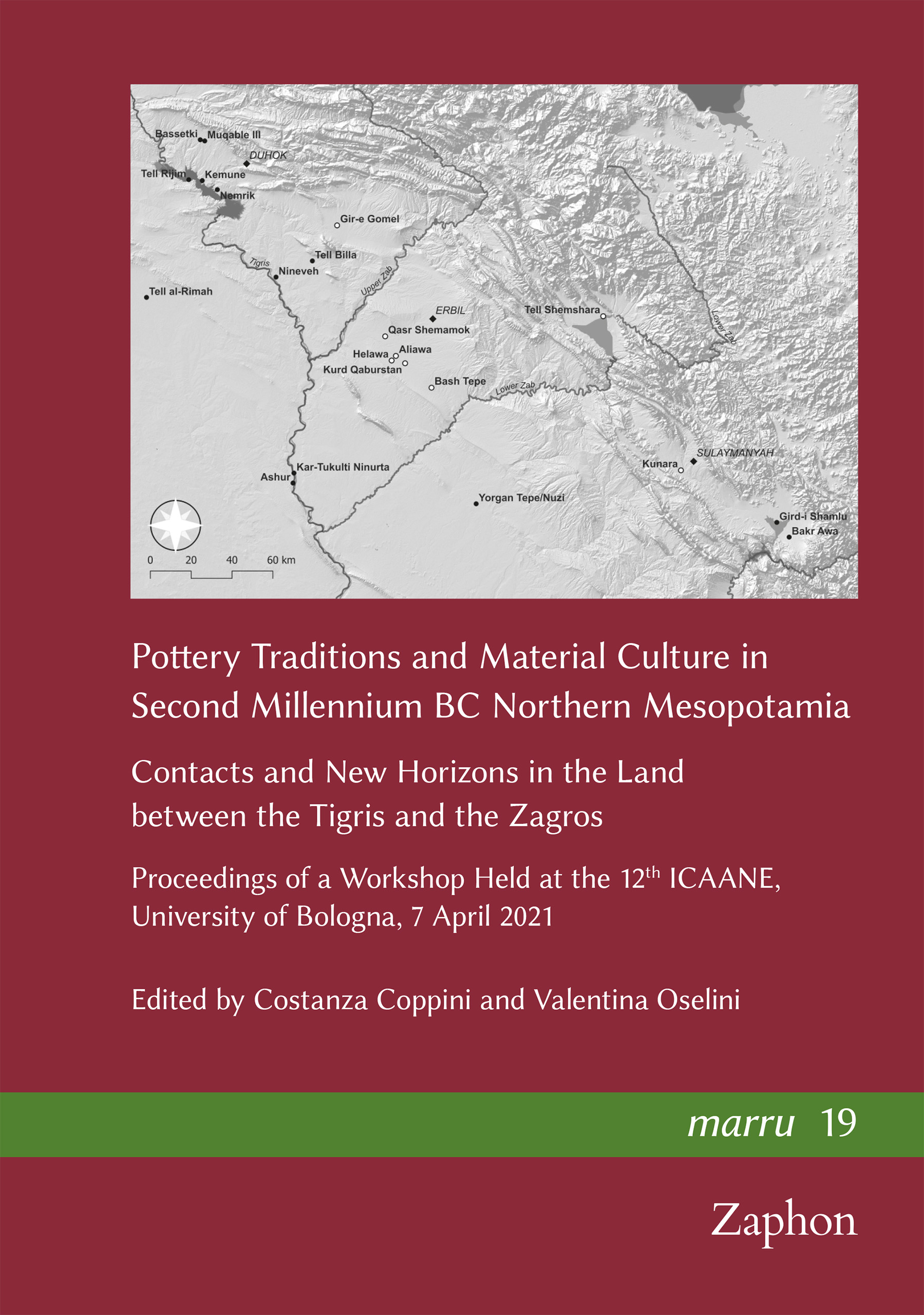 Pottery Traditions and Material Culture in Second Millennium BC Northern Mesopotamia
Contacts and New Horizons in the Land between the Tigris and the Zagros. Proceedings of a Workshop Held at the 12th ICAANE, University of Bologna, 7 April 2021
Volume 19
 Punning in Odd or Elegant Constructions in Jeremiah
The Convergence of Linguistics, Rhetoric, and Textuality in the Hebrew Text of Jeremiah
 Shame in the Worlds of the Hebrew Bible and Akkadian Texts
A Linguistic Study and Its Implications
Volume 33
 Telling Contexts
Archaeological and Textual Studies in Honor of Elizabeth Bloch-Smith and Mark S. Smith
 The Body
Lived, Cultured, Adorned: Essays on Dress and the Body in the Bible and Ancient Near East in Honor of Nili S. Fox
 The Discourse of Rites
Shaping and Reshaping the (Counter-)Priestly Rituals Conducted Outside the Tabernacle
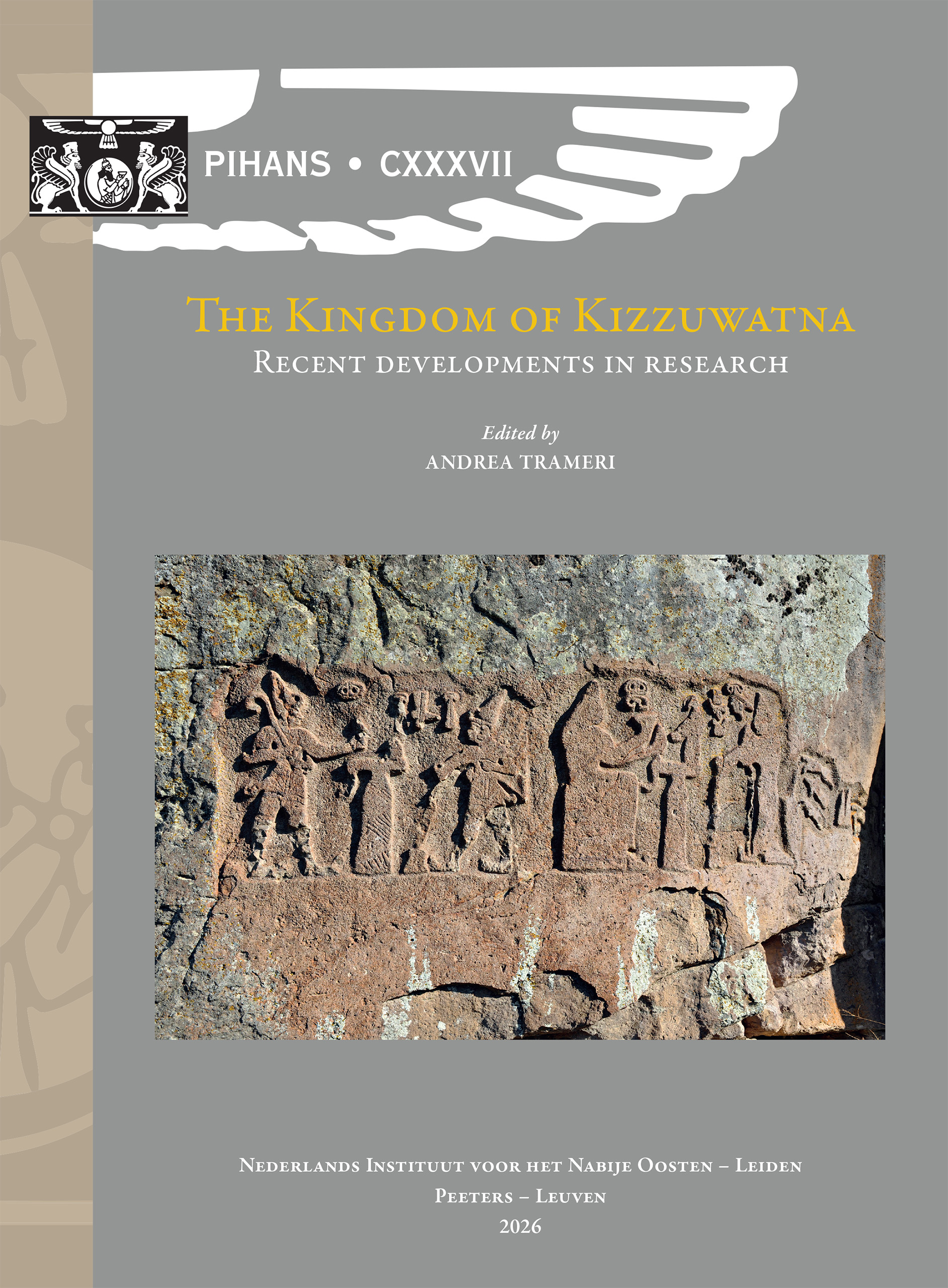 The Kingdom of Kizzuwatna: Recent Developments in Research
Proceedings of the Third NINO Postdoctoral Research Fellow Annual Conference, Leiden, 23rd-25th March 2023
Volume 137


 Die Entwicklung erdbebensicherer Bautechniken in der Frühen und Mittleren Eisenzeit in Ostanatolien
Volume 11
 Die JHWH-Religion und die Vorstellung göttlicher Gesetzgebung
Überschneidungen zwischen der Rechtsentwicklung und der Sphäre der Religion in der Geschichte des antiken Israel und Juda

 Kultur – Kontakt – Kultur
Beiträge anlässlich der 66. Rencontre Assyriologique Internationale in Frankfurt/Main und Mainz, 25.–29. Juli 2022
Volume 35
 Menschenwürde und Menschenrechte im Altem Orient, Israel und Hellas. Band 1
Human Dignity and Human Rights in the Ancient Near East, Ancient Israel, and Hellas. Volume 1
Volume 311
 Ptolemaiou Procheiroi Kanones. Les «Tables Faciles» de Ptolemée. Volume 2a: Tables A3-A13
Édition critique, Transcription
 Sprachwissenschaftliche und kulturhistorische Reflexionen
Festschrift zu Ehren von Jörg Klinger
Volume 31

 Vom Mädchen zur Frau
Weihgaben als Indikatoren rituellen und kommunikativen Handelns von Frauen in griechischen Kulten
Volume 188
 Von der Symmachie zur Arché und zurück
Die Entwicklungsphasen des Ersten Attischen Seebundes (478/7–404 v. Chr.)
