
Villes mortes della Siria
Topografia cristiana e insediamenti del Massiccio Calcareo (IV-VII secolo)
Edited by Elie Essa Kas Hanna

Paperback (Published)
(June 2025)
ISBN: 9781805830504
8.07 x 11.42 inches
Price: $70.00
In stock
This book explores the Dead Cities region in Syria, its development in the Early Byzantine Empire, and its transformation under Muslim rule. It includes archaeological research, historical context, and unpublished photos of sites, some now damaged by war.
The so-called Dead Cities region, or the Syrian Limestone Massif region, is located in the north-western part of Syria, in the historical region of Belus, bordered by the cities of Apamea, Antioch, Kyrrus and Aleppo. From the first centuries of the Christian era, the mountains of Belus experienced an extraordinary development, becoming an important and integral part of the Early Byzantine Empire, a phase in which the region saw a quantitative and qualitative peak of rural settlements never seen in the rest of the Empire. With the arrival of the Arabs in 636 CE, the Limestone Massif continued to be one of the key territories for the Muslims, especially for their expansionist plans, which caused the gradual dissolution of the proto-Byzantine economic system. This book is the result of archaeological research carried out a few months before the outbreak of the Syrian conflict, thanks to the support of the Metropolitan of the Syriac Orthodox Church of Aleppo, Mar Gregorios Yuhanna Ibrahim. The work also summarizes the results of previous researches carried out by European and American teams, who have been interested in the region. After appropriate historical and religious introductions, the book traces the topography of settlements in their poto-Byzantine phase, highlighting the various transformations and expedients that affected the architecture in general, with a main focus on the ecclesiastical architecture. The work also presents unpublished photographs of visited archaeological sites which, in 2010, were still in an excellent state of preservation and which today, due to the events of the war, have been partially or completely destroyed.
Prefazione
Introduzione
1. LIMITI SPAZIALI E CRONOLOGICI
2. PROBLEMI E METODOLOGIA
3. STORIA DEGLI STUDI
4. PROPOSTE PER AFFIDABILI CRITERI DI DATAZIONE
Capitolo 1: INQUADRAMENTI GENERALI: GEOGRAFIA, STORIA E RELIGIONE
1. GEOGRAFIA E GEOLOGIA
2. CARATTERI NATURALI DEL PAESAGGIO
3. QUADRO STORICO e AMMINISTRATIVO
4. QUADRO RELIGIOSO DELLE COMUNITÀ CRISTIANE
5. LA CRISTIANIZZAZIONE DELLA REGIONE ALLA LUCE DEI DATI EPIGRAFICI
6. VIABILITÀ
Capitolo 2: TIPOLOGIA E ASSETTO ORGANIZZATIVO DEGLI ABITATI
1. ORGANIZZAZIONE DEL PAESAGGIO NEL MASSICCIO CALCAREO
2. ORGANIZZAZIONE SPAZIALE INTERNA DEI CENTRI ABITATI
Capitolo 3: EDIFICI PUBBLICI
1. I TEMPLI DURANTE NELLA TARDA ANTICHITÀ E L’ETÀ PROTOBIZANTINA
2. ANDRONES “Ἀνδρῶνες”
3. COMPLESSI TERMALI
4. STRUTTURE RICETTIVE “Πανδοχεῖα”
5. MERCATI ED I BAZAR
6. TORRI
Capitolo 4: SISTEMA IDRICO E STRUTTURE AD USO RESIDENZIALE
1. APPROVVIGIONAMENTO IDRICO
2. MORFOLOGIA E COMPONENTI PRINCIPALI DELLE STRUTTURE RESIDENZIALI
3. LO SVILUPPO ARCHITETTONICO E TOPOGRAFICO DELLE STRUTTURE AD USO RESIDENZIALE PRODUTTIVO TRA IL V E IL VI SECOLO
4. CLASSIFICAZIONE DELLE STRUTTURE AD USO RESIDENZIALE
5. FUNZIONI SOCIO-ECONOMICHE DELLE STRUTTURE ABITATIVE
Capitolo 5: STRUTTURE AD USO FUNERARIO
1. TIPOLOGIE DELLE STRUTTURE FUNERARIE
2. SISTEMI DI CHIUSURA DELLE SEPOLTURE
3. STRUTTURAZIONE SPAZIALE ALL’ESTERNO DEI MONUMENTI FUNERARI E ARREDI FUNERARI
4. TOPOGRAFIA CIMITERIALE DEL MASSICCIO CALCAREO SIRIANO
Capitolo 6: EDIFICI ECCLESIASTICI: LE BASILICHE (IV-VII SECOLO)
1. ARCHITETTI
2. POSIZIONE E FUNZIONI DELL’EDIFICIO DI CULTO NEL TESSUTO ABITATIVO
3. FORME DEGLI EDIFICI DI CULTO
4. LE CHIESE DI IV SECOLO FRA REALTÀ E MITO
5. METODO PER UNA CLASSIFICAZIONE DELLE BASILICHE E DELLE CHIESE A NAVATA UNICA
6. BASILICHE LA CUI PRIMA FASE IN OPERA A DOPPIO PARAMENTO
7. BASILICHE CON UNA PRIMA FASE IN OPERA ORTOGONALE SEMPLICE
8. BASILICHE DEL MASSICCIO CALCAREO SIRIANO VII SECOLO
9. CARATTERISTICHE E INNOVAZIONI DELLE BASILICHE DEL MASSICCIO CALCAREO SIRIANO V-VII SECOLO
Capitolo 7: EDIFICI ECCLESIASTICI: CHIESE A NAVATA UNICA (V-VII SECOLO)
1. CHIESE A NAVATA UNICA DI V SECOLO DEI BORGHI E DEL LORO VICINATO
2. CHIESE MONOVANE DEI BORGHI E DEL LORO VICINATO NEL VI SECOLO
Capitolo 8: BATTISTERI TRA IL V E IL VI SECOLO
1. MORFOLOGIA E ASPETTO DEI BATTISTERI
2. ALCUNI BATTISTERI NELLE CATENE SETTENTRIONALI DEL MASSICCIO CALCAREO
3. FONTI E SVILUPPO DEL RITO BATTESIMALE: UNA RIFLESSIONE
Capitolo 9: ARREDI LITURGICI NELLE BASILICHE E CHIESE A NAVATA UNICA
1. I RELIQUIARI
2. BEMA
Capitolo 10: ABITATI DEL MASSICCIO CALCAREO SIRIANO
1. ĞABAL SIM‘ĀN
2. ĞABAL ḤALAQA
3. ĞABAL BĀRĪŠĀ
CONSIDERAZIONI CONCLUSIVE GENERALI
1. DINAMICHE INSEDIATIVE
2. BILANCIO GENERALE
Abbreviazioni
Bibliografia
Index locorum
- Edited by Elie Essa Kas Hanna
Other Titles in this Series
 Traffici commerciali e approdi portuali nella Sardegna meridionale
Analisi dei contenitori da trasporto e dei contesti subacquei (III-VII secolo)
 Excavaciones en el baptisterio del conjunto eclesiástico de Son Peretó (Manacor, Mallorca, islas Baleares)
Siglos V-VIII d. C.
 Perchement et Réalités Fortifiées en Méditerranée et en Europe, Vème-Xème Siècles
Fortified Hilltop Settlements in the Mediterranean and in Europe (5th-10th centuries)
 Sit tibi terra gravis: Sepolture anomale tra età medievale e moderna
Atti del Convegno Internazionale di Studi Albenga (SV) – Palazzo Oddo, 14-16 ottobre 2016

 Tra Montaccianico e Firenze: gli Ubaldini e la città
Atti del convegno di studi, Firenze-Scarperia 28–29 settembre 2012


 L’Aquila “città nuova” sulla frontiera fra Meridione e Stato della Chiesa
L’impianto e l’edilizia residenziale fra XII e XV secolo


Similar Books



 Caesar’s Visions and Impact on the Roman Empire
Revisiting the Archaeological and Historical Record of the 40s BC
Volume 2

 Connecting the Dots: Counting, Writing, and the Beginnings of Civilization
The Secret Lives of Clay Tokens: A Memoir


 Etruscan and Roman Hellenistic Anatomical ex votos
Reassessing Popular Religious Expressions in Central Italy
Volume 8

 Exploring Gender Dynamics across the Ancient Near East
Collected Essays of Gender and Methodology in the Ancient Near East (GeMANE) 4 and 5
Volume 7


 Ḫattušaš utnē išḫameški
Hittite and Other Ancient Near Eastern Studies Presented to Piotr Taracha on the Occasion of His 65th Birthday


 Invisible Labour in Antiquity
Visualizing Obscure Work in the Ancient Mediterannean and West Asia
Volume 1
 Late Antique villae in the Balkans (3rd–7th c. AD): Current Research Questions and Perspectives
HAEMUS Companion to the Late Antique Balkans 1
Volume 4

 New Research on Old Collections in Southwest Asian Archaeology
Proceedings of the Workshop Held at the British Museum, London, 31 July – 2 August, 2023
 Old Aramaic Inscriptions and their Contexts
An Epigraphic, Archaeological, and Historical Synthesis
Volume 63


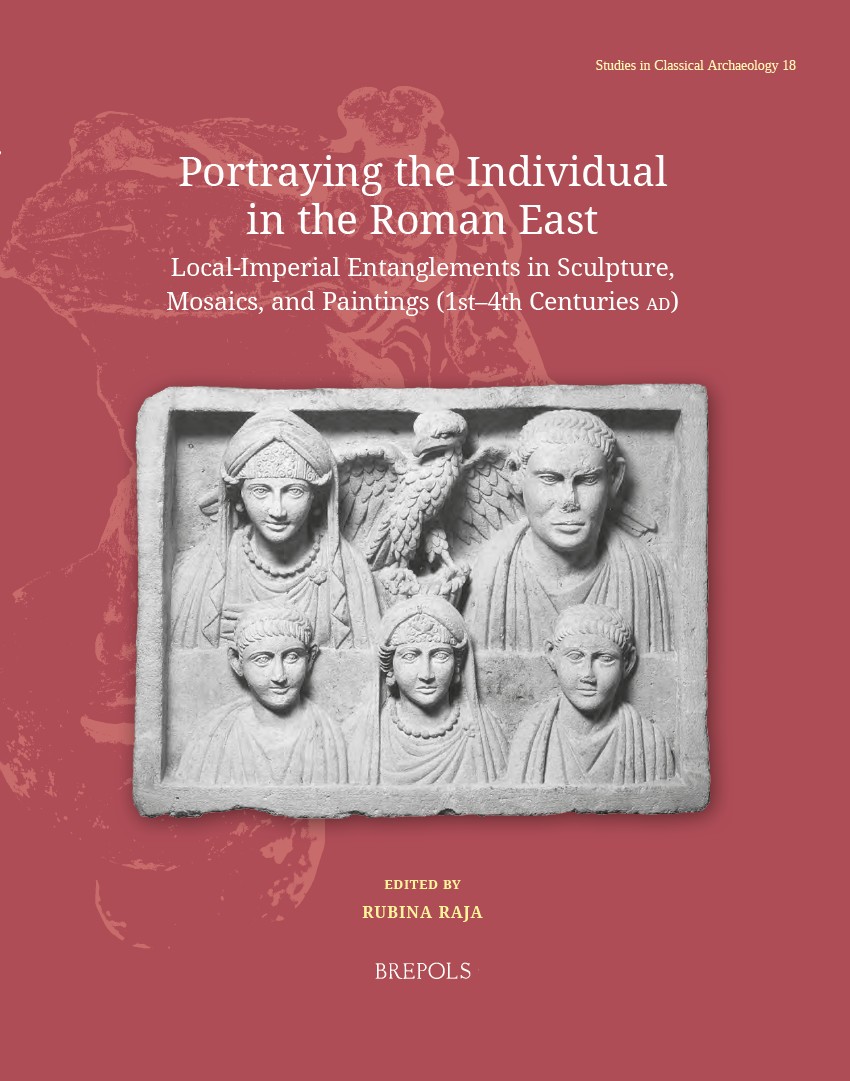 Portraying the Individual in the Roman East
Local–Imperial Entanglements in Sculpture, Mosaics, and Paintings (First–Fourth Centuries AD)
Volume 18
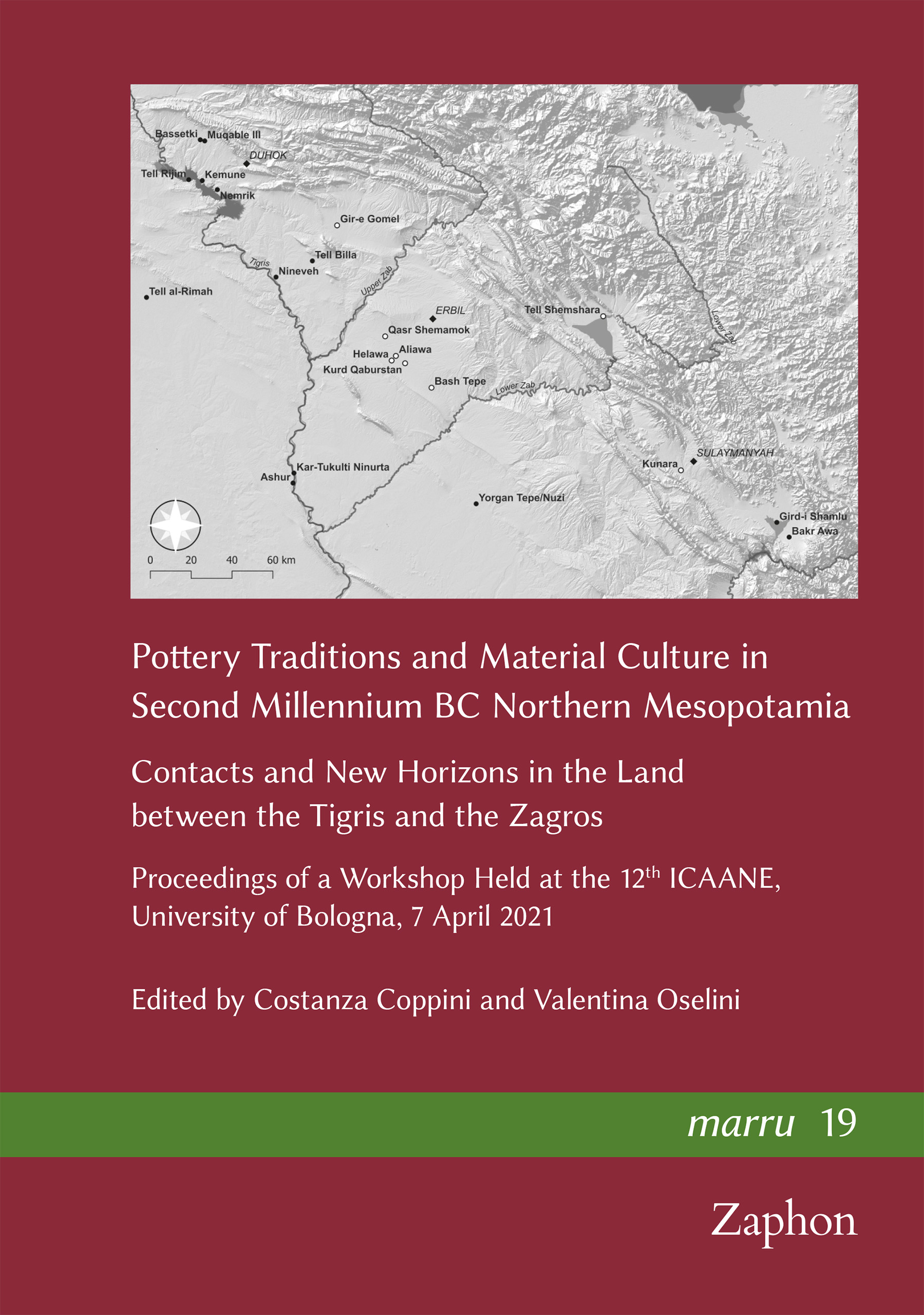 Pottery Traditions and Material Culture in Second Millennium BC Northern Mesopotamia
Contacts and New Horizons in the Land between the Tigris and the Zagros. Proceedings of a Workshop Held at the 12th ICAANE, University of Bologna, 7 April 2021
Volume 19
 Punning in Odd or Elegant Constructions in Jeremiah
The Convergence of Linguistics, Rhetoric, and Textuality in the Hebrew Text of Jeremiah

 Shame in the Worlds of the Hebrew Bible and Akkadian Texts
A Linguistic Study and Its Implications
Volume 33
 Small Worlds and Relational Agencies: Local Societies in Early Medieval Iberia
Pequeños mundos y Agencias relacionales: Sociedades locales altomedievales en la Península Ibérica
 Telling Contexts
Archaeological and Textual Studies in Honor of Elizabeth Bloch-Smith and Mark S. Smith
 The Body
Lived, Cultured, Adorned: Essays on Dress and the Body in the Bible and Ancient Near East in Honor of Nili S. Fox
 The Discourse of Rites
Shaping and Reshaping the (Counter-)Priestly Rituals Conducted Outside the Tabernacle