
Unruhe der Berührung
Eine karnale Ethik
By (author) Rebekka A. Klein

Paperback (Forthcoming)
(January 2027)
ISBN: 9783162008480
4.49 x 7.17 inches
Price: $38.00
In the search for ethical departures from the customs and morals of the body, touch proves to be groundbreaking: it does not occur as the embodiment and perpetuation of the good we strive for, but as a confrontation with a gap in the desire for the embodiments of the good life.
The truth of the body cannot be chosen, constructed, or “made” through discourse. It occurs in the sensory-affective entanglement, in the touch of the Other, which leaves us restless – exposed to the reality of our desire. Rebekka A. Klein takes on the challenge of thinking through the restlessness of touch by developing a psychoanalytical-materialist conception of the inconsistency of the human body and seeking to re-explore the ethical from the authority and truth of the body’s sensuous-affective power. Touch is therefore addressed not as a secure ethical episteme, not as tactile bodily knowledge, but as a site on the threshold of a crisis with an open outcome. Touch creates a world of inter-corporeal connection and entanglement, in which not the distant sense but the close sense of the body takes the lead. All the more does it stand precariously undecided between injury and tenderness, between disruption and rapprochement. In the search for ethical departures from the customs and morals of the body, touch proves to be groundbreaking precisely for this reason: it does not occur as the embodiment and perpetuation of the good we strive for, but as a confrontation with a gap in the desire for the embodiments of the good life.
1. Einleitung
1.1 Zur Möglichkeit einer karnalen Ethik
1.2 Radikale Sünde - Abbruch der moralischen Selbstberuhigung des Menschen
1.3 Affekte - Kräfte der Preisgabe des Subjekts in eine Exteriorität des Körpers
1.4 Berührung - jenseits der Vereinnahmung des Körpers als Manifestation des Guten
2. Der Körper als Medium zur Welt?
2.1 Kulturalisierung des Humanen - Türöffner des Transhumanen
2.2 Rückkehr des Realitätsprinzips in einer Pandemie der Körper
2.3 Leib als Medium des Entzugs und nicht-aufgehender Rest
2.4 ‚Ohne' Sinn - zur Exteriorität des Körpers
2.5 Verkörperung - der Körper als interaktive Materie
2.6 Auf-Gabe des Körpers - Inkarnation radikal und jenseits bloßer Medialität
3. Eine ethische Episteme des Körpers?
3.1 Zur kritischen Autorität des Körpers in einer karnalen Ethik
3.2 Vom Körper erfasst - zur affektiven Wahrheit der Preisgabe des Subjekts
3.3 ‚Fremdkörper' - jenseits der (Re-)Integration des Gebrochenen und Verletzten
3.4 Karnalität - materialistisches Konzept der Inkonsistenz humaner Realität
3.5 Im Affekt - eine ‚letzte Differenz' zur Maschine
3.6 Verzicht auf die Unruhe der Berührung - zur Regierbarkeit des affektiven Körpers
4. Berührung als Inkarnation des Guten?
4.1 Unwiderstehliche Präsenz - zur sinnlichen Intensität des ‚fleischlichen' Körpers
4.2 Materiales Gewicht - diesseits der Metaphern der Berührung
4.3 Berührung - ‚zärtlicher Taktgeber' des Lebens?
4.4 Episteme der Berührung - vom souveränen Subjekt zum pathischen Wir
4.5 Durchbrechen des Blicks - karnale Überschreitung der okularen Zentrierung
4.6 Der berührbare Körper - post-humane Materialität des Politischen?
4.7 Aufruhr, Be(un)ruhigung, Desorientierung - Berührung als Quelle der Ethik
4.8 Nancys Herausforderung jeder möglichen Ethik der Berührung
4.9 Anmaßungen der Mittelbarkeit - zur Macht des sinnlichen Genießens
4.10 Ethik karnaler Insistenz - zur Sprengkraft des Eros bei Irigaray
5. Schluss: Eine karnale Ethik des affektiven Körpers
5.1 Zur Unentscheidbarkeit des affektiven Körpers
5.2 Plädoyer für eine kritisch-disruptive Ethik
Born 1980; 2009 Dr. theol. in Protestant Theology at the University of Zurich; 2014 Habilitation; 2017-24 Professor of Systematic Theology at Ruhr-University Bochum; Professor of Systematic Theology with a focus on Ethics at Goethe University in Frankfurt am Main.
- By (author) Rebekka A. Klein
Similar Books


 Drunk the Potion, No Whit Charmed
The Doctrine of Pure and Perfect Souls from Iamblichus to Damascius
 Éthique, politique, religions
Superstition (XVIIe - XXIe siècles). Sémantique, histoires et cultures


 La Lettre clandestine
La littérature philosophique clandestine, ses éditeurs et ses éditions
Volume 34
 Libertinage et philosophie à l’époque classique (XVIe-XVIIIe siècle)
Athéisme, Modernité et Sécularisation / Atheism, Modernity and Secularization
Volume 23


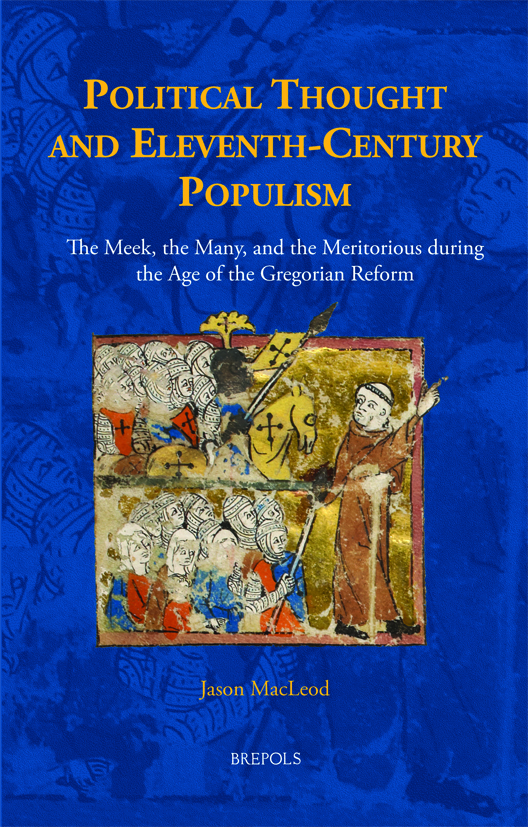 Political Thought and Eleventh-Century Populism
The Meek, the Many, and the Meritorious during the Age of the Gregorian Reform
Volume 38


 The Latin Hermes in Translation
Asclepius, Glosses on Trismegistus, Book of Six Principles of Things, Book of 24 Philosophers
Volume 50



 ‘Emergente Evolution’?
Fallstudien zur philosophischen Rekonstruktion und schopfungstheologischen Rezeption eines naturalistischen Paradigmas
Volume 40
 Al-Ğābirīs Genese und Kritik der Arabischen Vernunft
On Genesis and Critique of Arab Reason by Muḥammed ʿĀbid al-Ğābirī


 Geschichte der Ästhetik und Kunsttheorie
Band 1: Von der Antike bis zum 19. Jahrhundert. 2. aktualisierte Auflage

