
Une halte dans la steppe. Les gravures rupestres de ‘An Jamal près de Himà (région de Najran, Arabie saoudite)
A Stopover in the Steppe. The rock carvings of 'An Jamal near Himà (Region of Najran, Saudi Arabia)
By (author) C.J. Robin By (author) J. Schiettecatte By (author) S.F. al-Sa'id By (author) M. Arbach By (author) G. Charloux By (author) H. Dridi

Paperback (Published)
(December 2022)
ISBN: 9782877546881
Price: $94.00
On back order
This volume is devoted to the rock engravings of a rocky peak called ‘An Jamal, some ten kilometers east of the wells of Hima. Its chaotic relief and the innumerable superimpositions provide us with the first markers in the difficult chronological ordering of the Arabian rock art.
Sur les reliefs de grès, au nord de Najran (en Arabie saoudite), à l’orée de l’immense désert de l’Arabie centrale, les gravures rupestres se comptent en centaines de milliers. Ce sont des représentations figurées ou de petits textes, incisés par les populations qui habitaient là ou par les gens qui circulaient entre le Yémen et les lointaines contrées du nord de l’Arabie. La zone a été inscrite par l’UNESCO sur la liste du Patrimoine mondial en 2021.
En 2006, une mission franco-saoudienne a été créée pour cartographier et analyser ces gravures rupestres. Chaque année depuis lors, elle arpente l’ensemble de la zone et procède à des enregistrements et relevés systématiques de certains secteurs. Les observations déjà faites mettent en évidence que les pétroglyphes d’époque islamique, qui représentent notamment des cavaliers et des personnages féminins aux bras levés, sont aussi nombreux que les dessins antérieurs à l’islam.
Ce volume est consacré aux gravures rupestres d’un piton rocheux appelé ‘An Jamal, à une dizaine de kilomètres à l’est des puits de Himà. Ce piton constitue un amer dans le paysage désertique qui explique en partie le nombre et la diversité des gravures qu’on y trouve. Son relief chaotique et les innombrables superpositions nous apportent des premiers repères dans la difficile mise en ordre chronologique des gravures rupestres.
In the sandstone mountains north of Najran, Saudi Arabia, on the edge of the great Arabian desert, hundreds of thousands of rock engravings have been carved over time. These are figurative representations or small graffiti, incised by the natives or by people travelling between Yemen and the far reaches of northern Arabia. The area was inscribed by UNESCO on the World Heritage List in 2021. In 2006, a Saudi-French mission was set up to map and analyse these rock engravings. Every year since then, it has been surveying the area, systematically documenting and recording specific sectors. The first observations show that petroglyphs from the Islamic period (after 622 CE), mainly horsemen and female figures with raised arms, are as numerous as the pre-islamic carvings. This volume is devoted to the rock engravings of a rocky peak called ‘An Jamal, some ten kilometres east of the wells of Hima. This peak is a landmark in the desert landscape, which partly explains the number and diversity of engravings.Its chaotic relief and the innumerable superimpositions provide us with the first markers in the difficult chronological ordering of the Arabian rock art.
- By (author) C.J. Robin
- By (author) J. Schiettecatte
- By (author) S.F. al-Sa’id
- By (author) M. Arbach
- By (author) G. Charloux
- By (author) H. Dridi
Similar Books






 Boğazköy Tablets in the Museum of Anatolian Civilizations (Bo 9032–Bo 9097)
Anadolu Medeniyetleri Müzesinde Bulunan Boğazköy Tabletleri (Bo 9032–Bo 9097)
Volume 4
 Connecting the Dots: Counting, Writing, and the Beginnings of Civilization
The Secret Lives of Clay Tokens: A Memoir

 Curating the Prehistoric Past
Studies on West Asian Archaeology and Beyond in Honour of Yoshihiro Nishiaki

 Exploring Gender Dynamics across the Ancient Near East
Collected Essays of Gender and Methodology in the Ancient Near East (GeMANE) 4 and 5
Volume 7


 Ḫattušaš utnē išḫameški
Hittite and Other Ancient Near Eastern Studies Presented to Piotr Taracha on the Occasion of His 65th Birthday




 Kultur – Kontakt – Kultur
Beiträge anlässlich der 66. Rencontre Assyriologique Internationale in Frankfurt/Main und Mainz, 25.–29. Juli 2022
Volume 35
 Money of Mercenaries in the Cimmerian Bosporus
From the Mithridatic Wars to the Roman-Bosporan War of AD 45-49
Volume 45

 New Research on Old Collections in Southwest Asian Archaeology
Proceedings of the Workshop Held at the British Museum, London, 31 July – 2 August, 2023
 Old Aramaic Inscriptions and their Contexts
An Epigraphic, Archaeological, and Historical Synthesis
Volume 63

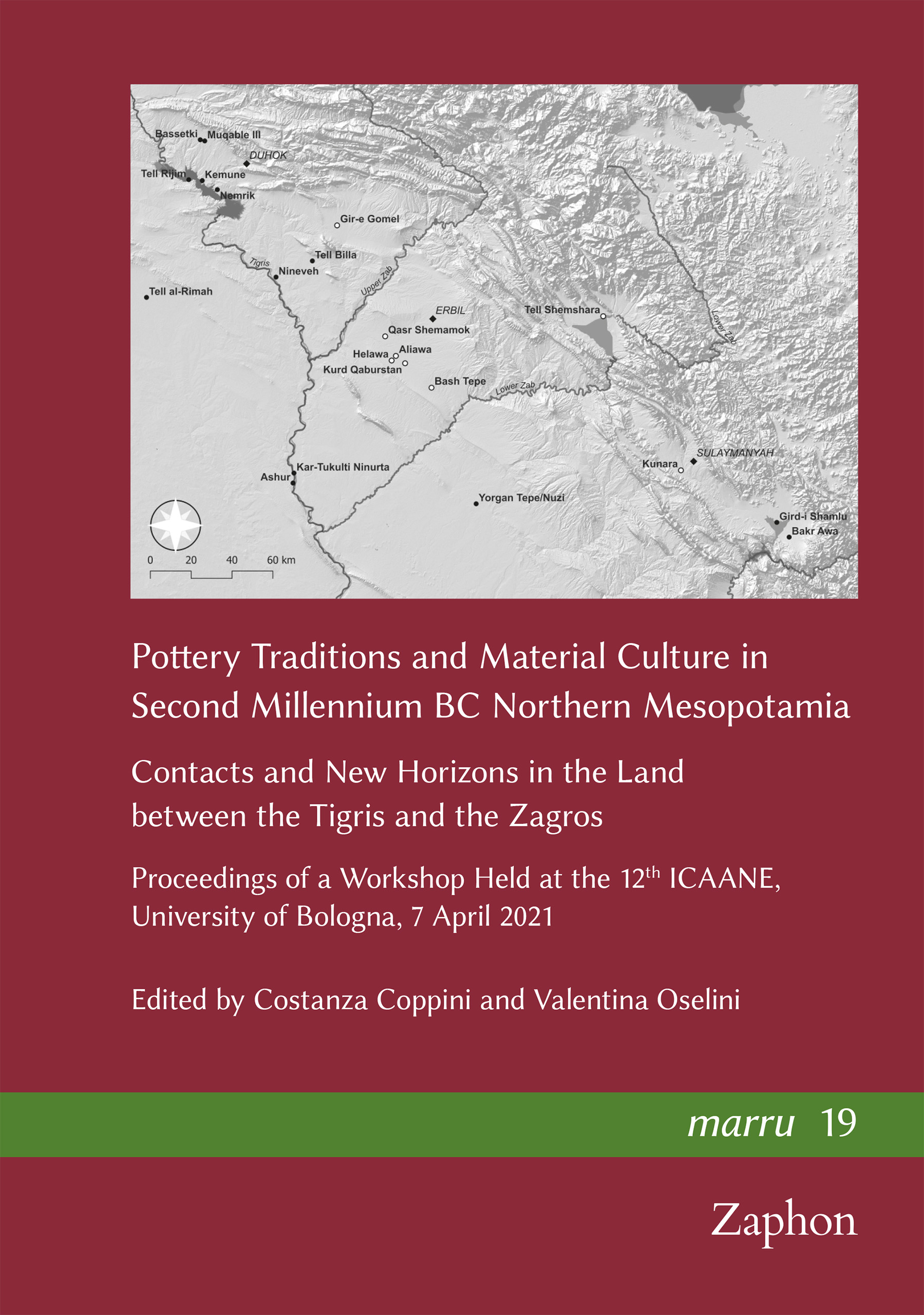 Pottery Traditions and Material Culture in Second Millennium BC Northern Mesopotamia
Contacts and New Horizons in the Land between the Tigris and the Zagros. Proceedings of a Workshop Held at the 12th ICAANE, University of Bologna, 7 April 2021
Volume 19
 Punning in Odd or Elegant Constructions in Jeremiah
The Convergence of Linguistics, Rhetoric, and Textuality in the Hebrew Text of Jeremiah

 Sertorius, the Exiles of the Sullan Regime and the Provinces of the Empire
Legitimacy, Morality and Imperial Discourse in the 70s BCE
 Shame in the Worlds of the Hebrew Bible and Akkadian Texts
A Linguistic Study and Its Implications
Volume 33

 Telling Contexts
Archaeological and Textual Studies in Honor of Elizabeth Bloch-Smith and Mark S. Smith
 The Body
Lived, Cultured, Adorned: Essays on Dress and the Body in the Bible and Ancient Near East in Honor of Nili S. Fox
 The Discourse of Rites
Shaping and Reshaping the (Counter-)Priestly Rituals Conducted Outside the Tabernacle
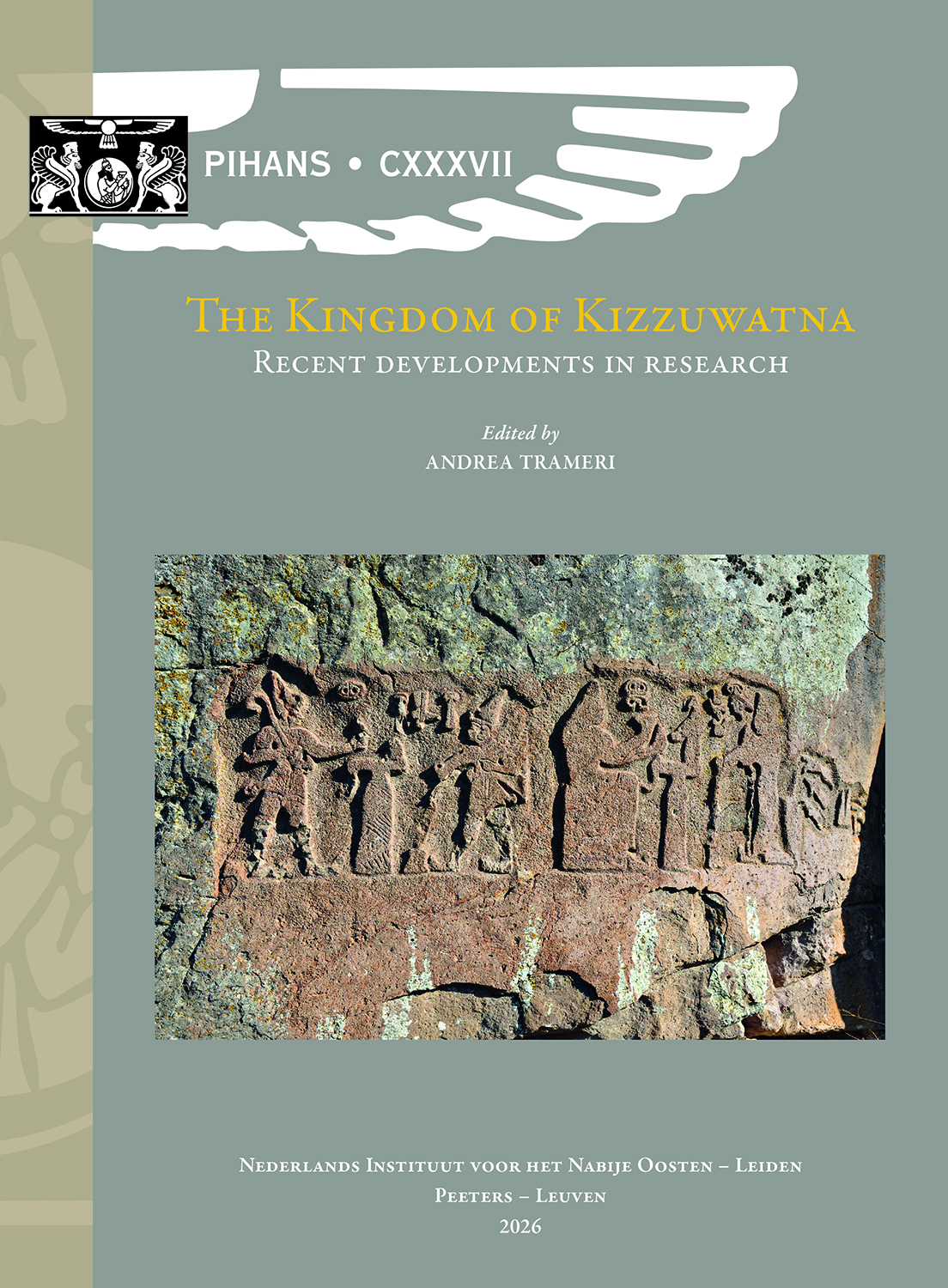 The Kingdom of Kizzuwatna: Recent Developments in Research
Proceedings of the Third NINO Postdoctoral Research Fellow Annual Conference, Leiden, 23rd-25th March 2023
Volume 137
