
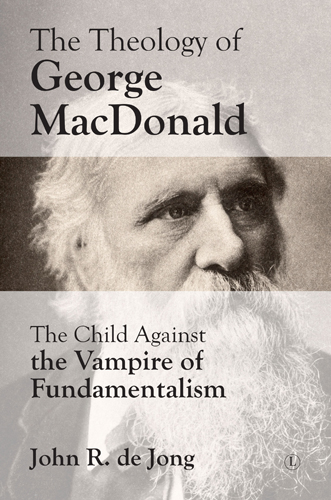
Theology of George MacDonald
The Child against the Vampire of Fundamentalism
by John R. de Jong
Paperback (No longer our product)
(August 2021)
ISBN: 9780718895792
Price: $45.00
In stock
George MacDonald (1824-1905) was writing at a time of Evangelical unease. In a society ravaged by Asiatic cholera, numbed by levels of infant mortality, and fearful of revolution and the toxicity of industry (to name but a few of the many challenges), the “gospel” proclaiming eternal damnation for unbelievers was hardly good news; rather, Christianity was increasingly viewed as the source of bad news and a tool of state oppression. MacDonald agreed: in his view, the church had become a vampire sucking the blood of her children instead of offering them eucharistic life. In contrast, like Christ, MacDonald brings before us a child. Although at first sight a familiar Romantic incarnation, in MacDonald’s theology “the child” becomes an unlikely icon challenging the vampire’s kingdom-a challenge reaching beyond the confines of Evangelicalism, confronting the foundations of much of Western theology. This meticulously-researched study exploring MacDonald’s work- especially his “realist” and fantasy novels- in the light of its Victorian context is of more than historical interest. His incisive critique of church and empire have particular relevance today in light of the growing and troubling alliance between fundamentalist expressions of church and intolerant, right-wing politics. This volume considers MacDonald’s radical solution to religious vampirism; becoming children.
John R. de Jong is a theologian, musician, and writer working at the interface of faith and creativity.
- By (author) John R de Jong
A study not only of the nineteenth century, de Jong's book on George MacDonald is also a warning for our own time and its religious tendencies. MacDonald is often known for little more than his influence on C. S. Lewis and Tolkien, but here he emerges as a serious voice, not a theologian but through literature an explorer of central theological ideas and their influence for good and, too often, ill. John de Jong's knowing and informed revisiting of the theme of the child after Wordsworth and Romanticism is a welcome reminder of its continuing importance today, of the importance of literature, and of the dangers of the vampire of fundamentalism.David Jasper, Emeritus Professor, University of GlasgowThis book is a scholarly achievement of the highest order, and all future work on MacDonald will have to take account of it.Rev Dr John Pridmore, Church Times
—
Similar Books
 ‘For You I Study, For You I Work, For You I Live, For You I Am Ready To Even Give My Life’
Essays in Honour of Francis (Frank) J Moloney, SDB

 A Connecting Polemic in the Medieval Mediterranean
The Correspondence of Leo III and ʿUmar II
Volume 6





 Ars Prophetica
Theology in the Poetry of Twentieth-Century Hebrew Poets Avraham Halfi, Shin Shalom, Amir Gilboa, and T. Carmi
 As Messianism Turns to Heresy
The Regenstein Chair Lectures On Lurianic Kabbalah and Shabbatai Tzevi at Hebrew Union College - Cincinnati


 Creating the Woman in Antiquity
Proceedings of the 16th Melammu Workshop, Innsbruck, 2–3 June 2022
Volume 13
 Cultic Kisses
Fruitful Encounters Between Deities and Humans. Festschrift for Angelika Berlejung on the Occasion of Her 65th Birthday
 De/colonizing Theologies
Glocal Histories, Contemporary Challenges, Theoretical Reflections
Volume 4
 Drunk the Potion, No Whit Charmed
The Doctrine of Pure and Perfect Souls from Iamblichus to Damascius




 Extracanonical Traditions and the Holy Land
Texts, Rituals, and Material Culture in Late Antique Palestine
 Fear, Fear of God, God-Fearers
Philological and Historical Perspectives on the World of Ancient Judaism and Christianity


 Gender and Iconography in Antiquity
Femininities, Masculinities, Ambiguities, and Beyond in the Ancient Levant, Near East, and Mediterranean


 Hoghe minne es deen vor dander
Essays on the Christian Mystical Tradition in Honour of Rob Faesen SJ
Volume 122

 International Comparison and Transfer in Religious Education
The Projects “RE at Schools in Europe” and “International Knowledge Transfer” in Dialogue
 Isaiah in the Fourth Gospel
Use of the Citations of Isaiah in John’s Gospel in Comparison to the Synoptics and Other Places in the New Testament