
The Syriac Script at Turfan
First Soundings
by Martina Galatello

This is the first book-length palaeographic study of about a thousand fragments in Syriac and Sogdian languages discovered between 1902 and 1914 in the Turfan area on the ancient Northern Silk Roads. This manuscript material, probably dating between the late 8th and 13th /14th centuries, is of utmost relevance for the history of an area that represents a crossroads region of various communities, languages and religions, not least the East Syriac Christian community.
This is the first book-length palaeographic study of about a thousand fragments in Syriac and Sogdian languages discovered between 1902 and 1914 in the Turfan area on the ancient Northern Silk Roads. This manuscript material, probably dating between the late 8th and 13th /14th centuries, is of utmost relevance for the history of an area that represents a crossroads region of various communities, languages and religions, not least the East Syriac Christian community. Palaeographic factors such as form, modulus, ductus, contrast, spaces between letters and ligatures have been examined. Particularly significant is a peculiar ligature of the letters sade and nun. One important observation that emerges from this research is the almost total absence of monumental script in favour of mostly cursive forms, most of them East Syriac cursive forms. These represent a valuable source for the study of the history of the East Syriac script due to the paucity of earlier and contemporary East Syriac manuscript evidence from the Middle East, at least before the twelfth century. Moreover, this research sheds light on scribal habits that are highly relevant for a better comprehension of the Sogdian and Syriac-speaking Christian communities, for the history of writing between Late Antiquity and the Middle Ages, and for a greater understanding of the social context in which these and other communities in the same area read, wrote, and shared handwritten texts. This study is part of the FWF stand-alone project “Scribal Habits. A case study from Christian Medieval Central Asia” (PI Chiara Barbati) at the Institute of Iranian Studies of the Austrian Academy of Sciences.
- By (author) Martina Galatello
Other Titles in this Series
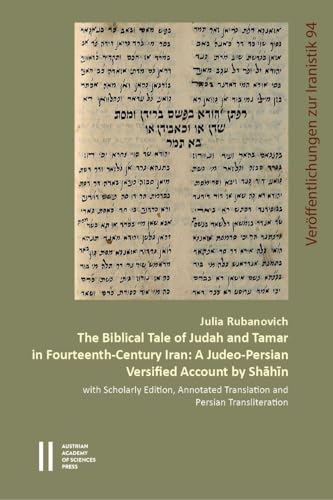 The Biblical Tale of Judah and Tamar in Fourteenth-Century Iran
A Judeo-Persian Versified Account by Shāhīn with Scholarly Edition, Annotated Translation and Persian Transliteration
Volume 94, 951

 The ‘River of Fire’ and the ‘River of Molten Metal’
A Historico-Theological Rafting Through the Rapids of the Christian and Mazdean Apokatastatic Falls
Volume 86


Similar Books
 ‘For You I Study, For You I Work, For You I Live, For You I Am Ready To Even Give My Life’
Essays in Honour of Francis (Frank) J Moloney, SDB


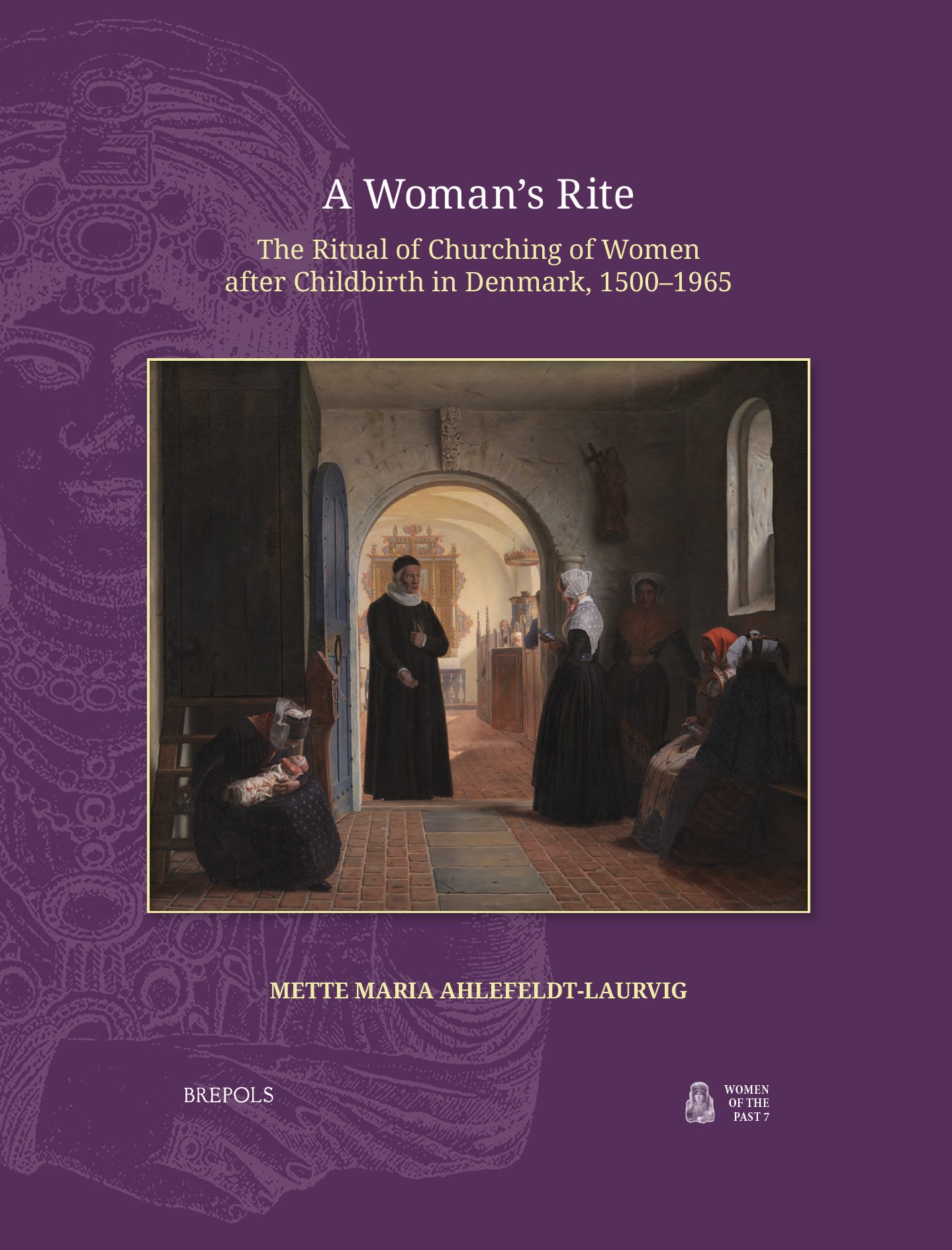


 Ars Prophetica
Theology in the Poetry of Twentieth-Century Hebrew Poets Avraham Halfi, Shin Shalom, Amir Gilboa, and T. Carmi
 As Messianism Turns to Heresy
The Regenstein Chair Lectures On Lurianic Kabbalah and Shabbatai Tzevi at Hebrew Union College - Cincinnati


 Cities through Time
Glimpses into Urbanity and Community in Mediaeval to Modern West Asia and Egypt
Volume 1
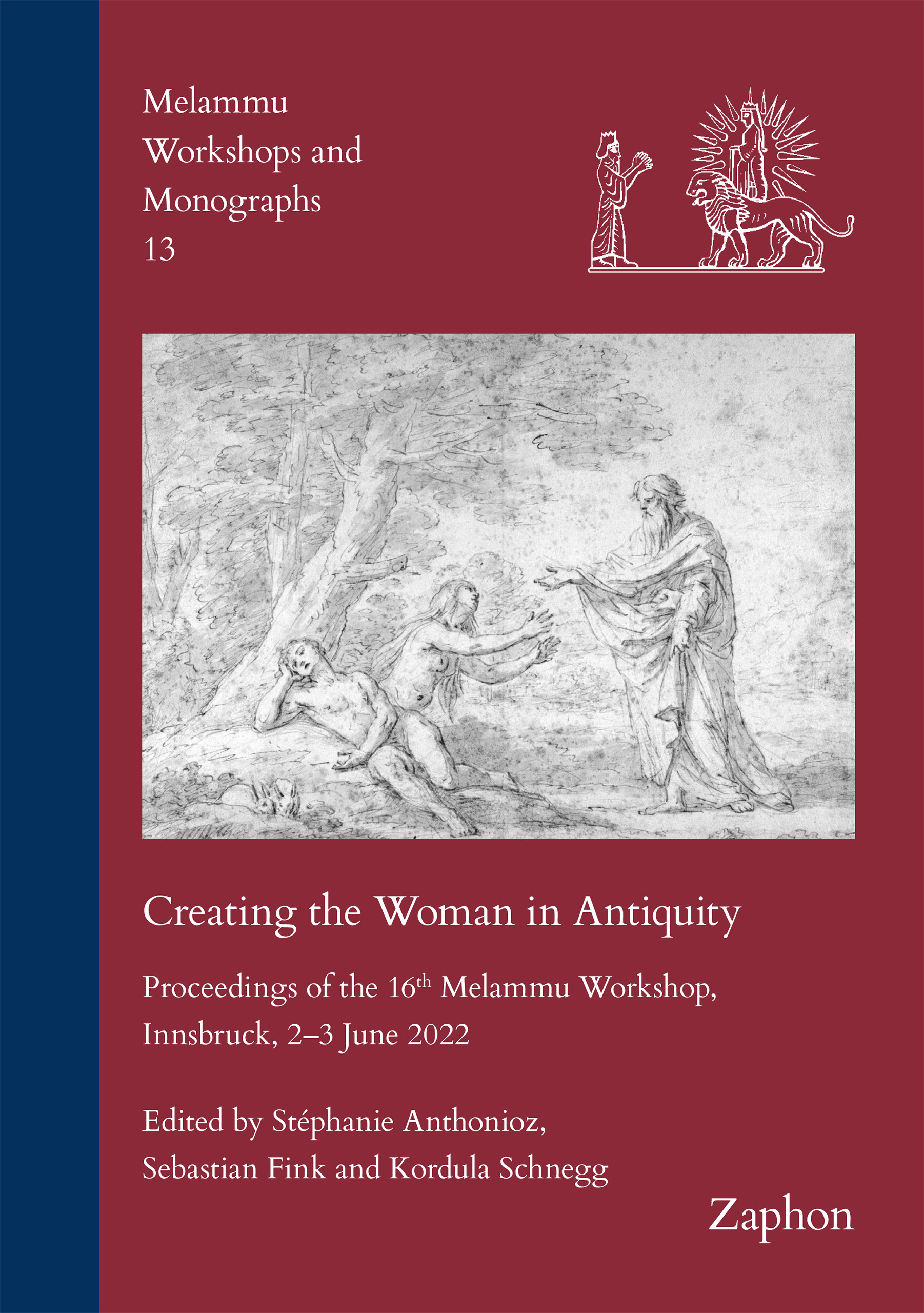 Creating the Woman in Antiquity
Proceedings of the 16th Melammu Workshop, Innsbruck, 2–3 June 2022
Volume 13
 Cuneiform Artefacts from Archaeological Contexts: New Research on Ancient Iraq
Proceedings of a Conference Held at the Bavarian Academy of Sciences and Humanities, July 4–5, 2024
Volume 2
 Des mots aux actes
Traduction épistémique et littéraire. Nouvelles tendances en histoire et didactique
Volume 15


 Drunk the Potion, No Whit Charmed
The Doctrine of Pure and Perfect Souls from Iamblichus to Damascius


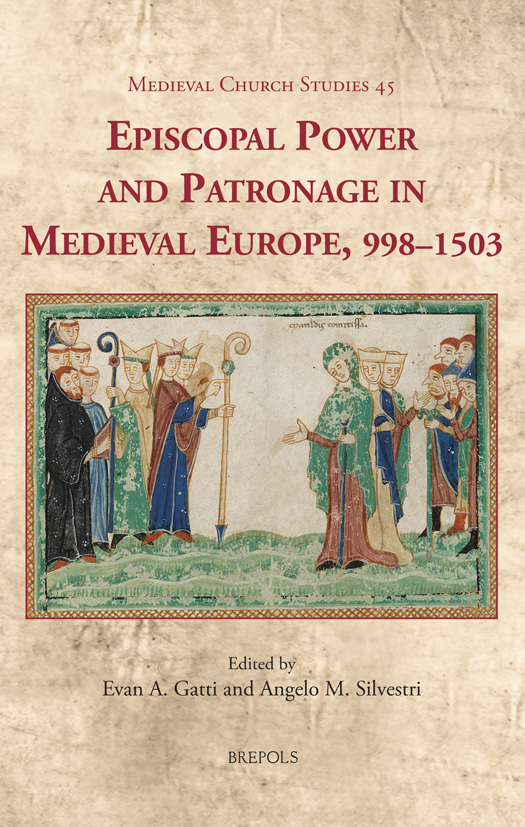

 Extracanonical Traditions and the Holy Land
Texts, Rituals, and Material Culture in Late Antique Palestine
 Fear, Fear of God, God-Fearers
Philological and Historical Perspectives on the World of Ancient Judaism and Christianity


 Global Gulf
Geo-Economic, Geo-Political, and Geo-Technological Transformation in Saudi Arabia, the United Arab Emirates, and Qatar

