The Maritime Traditions of the Fishermen of Socotra, Yemen
By (author) Julian Jansen van Rensburg

Paperback (Published)
(November 2016)
ISBN: 9781784914820
8.07 x 11.46 inches
Price: $66.00
In stock
This research analyses the Socotri maritime traditions and addressing the question as to how social, environmental and technological influences have shaped the maritime traditions of the fishermen of Socotra (205 nautical miles south of Yemen).
The Socotra archipelago lies approximately 135 nautical miles (Nm) northeast of Cape Guardafui, Somalia and 205Nm south of Ras Fartaq, Yemen. The archipelago is made up of four main islands, Socotra, cAbd al-Kuri, Sam?a and Darsa, of which Socotra is the largest and most densely populated. The population of Socotra is divided between the interior pastoralists and the coastal fishermen and traders. While scholarly studies concerning the interior population abound, the fishermen of Socotra have received comparatively less attention and little about them or their traditions is known. This research seeks to address this balance by analysing the Socotri maritime traditions and addressing the question as to how social, environmental and technological influences have shaped the maritime traditions of the fishermen of Socotra. The primary data forming the basis of this book is author’s ethnographic fieldwork carried out on the islands of Socotra and Sam?a between 2009 and 2010. This data is incorporated within a transdisciplinary framework that looks at some of the essential factors of historical, archaeological and environmental evidence to gain a holistic insight into the spatial and temporal factors affecting the maritime traditions of the fishermen.
Julian Jansen van Rensburg received his doctorate in September 2013 from the Institute of Arab and Islamic Studies at the University of Exeter. His thesis examined how local, regional and global influences have, over time, influenced the traditions and technologies of the maritime communities on the island of Socotra, Yemen. This research formed part of the MARES Project, a multi-disciplinary, multi-period project focusing on the maritime traditions of the peoples of the Red Sea and Arabian-Persian Gulf. Following his doctorate he was awarded funding from the Honor Frost Foundation to undertake research into the tangible and intangible maritime heritage of the fishing communities in Anfeh, Lebanon. This research project included a maritime ethnographic workshop for Lebanese students and members of local NGOs. The workshop was used to train the participants in quantitative and qualitative techniques of maritime ethnography and traditional vessel recording. This research formed a part of the wider Anfeh Project being run by the University of Balamand. Subsequently, Julian received a National Geographic grant to study rock art on Socotra, the results of which are part of his current research as a Dahlem Research School POINT Fellow within the Excellence Cluster Topoi. He holds positions on the steering committee for the British Foundation for the Study of Arabia and the Executive Committee of the Friends of Socotra. He is also an Assistant Editor of the Proceedings for the Study of Arabia. His research interests include underwater archaeology, maritime ethnography and the typology of traditional boats of the Near East, rock art studies, GIS applications in archaeology, landscape archaeology, island and coastal archaeology, Indian Ocean trade networks in Antiquity and the Islamic Period, and cultural heritage management.
- By (author) Julian Jansen van Rensburg
Similar Books
 Cities through Time
Glimpses into Urbanity and Community in Mediaeval to Modern West Asia and Egypt
Volume 1

 Islamic Rituals Beyond the Mosque
Historical Evolution of Prayer and Devotion in Physical Space and Cyberspace
 Ismail Hakki Bursevi’s translation of and commentary on Fusus al-Hikam By Muhyiddin Ibn ‘Arabi
Volumes 1-4

 Qatar’s Societal Security
Towards the Inclusive National Concept of ‘Baladna’ Identity, Migration and External Threats Since 2017


 Beiträge zur Islamischen Kunst und Archäologie
The Arts and Archaeology of Funerary Cultures in Islam
Volume 10.0

 Explorations in Islamic Archaeology
Material Culture, Settlements, and Landscapes from the Mediterranean to Western Asia
Volume 7


 Occasionalism Revisited
New Essays from the Islamic and Western Philosophical Traditions (2nd ed.)
Volume 2
 Proceedings of the Seminar for Arabian Studies Volume 54 2025
Papers from the fifty-seventh meeting of the Seminar for Arabian Studies held at the Institut national d’histoire de l’art, Paris, 27–29 June 2024
 The Logic of al-Fanari
A Study and Annotated Translation of al-Fanari's Commentary on the Isaghuji
Volume 3


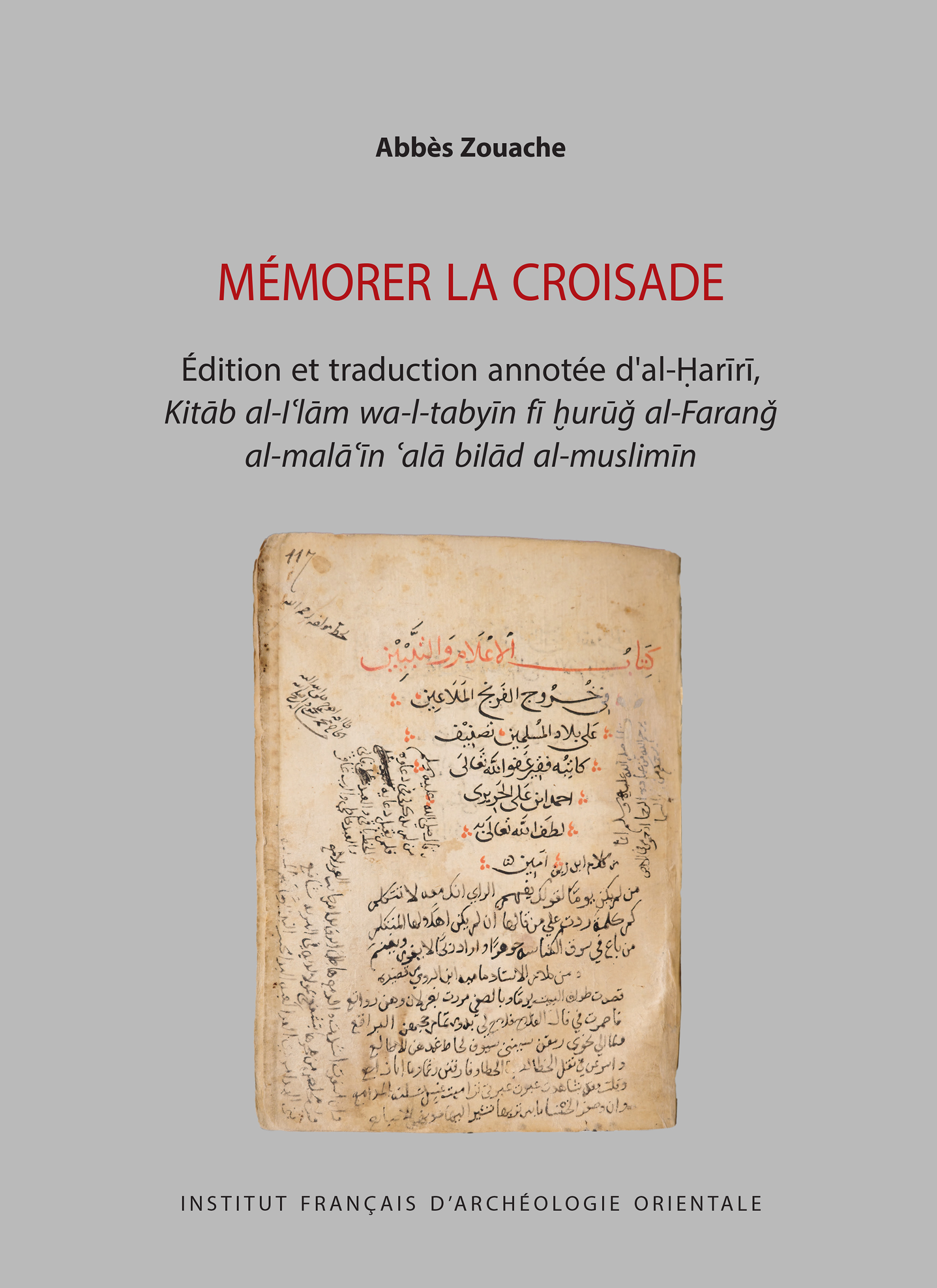 Memorer la croisade
Edition et traduction annotee dal-Hariri, Kitab al-I'lam wa-l-tabyin fi hurug al-Farang al-mala'in 'ala bilad al-muslimin
Volume 64


 Freedom Revisited
A Comparative Theological Approach to the Question of Free Will in Islam
Volume 40


 History of the Oil Industry in the Gulf and the People Who Made it Happen, 1934-1966
Based on Original Documents of Abu Dhabi Petroleum Company
 Navigating Language in the Early Islamic World
Multilingualism and Language Change in the First Centuries of Islam
Volume 2
 Proceedings of the Seminar for Arabian Studies Volume 53 2024
Papers from the fifty-sixth meeting of the Seminar for Arabian Studies held in Aarhus 4–6 August 2023


 The Trucial Coast Political Reports 1963-1966
From Pearls to Oil - at Last. With an Index for vols 1-5
 Zoroastrian Hermeneutics in Late Antiquity
Commentary on the 'Sudgar Nask' of 'Denkard' Book 9
Volume 32