
The Drawings of Peter Paul Rubens, A Critical Catalogue, Volume Three, 1621-1640
Part One: Text and Part Two: Plates
by Anne-Marie Logan and Kristin Lohse Belkin

This is the final volume of the catalogue raisonne of the drawings by Peter Paul Rubens, covering the years 1621-1640. The project is a collaboration between Anne-Marie Logan, to whom belong all the Rubens attributions, and Kristin Lohse Belkin. It is the first publication that presents the artist’s entire drawn oeuvre in chronological order, previous such publications containing only selections of drawings. Accordingly, Volume III consists of the drawings from 1621 to the artist’s death in 1640. The first decade is characterized by Rubens’s first foreign commission, the paintings for the Luxembourg Palace, Marie de’ Medici, the Queen Mother’s new residence in Paris, and by the demands of the artist’s diplomatic missions to the courts of Madrid and London. In contrast to the works requested by Rubens’s official duties, especially portraiture, a subject not of primary interest to the artist before, are the paintings and drawings of the second decade, predominantly inspired by the elderly painter’s marriage to the young Helena Fourment and the love and deep affection for his wife and her children. Court portraits are replaced by images of his family a trois crayons, Rubens preferred medium in these years. Helena in disguise appears in the artist’s religious, mythological and genre paintings, most gloriously in the series of drawings for The Garden of Love. Commissions for altarpieces continue but unlike the black chalk anatomical studies of the 1610s, preparatory drawings now consist of head studies in black and red chalk, the latter used for the capture and color of skin. At the same time, images of domestic bliss are accompanied by drawings of the Flemish countryside, especially after Rubens’s purchase of the seignorial estate Het Steen in 1635. In addition, Rubens continues to design title-pages and even to make copies after older works of art that constitute such a large part of his earliest output. But the activity of copying the works of his predecessors for the purpose of artistic instruction now has turned into the antiquarian’s pursuit of knowledge and the collector’s desire and delight, as Rubens records ancient gems and cameos in a series of drawings with the aim of a scholarly publication that, however, never materialized. As in previous volumes, each entry consists of a detailed physical description of the drawing, provenance, exhibition history, full bibliography and a critical, interpretive discussion. All drawings by Rubens as well as a selection of comparative images are reproduced in color as far as possible.
This is the final volume of the catalogue raisonne of the drawings by Peter Paul Rubens, covering the years 1621-1640. The project is a collaboration between Anne-Marie Logan, to whom belong all the Rubens attributions, and Kristin Lohse Belkin. It is the first publication that presents the artist’s entire drawn oeuvre in chronological order, previous such publications containing only selections of drawings. Accordingly, Volume III consists of the drawings from 1621 to the artist’s death in 1640. The first decade is characterized by Rubens’s first foreign commission, the paintings for the Luxembourg Palace, Marie de’ Medici, the Queen Mother’s new residence in Paris, and by the demands of the artist’s diplomatic missions to the courts of Madrid and London. In contrast to the works requested by Rubens’s official duties, especially portraiture, a subject not of primary interest to the artist before, are the paintings and drawings of the second decade, predominantly inspired by the elderly painter’s marriage to the young Helena Fourment and the love and deep affection for his wife and her children. Court portraits are replaced by images of his family a trois crayons, Rubens preferred medium in these years. Helena in disguise appears in the artist’s religious, mythological and genre paintings, most gloriously in the series of drawings for The Garden of Love. Commissions for altarpieces continue but unlike the black chalk anatomical studies of the 1610s, preparatory drawings now consist of head studies in black and red chalk, the latter used for the capture and color of skin. At the same time, images of domestic bliss are accompanied by drawings of the Flemish countryside, especially after Rubens’s purchase of the seignorial estate Het Steen in 1635. In addition, Rubens continues to design title-pages and even to make copies after older works of art that constitute such a large part of his earliest output. But the activity of copying the works of his predecessors for the purpose of artistic instruction now has turned into the antiquarian’s pursuit of knowledge and the collector’s desire and delight, as Rubens records ancient gems and cameos in a series of drawings with the aim of a scholarly publication that, however, never materialized. As in previous volumes, each entry consists of a detailed physical description of the drawing, provenance, exhibition history, full bibliography and a critical, interpretive discussion. All drawings by Rubens as well as a selection of comparative images are reproduced in color as far as possible.
- By (author) Kristin Lohse Belkin
- By (author) Anne-Marie Logan
Other Titles in this Series
 Peter Snayers (1592-1667)
Between Remembrance and Glorification: A Contextual Study of the Topographical Battle Paintings for the Habsburg Elite
Volume 22

 Van Dyck’s Hosts in Genoa
Lucas and Cornelis de Wael's Lives, Business Activities and Works
Volume 19


 Denijs van Alsloot (vers 1568? – 1625/26)
Peintre paysagiste au service de la cour des archiducs Albert et Isabelle Volume I
Volume 15

 Denijs van Alsloot (vers 1568? – 1625/26)
Peintre paysagiste au service de la cour des archiducs Albert et Isabelle
Volume 15

 Corporate Splendour. Civic Group Portraits in Brabant 1585-1800
A Social, Typological, and Iconographic Approach
Volume 18


 The Drawings of Peter Paul Rubens, A Critical Catalogue, Volume Two (1609-1620)
Part One: Text and Part Two: Images
Volume 23


Similar Books


 Balthasar Caymox of Nuremberg
Early Modern German Print Publishers: Popular Prints of the Seventeenth Century
 Beyond Sovereign Courts
Agents and Practices in Early Modern Spanish and Habsburg Diplomacy
Volume 3

 Circulation, Use, Impact
The Consumption of Architectural Books in the Early Modern Eastern Adriatic
Volume 1

 Councils, Conflicts, Correspondence
Urban Diplomacy in Reval (Tallinn) and Lübeck (c. 1470–1570)
Volume 67


 Innovationes Lovanienses: Arts, Law and Theology at the University of Louvain (1425–1797)
Studium Lovaniense: Learning across Borders, 2
Volume 18
 Legal Visuality
Exegesis, Ambiguity, and Dissimulation of the Donation of Constantine in the Early Modern Period

 Naples as Laboratory / Laboratorium Neapel
Style Options, Artistic Rivalry and Self Fashioning in Neapolitan Baroque Painting / Plurale Stilbildung, Kunstlerkonkurrenz und Self Fashioning in der neapolitanischen Barockmalerei
 Power and Women in Southeast and Central Europe in Late Medieval and Early Modern Period (1300-1600)
Volume 10



 Staging the Spectacle of Majesty
Ceremonial, Courtly Space, and Collecting under the Spanish Habsburgs
Volume 9
 Students, Scholars and Their Books at the University of Louvain (1425-1797)
Studium Lovaniense: Learning across Borders, 1
Volume 17


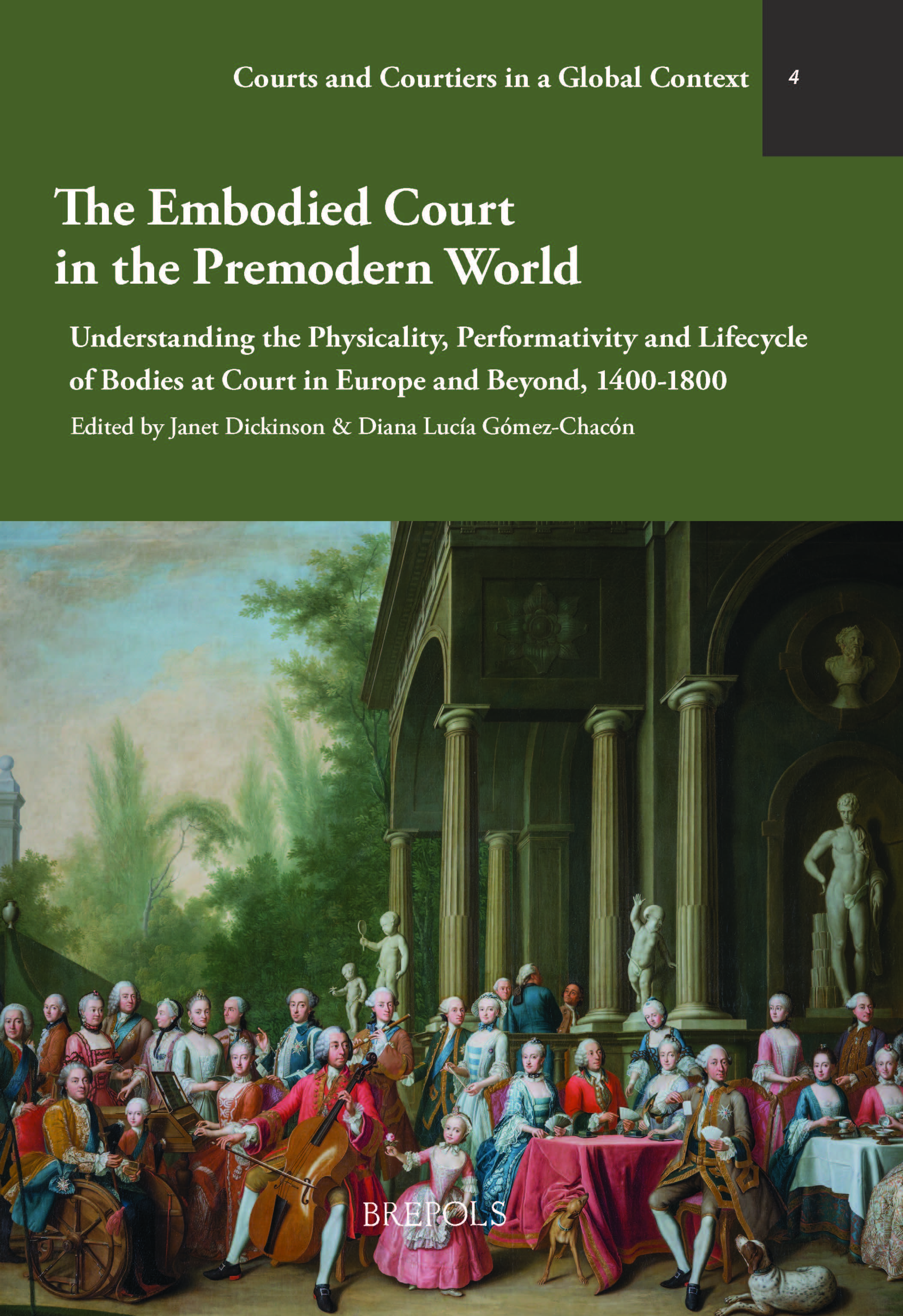 The Embodied Court in the Premodern World
Understanding the Physicality, Performativity and Lifecycle of Bodies at Court in Europe and Beyond, 1400-1800
Volume 4

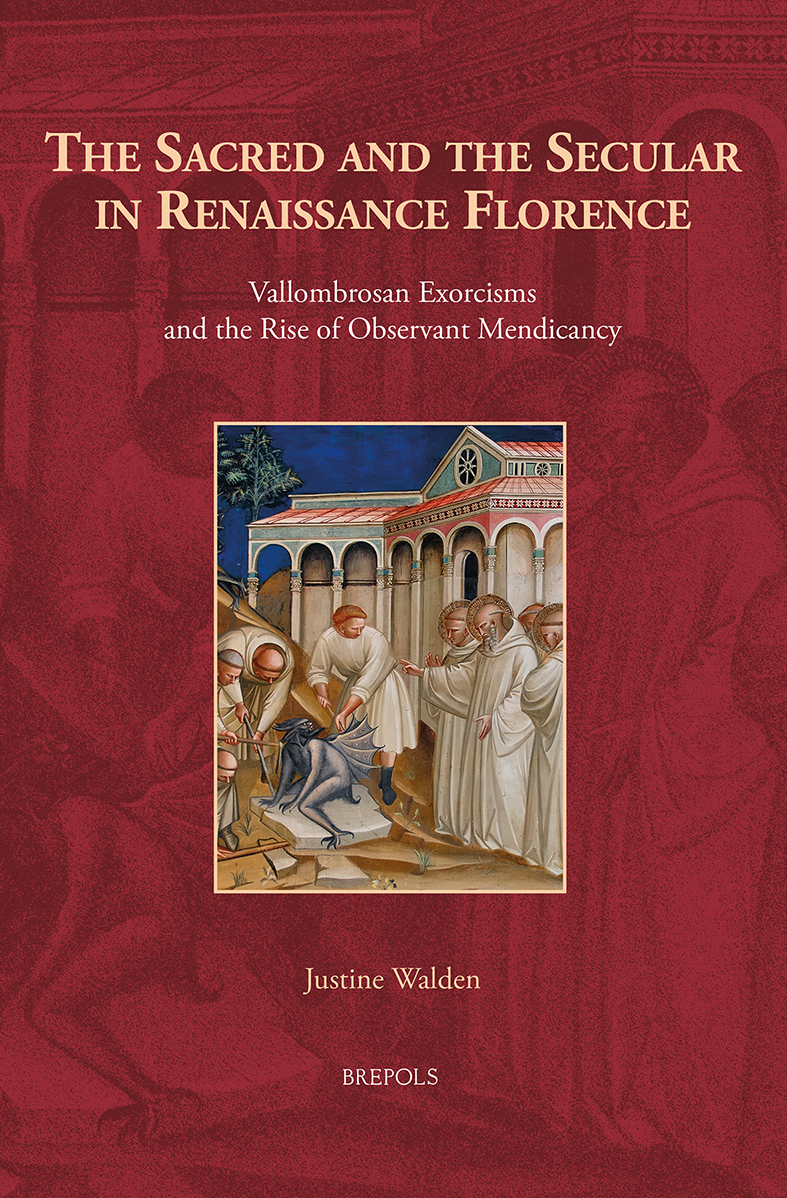 The Sacred and the Secular in Renaissance Florence
Vallombrosan Exorcisms and the Rise of Observant Mendicancy
Volume 31
 Tradition, Interpretation, and Change
Developments in the Liturgy of Medieval and Early Modern Ashkenaz

 À la recherche des normes de traduction
Textes spécialisés dans le monde hispanophone et francophone (1450–1850)

 Briefe einer Fürstin aus dem Dreißigjährigen Krieg
Die Korrespondenz der Kaiserin Maria aus den Jahren 1629 bis 1645
 Die Lutherbibel (1541) des Seidenstickers Hans Plock
Eine buchbiographische und kulturhistorische Untersuchung
Volume 89


