
The Divine Voice in Paul’s Letters
The Use of Scripture as Theopoiesis and Paul’s Characterization of God
By (author) Gregory M. Barnhill

Paperback (Forthcoming)
(December 2026)
ISBN: 9783162006417
6.1 x 9.13 inches
Price: $180.00
Gregory M. Barnhill reads Paul’s quotations of first-person divine speech as theopoiesis: Paul’s creative use of scriptural words to characterize God and to make God present to his hearers. The Christ-event, he argues, transformed the way Paul read Scripture and understood the God who speaks.
In this study, Gregory M. Barnhill demonstrates the theological significance of the many instances in Paul’s letters in which he quotes first-person divine speech from the Jewish Scriptures. The author systematically analyzes twenty-eight instances of God’s scriptural speeches and considers their rhetorical and theological implications, going beyond previous observations of the phenomenon.
To ground Paul’s use of first-person speech quotations historically, the study draws upon the rhetorical practice of “speech-in-character” (prosopopoeia), a concept of poetic persuasion that emphasizes the pathos of such speeches, and the hermeneutical technique of segmentation as developed by scholars of Jewish exegetical practices. Based upon these practices, the author proposes the term theopoiesis as a suitable shorthand for Paul’s use of the divine voice through Scripture quotations, defining it as Paul’s creative use of scriptural words in the new context of his letters to characterize God and to invoke God’s presence through speech so that Paul’s audiences would both understand and encounter God as they listened to Paul’s letters.
Finally, the author shows what Paul’s uses of theopoiesis mean for the question of Paul’s understanding of God. God’s speeches provide clear evidence that Paul has understood God in new ways under the influence of the apocalyptic Christ-event and its resulting theological epistemology. While Paul draws upon traditional Jewish concepts of God and upon the Scriptures to construct the divine voice, Paul’s reading of the Scriptures and understanding of God have ultimately been transformed because of the generative influence of the Christ-event.
Chapter 1: Introduction
1.1 God in Paul's Letters and Theology in Recent Study
1.2 The Present Study
1.3 Preview
Chapter 2: Introducing Theopoiēsis
2.1 Paul's Use of the Jewish Scriptures
2.2 The Voices of Scripture
2.3 Proposals Regarding God as Speaker of Scripture
2.4 Rhetorical Criticism: Prosopopoeia
2.5 Poetic Persuasion
2.6 Segmentation of Scriptural Speeches
2.7 Defining Theopoiēsis and Cataloguing Paul's Uses of It
2.8 Chapter Conclusion
Chapter 3: Knowing the God Who Speaks
3.1 Knowing the God Who Destroys Human Wisdom: Theopoiēsis in 1 Corinthians 1:19
3.2 "From Darkness, Light Shall Shine": Theopoiēsis in 2 Corinthians 4:6
3.3 Reconciliation, Righteousness, and New Creation: Theopoiēsis in 2 Corinthians 6:2
3.4 Chapter Conclusion
Chapter 4: The Lord Speaks: ΛέγειΚύριος Quotations in Paul's Letters
4.1 Why Does Paul Use ΛέγειΚύριος? A Proposal
4.2 The Lord and God in Romans 14:11
4.3 The Lord Jesus in Romans 12:19
4.4 The Speaking Lord in 1 Corinthians 14:21
4.5 Chapter Conclusion
Chapter 5: God Speaks to the Nations
5.1 The Authenticity and Integrity of 2 Corinthians 6:14-7:1
5.2 Analysis of Paul's Creation of Theopoiēsis in 2 Corinthians 6:16-18
5.3 The Function of Paul's Theopoiēsis and 6:14-7:1 in the Letter
5.4 Characterization of God through Theopoiēsis
5.5 Chapter Conclusion
Chapter 6: God's Life-Giving Promise
6.1 Historical Situations of Romans and Galatians
6.2 The God Who Calls into Existence (Romans 4:3, 17, 18)
6.3 The God Who Gives the Promise of the Spirit through Faith
6.4 Chapter Conclusion
Chapter 7: God's Mercy to Jews and Gentiles
7.1 Introductory Matters
7.2 Paul's Thesis and Theopoiēsis
7.3 The God of the Promise: Romans 9:6-9
7.4 The God Who Calls: Romans 9:10-13
7.5 The God Who Shows Mercy: Romans 9:14-18
7.6 The God Who Calls Jews and Gentiles: Romans 9:24-26
7.7 God Rigs the Race: Romans 9:30-10:13
Chapter 8: God Speaks to Israel
8.1 God, Israel, and the Nations Again: Romans 10:14-21
8.2 The Remnant of Israel in Romans 11:4
8.3 God's Mystery of Israel's Salvation in Romans 11:25-27
8.4 Chapter Conclusion: Paul's Use of Theopoiēsis in Romans 9-11
Chapter 9: Conclusion
9.1 Hermeneutics and Functions of Theopoiēsis
9.2 Theopoiēsis and Paul's Understanding of God
9.3 Apocalyptic Interpretation and Apocalyptic Epistemology
- By (author) Gregory M. Barnhill
Other Titles in this Series
 The Mission of Jesus
Second Nordic Symposium on the Historical Jesus, Lund, 7-10 October 2012
Volume 391


 Paul’s Inclusive Ethic
Resolving Community Conflicts and Promoting Mission in Romans 14-15
Volume 252
 From Messiah to Preexistent Son
Jesus' Self-Consciousness and Early Christian Exegesis of Messianic Psalms
Volume 192
 The Colossian Hymn in Context
An Exegesis in Light of Jewish and Greco-Roman Hymnic and Epistolary Conventions
Volume 228
 Erwahlung und Berufung bei Paulus
Bedeutung, Entwicklung und Funktion einer Vorstellung in ihrem fruhjudischen und griechisch-romischen Kontext
Volume 630

 Die Niedrigkeit Jesu und seiner Jungerschaft
Eine Studie zur Korrelation von Ethik und Christologie in Mt 16,21-20,34
Volume 549


 Exploring Johannine Ethics
A Rhetorical Approach to Moral Efficacy in the Fourth Gospel Narrative
Volume 449


 Sensitivity towards Outsiders
Exploring the Dynamic Relationship between Mission and Ethics in the New Testament and Early Christianity

 Pauline Communities as ‘Scholastic Communities’
A Study of the Vocabulary of 'Teaching' in 1 Corinthians, 1 and 2 Timothy and Titus
Volume 335


 Die Wunder an den Widersachern
Wunderhermeneutik am Beispiel der Strafwunder im lukanischen Doppelwerk
Volume 612


 The Temple Keys of Isaiah 22:22, Revelation 3:7, and Matthew 16:19
The Isaianic Temple Background and Its Spatial Significance for the Mission of Early Christ Followers
Volume 559


Similar Books


 Athanasius of Alexandria, Epistula ad episcopos Aegypti et Libyae
Old Slavonic Version and English Translation
Volume 261


 Cyril of Alexandria’s Christological Exegesis
Explorations of Partitive Exegesis in the Dialogues on the Trinity
Volume 70


 Epiphanies of the Divine in the Septuagint and the New Testament
Fifth International Symposium of the Corpus Judaeo-Hellenisticum Novi Testamenti (CJHNT), 14-17 May 2015, Nottingham

 Extracanonical Traditions and the Holy Land
Texts, Rituals, and Material Culture in Late Antique Palestine
 From Joseph to Jesus
The Joseph Narrative as a Compositional Template from Old Greek Esther to the Gospel of Luke
Volume 125


 Paradise Lost in Transmission
The Return to Eden in the Apocalypse of Peter within Its Ethiopic and Early Christian Contexts



 Punning in Odd or Elegant Constructions in Jeremiah
The Convergence of Linguistics, Rhetoric, and Textuality in the Hebrew Text of Jeremiah

 Shame in the Worlds of the Hebrew Bible and Akkadian Texts
A Linguistic Study and Its Implications
Volume 33

 Tabernacle, Table, Ark, and Text
Richard of Saint Victor on the Interpretation of Scripture
Volume 67
 The Anglo-Norman Bible’s Books of Kings, a Critical Edition
(BL Royal 1 C III, fols 234r-274v)
Volume 37
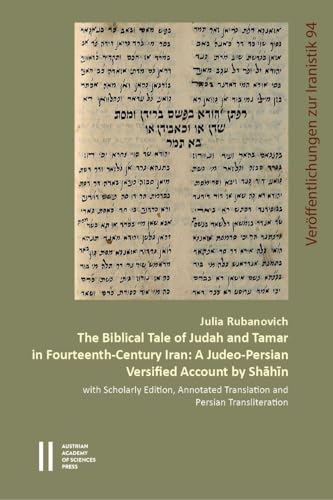 The Biblical Tale of Judah and Tamar in Fourteenth-Century Iran
A Judeo-Persian Versified Account by Shāhīn with Scholarly Edition, Annotated Translation and Persian Transliteration
Volume 94, 951
 The Body
Lived, Cultured, Adorned: Essays on Dress and the Body in the Bible and Ancient Near East in Honor of Nili S. Fox

 The Compositional History of the Book of Kings
An Analysis of the Evaluative Frameworks in 1 Kings 14–2 Kings 25
 The Discourse of Rites
Shaping and Reshaping the (Counter-)Priestly Rituals Conducted Outside the Tabernacle


