
Ships of the Desert and Ships of the Sea
Palmyra in the World Trade of the First Three Centuries CE
by Eivind Heldaas Seland

In the Roman period, the world from the Atlantic Ocean to the East China Sea was tied together by ships and caravans carrying textiles, minerals, aromatics, and other valuable commodities across vast distances. In the span of three short centuries, the Syrian city of Palmyra rose from unremarkable origins to assume a key role in this exchange a position that eventually enabled her to, albeit unsuccessfully, take on the might of Rome herself. This first book-length survey of Palmyrene trade in almost four decades asks how this was possible for the people of a city that was neither on the shortest, nor on the easiest route between east and west. The study draws on the wealth of epigraphic, literary, and archaeological data handed down from the ancient city as well as the extensive scholarly tradition. This material is juxtaposed with information about the natural and geopolitical environment, ethnographic records, and network analysis, in order to explain the remarkable success of the cosmopolitan desert nomads of Palmyra.
In the Roman period, the world from the Atlantic Ocean to the East China Sea was tied together by ships and caravans carrying textiles, minerals, aromatics, and other valuable commodities across vast distances. In the span of three short centuries, the Syrian city of Palmyra rose from unremarkable origins to assume a key role in this exchange a position that eventually enabled her to, albeit unsuccessfully, take on the might of Rome herself. This first book-length survey of Palmyrene trade in almost four decades asks how this was possible for the people of a city that was neither on the shortest, nor on the easiest route between east and west. The study draws on the wealth of epigraphic, literary, and archaeological data handed down from the ancient city as well as the extensive scholarly tradition. This material is juxtaposed with information about the natural and geopolitical environment, ethnographic records, and network analysis, in order to explain the remarkable success of the cosmopolitan desert nomads of Palmyra.
- By (author) Eivind Heldaas Seland
Other Titles in this Series
 Das Charisma der Konige
Zur Konzeption des altorientalischen Konigtums im Hinblick auf Urartu
Volume 84
 Raumkonzeptionen in antiken Religionen
Beitrage des internationalen Symposiums in Gottingen, 28. und 29. Juni 2012
Volume 69
 Historiographie – Ethnographie – Utopie. Gesammelte Schriften
Studien zur Utopie und der Imagination fremder Welten
Volume 18.2

 Amministrare e comunicare nell’Egitto tolemaico
La funzione delle copie (antigrapha) nella documentazione papirologica
Volume 149

 Goliath’s Legacy
Philistines and Hebrews in Biblical Times, Translated from Polish by Maria Kantor
Volume 83
 Der Orient und die Anfange Europas
Kulturelle Beziehungen von der Spaten Bronzezeit bis zur Fruhen Eisenzeit
Volume 42


 Studien zur lex rivi Hiberiensis
Zur Rechtsdurchsetzung innerhalb einer Bewasserungsgemeinschaft im 2. Jh. n. Chr.

 Die Waffengraber der agaischen Bronzezeit
Waffenbeigaben, soziale Selbstdarstellung und Adelsethos in der minoisch-mykenischen Kultur
Volume 52


 Die Personennamen des Alten Reiches
Altagyptische Onomastik unter lexikographischen und sozio-kulturellen Aspekten
Volume 28
 Mensch und Umwelt im Spiegel der Zeit
Aspekte geoarchaologischer Forschungen im ostlichen Mittelmeer
Volume 1

 Teichos
Vom endneolithischen Wehrdorf zum spatosmanischen Tambouri: 5000 Jahre Festungswesen in Attika
Volume 151


 Zwischen Entwurf und Produkt
Die griechisch-romischen Gipsformen aus Agypten im Museum August Kestner, Hannover. Mit einer CD-Rom der abgebildeten Museumsobjekte
Volume 44
 Attika – Archaologie einer ‘zentralen’ Kulturlandschaft
Akten der internationalen Tagung vom 18.-20. Mai 2007 in Marburg
Volume 37

 Change, Continuity, and Connectivity
North-Eastern Mediterranean at the turn of the Bronze Age and in the early Iron Age

 The Letter
Law, State, Society and the Epistolary Format in the Ancient World Proceedings of a Colloquium held at the American Academy in Rome 28-30.9.2008
Volume 55.1
Similar Books





 Boğazköy Tablets in the Museum of Anatolian Civilizations (Bo 9032–Bo 9097)
Anadolu Medeniyetleri Müzesinde Bulunan Boğazköy Tabletleri (Bo 9032–Bo 9097)
Volume 4
 Caesar’s Visions and Impact on the Roman Empire
Revisiting the Archaeological and Historical Record of the 40s BC
Volume 2

 Connecting the Dots: Counting, Writing, and the Beginnings of Civilization
The Secret Lives of Clay Tokens: A Memoir
 Construction Processes in Historical Western Societies (5th c. BC – 10th c. AD)
Case Studies on Techniques, Models, and Costs

 Curating the Prehistoric Past
Studies on West Asian Archaeology and Beyond in Honour of Yoshihiro Nishiaki


 Etruscan and Roman Hellenistic Anatomical ex votos
Reassessing Popular Religious Expressions in Central Italy
Volume 8

 Exploring Gender Dynamics across the Ancient Near East
Collected Essays of Gender and Methodology in the Ancient Near East (GeMANE) 4 and 5
Volume 7


 Ḫattušaš utnē išḫameški
Hittite and Other Ancient Near Eastern Studies Presented to Piotr Taracha on the Occasion of His 65th Birthday



 Invisible Labour in Antiquity
Visualizing Obscure Work in the Ancient Mediterannean and West Asia
Volume 1


 Kultur – Kontakt – Kultur
Beiträge anlässlich der 66. Rencontre Assyriologique Internationale in Frankfurt/Main und Mainz, 25.–29. Juli 2022
Volume 35
 Late Antique villae in the Balkans (3rd–7th c. AD): Current Research Questions and Perspectives
HAEMUS Companion to the Late Antique Balkans 1
Volume 4


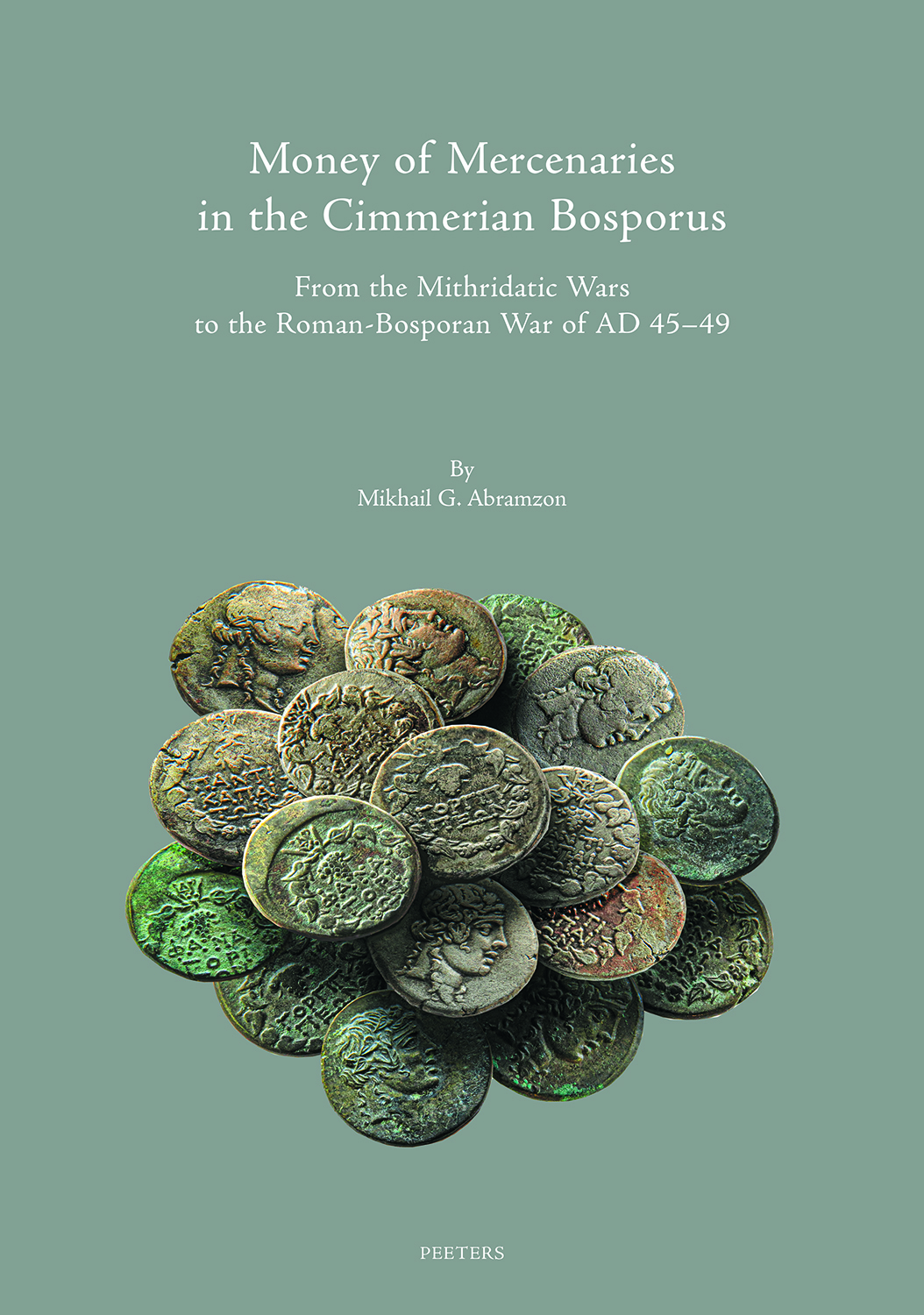 Money of Mercenaries in the Cimmerian Bosporus
From the Mithridatic Wars to the Roman-Bosporan War of AD 45-49
Volume 45


