
Scripted Intimacy in Fronto’s Correspondence with Marcus Aurelius
By (author) Wytse Keulen

Hardback (Forthcoming)
(December 2026)
ISBN: 9783161643224
6.1 x 9.13 inches
Price: $210.00
This study is the first to explore the striking intimacy of the early correspondence between Marcus Aurelius and his tutor Fronto (second century AD) as a literary production. Wytse Keulen presents Fronto’s letter collection as a self-edited literary monument that brings his most important friendship to life with an emphasis on public appeal.
English summary: In this reappraisal of the early letter exchange between the Roman orator Fronto and his most famous pupil, Marcus Aurelius (second century AD), Wytse Keulen explores the profound mimetic impact of their strikingly ‘authentic’ intimacy. Keulen’s analysis includes the letters’ public appeal as a social performance, which skilfully combines eloquent self-fashioning with polite consensus building. He elucidates Fronto’s letter collection as an artistic unity, published by Fronto himself: by weaving letters and replies into a meaningful overarching structure, the correspondence memorializes Fronto’s friendship with the future Emperor as a literary monument dedicated to both correspondents. Thanks to this original conception, Fronto’s letter collection proves to be a more than worthy successor to Pliny the Younger’s epistolary project, surpassing its model through its dramatic power and captivating intimacy German description: In dieser Neubewertung des fruhen Briefwechsels zwischen dem romischen Redner Fronto und seinem beruhmtesten Schuler Marc Aurel (2. Jahrhundert n. Chr.) untersucht Wytse Keulen die mimetische Wirkung ihrer auffallend ‘authentischen’ Intimitat. Keulens Analyse fokussiert auf die Publikumswirksamkeit der Briefe als soziale Performance, die redegewandte Selbstdarstellung und hofliche Konsensbildung gekonnt miteinander verknupft. Er versteht Frontos Briefsammlung als kunstlerische Einheit, die von Fronto selbst veroffentlicht wurde: Indem die Korrespondenz Briefe und Antworten zu einer bedeutungsvollen, ubergreifenden Struktur verwebt, verwandelt sie Frontos Freundschaft mit dem zukunftigen Kaiser in ein literarisches Denkmal fur beide Briefpartner. Die Briefsammlung erweist sich dank dieser von Fronto selbst verantworteten Konzeption als ein mehr als wurdiger Nachfolger des Briefprojekts von Plinius dem Jungeren. Ihr Vorbild ubertrifft sie gar durch ihre dramatische Wirkmacht und fesselnde Intimitat.
Part One: Community of Letters Chapter 1. Ritualised Communications Chapter 2. convivium in litteris Chapter 3. salutatio in litteris Part Two: Theatre of Letters Chapter 4. Epistle-in-Character: Scripted Roles and Lettered Ethopoeia Chapter 5. Epistolary Theatricality: Communication and Meta-Communication Part Three: Corpus of Letters Chapter 6. mea oratio extabit. Fronto's Literary Letter Corpus Chapter 7. Liber I: Imagination and Exposure Chapter 8. Liber II: Occasion and Extemporisation Chapter 9. Liber III: Instruction and Resistance Chapter 10. Liber IV: Conflict and Reconciliation Chapter 11. Liber V: Intimisation and InCORPoration ~GER~Part One: Community of Letters Chapter 1. Ritualised Communications Chapter 2. convivium in litteris Chapter 3. salutatio in litteris Part Two: Theatre of Letters Chapter 4. Epistle-in-Character: Scripted Roles and Lettered Ethopoeia Chapter 5. Epistolary Theatricality: Communication and Meta-Communication Part Three: Corpus of Letters Chapter 6. mea oratio extabit. Fronto's Literary Letter Corpus Chapter 7. Liber I: Imagination and Exposure Chapter 8. Liber II: Occasion and Extemporisation Chapter 9. Liber III: Instruction and Resistance Chapter 10. Liber IV: Conflict and Reconciliation Chapter 11. Liber V: Intimisation and InCORPoration,
Part One: Community of Letters
Chapter 1. Ritualised Communications
Chapter 2. convivium in litteris
Chapter 3. salutatio in litteris
Part Two: Theatre of Letters
Chapter 4. Epistle-in-Character: Scripted Roles and Lettered Ethopoeia
Chapter 5. Epistolary Theatricality: Communication and Meta-Communication
Part Three: Corpus of Letters
Chapter 6. mea oratio extabit. Fronto's Literary Letter Corpus
Chapter 7. Liber I: Imagination and Exposure
Chapter 8. Liber II: Occasion and Extemporisation
Chapter 9. Liber III: Instruction and Resistance
Chapter 10. Liber IV: Conflict and Reconciliation
Chapter 11. Liber V: Intimisation and InCORPoration
Born 1968; 2003 doctorate (University of Groningen); 2009 habilitation (University of Rostock); DFG project assistant at the Georg-August University of Göttingen.
- By (author) Wytse Keulen
Other Titles in this Series

 Meister, Junger, Rebellen
Nachfolge und Widerspruch (akolouthesis und enantiosis) im Spiegel der Zeiten
Volume 2


Similar Books


 As Messianism Turns to Heresy
The Regenstein Chair Lectures On Lurianic Kabbalah and Shabbatai Tzevi at Hebrew Union College - Cincinnati

 Beyond Sovereign Courts
Agents and Practices in Early Modern Spanish and Habsburg Diplomacy
Volume 3



 Contesting Labeled Identities
The Sociology of Gentilics in Biblical and Northwest Semitic Literature


 Drunk the Potion, No Whit Charmed
The Doctrine of Pure and Perfect Souls from Iamblichus to Damascius


 Epigraphic “Shades” from Hellenistic Thrace
Contextualizing Inscriptions in Greek from Thracian Tombs

 Epiphanies of the Divine in the Septuagint and the New Testament
Fifth International Symposium of the Corpus Judaeo-Hellenisticum Novi Testamenti (CJHNT), 14-17 May 2015, Nottingham


 Food Security under Armed Conflict
Global Knowledge Landscape and Public Attention to Social, Economic, and Humanitarian Dimensions


 Gold, Silver and Glass: Power Networks, Cultural Identities, Technology Transfers and Agency across the Old World (7th Century BC – 1st Century AD)
Proceedings of a Conference Held at the British Museum, 16–18 June 2023
 Innovationes Lovanienses: Arts, Law and Theology at the University of Louvain (1425–1797)
Studium Lovaniense: Learning across Borders, 2
Volume 18

 Language and Power in the Roman Empire and Early India
Hierarchy, Ambiguity, and the Art of Reading the Signs in Cosmopolitan Cultures
 Late Antique villae in the Balkans (3rd–7th c. AD): Current Research Questions and Perspectives
HAEMUS Companion to the Late Antique Balkans 1
Volume 4


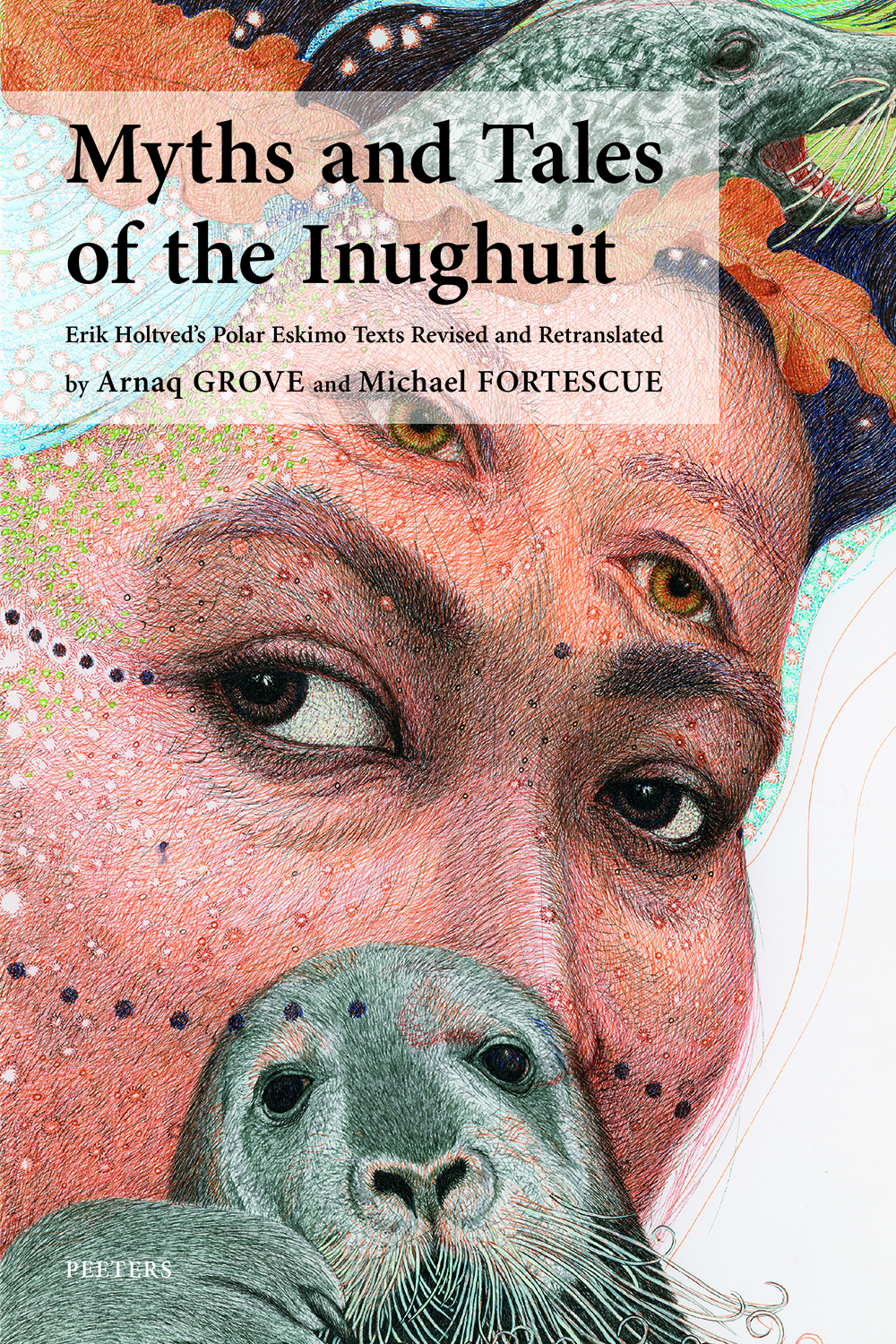 Myths and Tales of the Inughuit
Erik Holtved's Polar Eskimo Texts Revised and Re-translated into Danish and English
Volume 475, 12

 Nurturing the Elite
Representations of Drinking, Eating, and Religious Vessels in Palmyrene Funerary Iconography
Volume 13

