
Sangtarashan, l’Âge du Fer au Pish Kuh du Luristan
Avec une étude "L'assemblage lithique de Sangtarashan" par Francesca Manclossi
By (author) Z. Hashemi By (author) M. Malekzadeh By (author) A. Hasanpour

Le site archeologique de Sangtarashan est situe a l’ouest de l’Iran, dans la province du Luristan, au coeur de la chaine montagneuse du Zagros. Decouvert en 2002, il a fait l’objet de six campagnes de fouilles entre 2005 et 2011. Des les premieres recherches, il est apparu que le site presentait des caracteristiques exceptionnelles. Au sein d’une structure circulaire en pierre, chevauchee par plusieurs autres constructions, les fouilles ont mis au jour plus de deux mille objets. Parmi eux, des centaines d’objets metalliques connus sous le nom de Bronzes du Luristan. Ces bronzes etaient enterres par lot, inseres dans les murs ou eparpilles sur toute la surface du site. L’etude architecturale et l’examen de la nature et de la distribution des objets conduisent a penser que le site de Sangtarashan serait un sanctuaire ayant connu deux phases d’occupation. Les depots de la premiere phase sont constitues d’armes et de vases enfouis dans le sol. Ceux de la seconde phase sont constitues d’objets isoles, de taille plus petite et de nature plus variee, deposes dans la maconnerie des batiments. La premiere occupation daterait de l’Age du Fer I-II, la seconde de l’Age du Fer II-III (et peut-etre meme IV). L’hypothese d’une fonction non cultuelle pendant la seconde phase n’est pas totalement ecartee au regard de la prolongation des structures architecturales vers l’ouest et de la position des objets eparpilles sur toute la surface du site. Avec Sorkhdom-i Lori, Sangtarashan est le deuxieme sanctuaire de l’Age du Fer de la region du Zagros central ou les fideles deposaient des objets dans le sol ou dans la maconnerie des batiments. La richesse des objets metalliques decouverts fait de Sangtarashan un site de reference pour l’etude des Bronzes du Luristan. L’analyse du materiel archeologique permet desormais de proposer une datation pour des objets jusqu’alors connus uniquement par des exemplaires issus de fouilles clandestines.
- By (author) Z. Hashemi
- By (author) M. Malekzadeh
- By (author) A. Hasanpour
Other Titles in this Series
 Piran und Zeyaratgah: Schreine und Wallfahrtsstätten der Zarathustrier im neuzeitlichen Iran
Volume 48


 The King and Kingship in Achaemenid Art
Essays in the Creation of an Iconography of Empire
Volume 19


 Ancient Chorasmia
A Polity between the Semi-Nomadic and Sedentary Cultural Areas of Central Asia. Cultural Interactions and Local Developments from the Sixth Century BC to the First Century AD
Volume 56


 Luristan Excavation Documents Vol. V: The Iron Age III Graveyard at War Kabud, Pusht-i Kuh, Luristan
Volume 42

 Luristan Excavation Documents Vol. VI
Bani Surmah: An Early Bronze Age Graveyard in Pusht-i Kuh, Luristan
Volume 43


 The Hispano-Portuguese Empire and its Contacts with Safavid Persia, the Kingdom of Hormuz and Yarubid Oman from 1489 to 1720
A Bibliography of Printed Publications 1508-2007
Volume 45

 Le Sentiment du Savoir
Présentation, analyse, traduction et commentaire de la Spenta.maniiu Gatha (Y 47-50). Précédé d'une introduction générale, suivi de quatre Marginales grammaticales et d'une Concordance des textes vieil-avestiques
Volume 61
 Biainili-Urartu
The Proceedings of the Symposium Held in Munich 12-14 October 2007 / Tagungsbericht des Munchner Symposiums 12.-14. Oktober 2007
Volume 51


Similar Books



 Connecting the Dots: Counting, Writing, and the Beginnings of Civilization
The Secret Lives of Clay Tokens: A Memoir


 Exploring Gender Dynamics across the Ancient Near East
Collected Essays of Gender and Methodology in the Ancient Near East (GeMANE) 4 and 5
Volume 7


 Ḫattušaš utnē išḫameški
Hittite and Other Ancient Near Eastern Studies Presented to Piotr Taracha on the Occasion of His 65th Birthday


 New Research on Old Collections in Southwest Asian Archaeology
Proceedings of the Workshop Held at the British Museum, London, 31 July – 2 August, 2023
 Old Aramaic Inscriptions and their Contexts
An Epigraphic, Archaeological, and Historical Synthesis
Volume 63

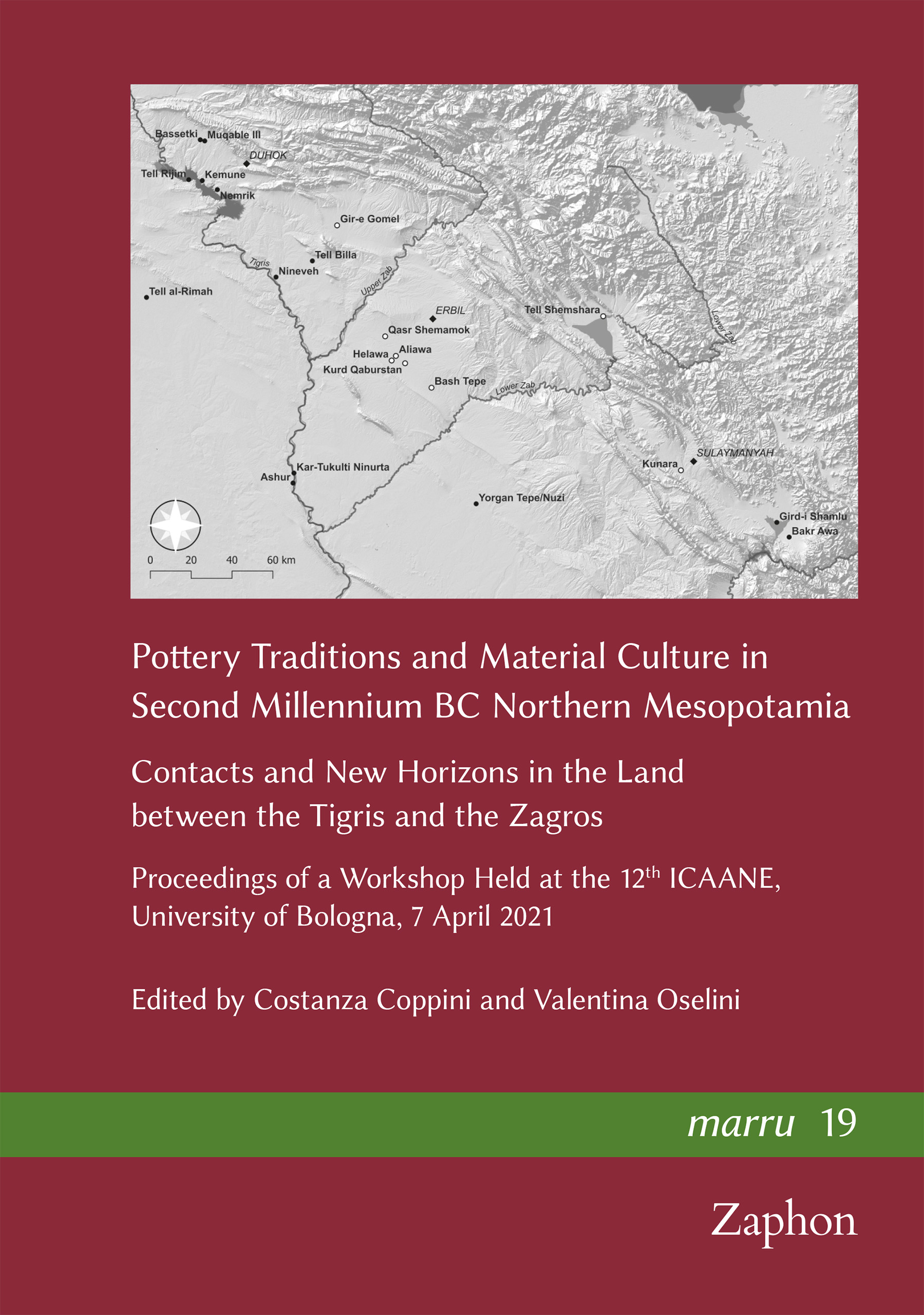 Pottery Traditions and Material Culture in Second Millennium BC Northern Mesopotamia
Contacts and New Horizons in the Land between the Tigris and the Zagros. Proceedings of a Workshop Held at the 12th ICAANE, University of Bologna, 7 April 2021
Volume 19
 Punning in Odd or Elegant Constructions in Jeremiah
The Convergence of Linguistics, Rhetoric, and Textuality in the Hebrew Text of Jeremiah
 Shame in the Worlds of the Hebrew Bible and Akkadian Texts
A Linguistic Study and Its Implications
Volume 33
 Telling Contexts
Archaeological and Textual Studies in Honor of Elizabeth Bloch-Smith and Mark S. Smith
 The Body
Lived, Cultured, Adorned: Essays on Dress and the Body in the Bible and Ancient Near East in Honor of Nili S. Fox
 The Discourse of Rites
Shaping and Reshaping the (Counter-)Priestly Rituals Conducted Outside the Tabernacle
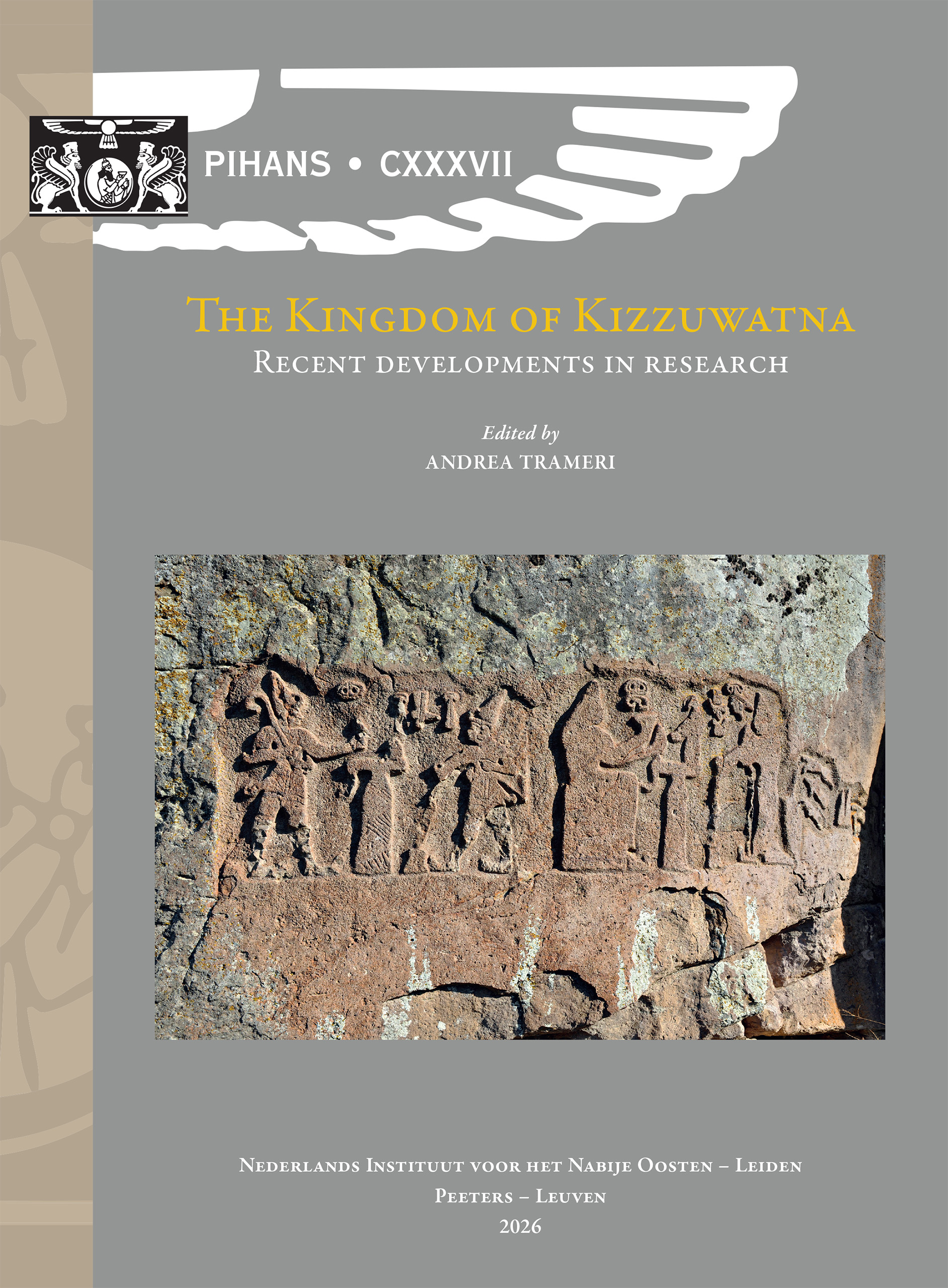 The Kingdom of Kizzuwatna: Recent Developments in Research
Proceedings of the Third NINO Postdoctoral Research Fellow Annual Conference, Leiden, 23rd-25th March 2023
Volume 137


 Die Entwicklung erdbebensicherer Bautechniken in der Frühen und Mittleren Eisenzeit in Ostanatolien
Volume 11
 Die JHWH-Religion und die Vorstellung göttlicher Gesetzgebung
Überschneidungen zwischen der Rechtsentwicklung und der Sphäre der Religion in der Geschichte des antiken Israel und Juda

 Kultur – Kontakt – Kultur
Beiträge anlässlich der 66. Rencontre Assyriologique Internationale in Frankfurt/Main und Mainz, 25.–29. Juli 2022
Volume 35
 Menschenwürde und Menschenrechte im Altem Orient, Israel und Hellas. Band 1
Human Dignity and Human Rights in the Ancient Near East, Ancient Israel, and Hellas. Volume 1
Volume 311
 Ptolemaiou Procheiroi Kanones. Les «Tables Faciles» de Ptolemée. Volume 2a: Tables A3-A13
Édition critique, Transcription
 Sprachwissenschaftliche und kulturhistorische Reflexionen
Festschrift zu Ehren von Jörg Klinger
Volume 31

 Vom Mädchen zur Frau
Weihgaben als Indikatoren rituellen und kommunikativen Handelns von Frauen in griechischen Kulten
Volume 188
 Von der Symmachie zur Arché und zurück
Die Entwicklungsphasen des Ersten Attischen Seebundes (478/7–404 v. Chr.)