
Samarqand et le Sughd à l’époque ‘abbasside
Histoire politique et sociale
By (author) Y. Karev

During the Abbasid period (750-820), the vast territories beyond the Amu Darya river (the Mawara’annahr), conquered by the Umayyad generals in the first half of the eighth century, entered definitively into the cultural sphere of Islam. The comparative analysis of medieval Arabic, Persian, and Chinese sources, supplemented by materials from unpublished manuscripts, as well as the latest results yielded by archaeological excavations at Samarkand, have made it possible to establish a fine-grained chronology of this turning point in the history of Central Asia. Examined in this new light are complex and irreversible processes that resulted in a changed political and religious fabric, transformations of the Sogdian and Muslim elite, and the evolution of the state’s system of controlling territories on its borders, within a context of confrontations and diplomatic relations between the caliphate, the Tang empire in China, and the Turks.
English summary: During the Abbasid period (750-820), the vast territories beyond the Amu Darya river (the Mawara’annahr), conquered by the Umayyad generals in the first half of the eighth century, entered definitively into the cultural sphere of Islam. The comparative analysis of medieval Arabic, Persian, and Chinese sources, supplemented by materials from unpublished manuscripts, as well as the latest results yielded by archaeological excavations at Samarkand, have made it possible to establish a fine-grained chronology of this turning point in the history of Central Asia. Examined in this new light are complex and irreversible processes that resulted in a changed political and religious fabric, transformations of the Sogdian and Muslim elite, and the evolution of the state’s system of controlling territories on its borders, within a context of confrontations and diplomatic relations between the caliphate, the Tang empire in China, and the Turks. French description: A partir de l’epoque abbasside (750-820), les vastes territoires situes au-dela du fleuve Amu Darya (le Mawara’annahr), conquis par les generaux umayyades durant la premiere moitie du VIIIe siecle, entrent definitivement dans l’aire culturelle de l’islam. L’analyse croisee des sources medievales arabes, persanes et chinoises, completees par les donnees de manuscrits inedits, ainsi que les derniers resultats livres par les fouilles archeologiques de Samarqand permettent d’etablir une chronologie fine de cette periode charniere de l’histoire de l’Asie centrale. Sous cet eclairage nouveau sont examines les processus complexes et irreversibles qui ont abouti a un changement du cadre politique et religieux, a la transformation des elites sogdiennes et musulmanes, a l’evolution du systeme etatique de controle des pays frontaliers, dans un contexte de confrontations et de relations diplomatiques entre le califat, l’empire chinois des Tang et les Turcs.
- By (author) Y. Karev
Other Titles in this Series

 Chretiens en terre d’Iran III: Vita e studi di Timoteo I, patriarca cristiano di Baghdad
Ricerche sull' epistolario e sulle fonti contigue
Volume 41

 Mediaeval and Modern Iranian Studies
Proceedings of the 6th European Conference of Iranian Studies (Vienna, 2007)
Volume 45


 Iranian Languages and Literatures of Central Asia
From the Eighteenth Century to the Present
Volume 57


 Further Topics in Iranian Linguistics
Proceedings of the 5th International Conference on Iranian Linguistics, held in Bamberg on 24-26 August 2013
Volume 58

 Chrétiens en terre d’Iran VI: Les liens du sol
Images du pouvoir et identités des chrétiens sous Khusro Ier
Volume 63


 Études sur l’Iran médiéval: géographie historique et société
Édition indexée avec une introduction par Denise Aigle
Volume 60
 «Husraw i Kawadan ud Redag-e». Khosrow fils de Kawad et un page
Texte pehlevi édité et traduit
Volume 49


 Rabbo l’olmyn «Maitre pour l’Éternité»
Florilège offert à Philippe Gignoux pour son 80e anniversaire
Volume 43
Similar Books
 A Collaborative Tapestry in Honour of Shirley Ann Brown / Une fresque brodée en l’honneur de Shirley Ann Brown
The Bayeux Tapestry Seen by her Colleagues and Friends / La Tapisserie de Bayeux vue par ses collègues et amis
 Behind the Scenes of Medieval Roofs
An Overview of the Roofing Systems of Italian Churches
Volume 90


 Cities through Time
Glimpses into Urbanity and Community in Mediaeval to Modern West Asia and Egypt
Volume 1

 Cuneiform Artefacts from Archaeological Contexts: New Research on Ancient Iraq
Proceedings of a Conference Held at the Bavarian Academy of Sciences and Humanities, July 4–5, 2024
Volume 2




 Global Gulf
Geo-Economic, Geo-Political, and Geo-Technological Transformation in Saudi Arabia, the United Arab Emirates, and Qatar


 Innovation and Medieval Communities
The Circulation of Ideas and Practices in and out of the Town (1200-1500)
Volume 63
 Ismail Hakki Bursevi’s translation of and commentary on Fusus al-Hikam By Muhyiddin Ibn ‘Arabi
Volumes 1-4
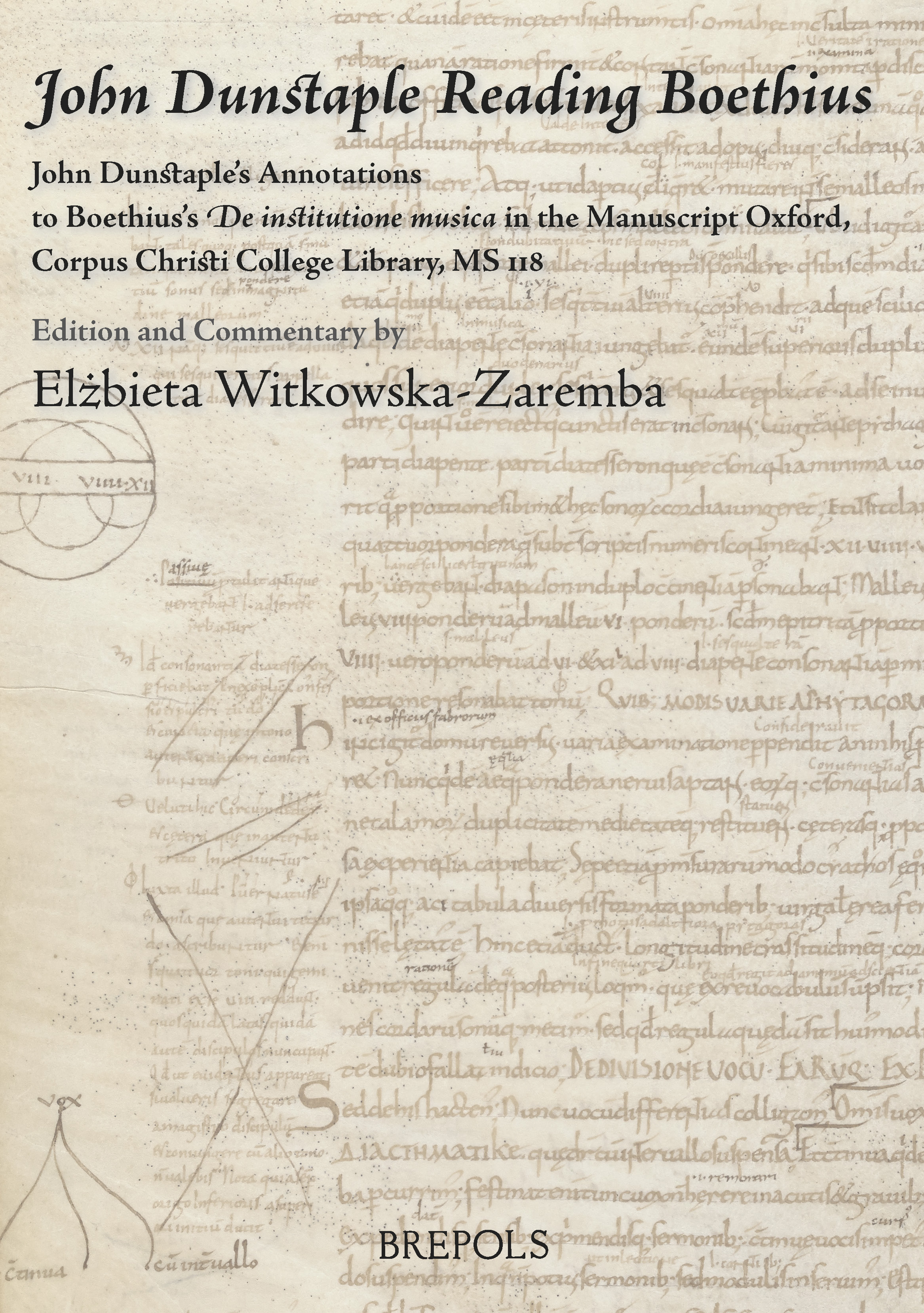 John Dunstaple Reading Boethius
John Dunstaple’s Annotations to Boethius’s “De institutione musica” in the Manuscript Oxford, Corpus Christi College Library, MS 118
 Linguistic and Cultural Dynamics in a Frontier Society
New Perspectives on Northeastern Bavaria and Western Bohemia in the Early Middle Ages
Volume 9
 Medieval Debates on Foreknowledge: Future Contingents, Prophecy, and Divination
Acts of the XXVII Annual Colloquium of the SIEPM, Trento 12-15 September 2023
Volume 31
 Medieval Yeghegis, Armenia
History, Archaeology, Society. Local Multiplicities and Global Connections of a Rural Centre on the Silk Road(s)
 Monastic Manuscripts from the Eastern Mediterranean (Sinai, Jerusalem, Antioch)
Production, Use, and Contexts


 Power and Women in Southeast and Central Europe in Late Medieval and Early Modern Period (1300-1600)
Volume 10
 Qatar’s Societal Security
Towards the Inclusive National Concept of ‘Baladna’ Identity, Migration and External Threats Since 2017


 The Anglo-Norman Bible’s Books of Kings, a Critical Edition
(BL Royal 1 C III, fols 234r-274v)
Volume 37