
Sacred Landscapes, Connecting Routes
Religious Topographies in the Graeco-Roman World
Edited by C.G. Williamson
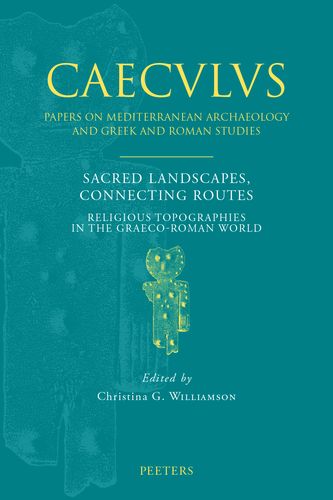
At the crossroads of community, territory, and the divine is the landscape of religion. This landscape is shaped by those who occupy it, or desire to occupy it, and their ideologies as much as their cosmologies. But equally important are those who pass through it, and the flow of ideas that travel through its connections. Sacred landscapes are cultural artefacts, rooted in natural phenomena, legends and myths from the deep past, shaped by ritual performance and perception. They evoke by definition a sense of timelessness and yet are constantly evolving, subject to the shifts of formal and informal agencies across the scales. The religious environment is here addressed in terms of landscape, geography, traffic and paths of connection and communication and their material manifestations. How was sacred movement etched into the landscape? What sorts of media were involved in creating a ‘sacred’ landscape? Which material culture helped connect communities across time and space? The contributions in this volume explore these questions in relation to specific case studies in the ancient world, spanning the Mediterranean from Asia Minor through Greece to the Italian peninsula, in a time frame ranging from the Early Iron Age to the High Imperial period. They open up new areas to consider when looking at the phenomenon of sacred landscapes and connectivities. Such questions reach out beyond antiquity – they reflect on our own views of urban and rural space, and the importance of religion for collective identities and territorial claims today.
- Edited by C.G. Williamson
Other Titles in this Series

 Public Space in the Post-Classical City
Proceedings of a One Day Colloquium held at Fransum, 23rd July 2007
Volume 7


Similar Books


 Caesar’s Visions and Impact on the Roman Empire
Revisiting the Archaeological and Historical Record of the 40s BC
Volume 2

 Construction Processes in Historical Western Societies (5th c. BC – 10th c. AD)
Case Studies on Techniques, Models, and Costs


 Etruscan and Roman Hellenistic Anatomical ex votos
Reassessing Popular Religious Expressions in Central Italy
Volume 8




 Invisible Labour in Antiquity
Visualizing Obscure Work in the Ancient Mediterannean and West Asia
Volume 1

 Late Antique villae in the Balkans (3rd–7th c. AD): Current Research Questions and Perspectives
HAEMUS Companion to the Late Antique Balkans 1
Volume 4





 Portraying the Individual in the Roman East
Local–Imperial Entanglements in Sculpture, Mosaics, and Paintings (First–Fourth Centuries AD)
Volume 18


 Roman Copies, Collecting, and Culture in the Bay of Naples and Beyond
Papers in Honor of Eugene J. Dwyer
 Small Worlds and Relational Agencies: Local Societies in Early Medieval Iberia
Pequeños mundos y Agencias relacionales: Sociedades locales altomedievales en la Península Ibérica
 SOMA 2023: Proceedings of the 24th Symposium on Mediterranean Archaeology
Ideas that Travelled by the Sea, Udine, 2-4 February, 2023


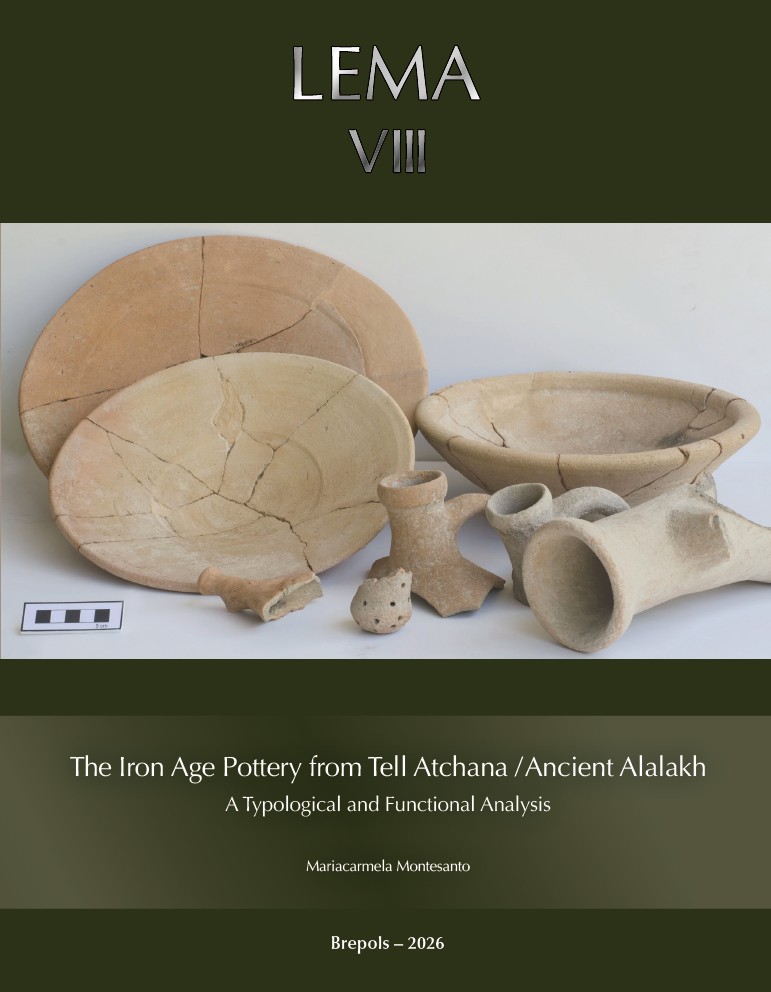 The Iron Age Pottery from Tell Atchana / Ancient Alalakh
A Typological and Functional Analysis
Volume 8


 Writing in the Church of the Nativity in Bethlehem
Inscription and Graffiti in a Multilingual and Multigraphic Perspective
Volume 45
 Zooarchaeology of Ancient Greek Sanctuaries in Southwestern Sicily
Faunal Analysis from Selinus and Akragas as Evidence of Differences in the Treatment of Animals for Ritual Purposes
 Alabaster
An Interdisciplinary Study of the Sources and Uses of Calcite Alabaster in Antiquity
Volume 5
