
Republikanische Träume von der Macht
Die Utopie als politische Sprache im England des 17. Jahrhunderts
By (author) Stefano Saracino Series edited by Angela De Benedictis Series edited by Gustavo Corni Series edited by Brigitte Mazohl-Wallnig Series edited by Daniela Rando Series edited by Luise Schorn-Schütte
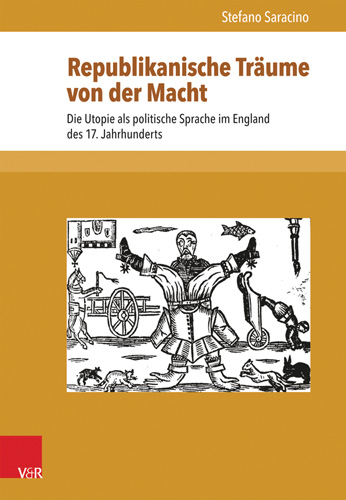
Hardback (Published)
(September 2014)
ISBN: 9783847102830
6.34 x 9.25 inches
Price: $94.00
On back order
English summary: During the English Revolution the concept of utopia became a part of everyday political language and was used in the rhetorical battles between political actors. Utopian language and utopian thought was no longer a prerogative of humanist scholars but infiltrated genres like political speeches and pamphlets, the newsbooks, religious and scientific treatises. Saracinos book analyzes these genres as well as the (in a stricter sense) utopian descriptions of fictional commonwealths, which flourished during the 1640s, 1650s and 1660s. The special emphasize lies on the use made of the utopian genre by authors and speakers with a republican commitment. In four case studies Saracino reconstructs the use of utopian textforms and utopian speech-acts during the Long Parliament, under Cromwell’s rule, after the collaps of the protectorate and the restitution of parliamentary government in September 1659 and finally in the years after the Restoration of the Stuart-monarchy. The book tells the story of a symbiosis between utopian and republican political thought and political language, which led to varying outcomes, e.g. the construction of a republican tradition in the monarchically dominated political culture of early modern England, the satirical communication with rulers (like Cromwell oder Charles II) as well as the anticipation of the modern state. Saracino pleads for a three-dimensional understanding of utopia as a textform, as a practice as well as a speech-act and argues that utopian republicanism during the English Revolution as well as afterwarts oscillated between the opposition and apology of existing political power. German description: Die Utopie wandert im England des 17. Jahrhunderts in die alltagliche politische Sprache und ist als Begriff, als Textgattung, aber auch in der politischen Kommunikation sehr prasent. Saracinos ideen- und kommunikationsgeschichtliche Studie untersucht die Verwendung der Utopie bei Autoren und Sprechakteuren, die dem Republikanismus nahestanden, nimmt aber auch die Restaurationsutopien in den Blick, die in den 1660er Jahren der Stuart-Herrschaft das Wort redeten. Neben den an Morus’ Utopia angelehnten utopischen Beschreibungen fiktiver Gemeinwesen untersucht Saracino Quellengattungen wie politische Reden und Flugschriften, das Newsbook sowie religiose und naturwissenschaftliche Traktate, die fur die Analyse des politischen Kommunikationsraums der Utopie in Betracht kommen.
Dr. Stefano Saracino forscht am Messerli-Forschungsinstitut Wien und an der Goethe-Universitat Frankfurt am Main.
- By (author) Stefano Saracino
- Series edited by Angela De Benedictis
- Series edited by Gustavo Corni
- Series edited by Brigitte Mazohl-Wallnig
- Series edited by Daniela Rando
- Series edited by Luise Schorn-Schütte
Other Titles in this Series
 Das richtige Europa schaffen
Europa als Konkurrenzthema zwischen Sozial- und Christdemokraten – Deutschland und Italien von 1945 bis 1963 im Vergleich

 Europa im Bild
Imaginationen Europas in Wochenschauen in Deutschland, Frankreich, Großbritannien und Österreich 1948–1959
 Die Sprache des Politischen in actu
Zum Verhältnis von politischem Handeln und politischer Sprache von der Antike bis ins 20. Jahrhundert

 Die deutsche Stammzelldebatte
Eine exemplarische Untersuchung bioethischer Normenkonflikte in der politischen Kommunikation der Gegenwart


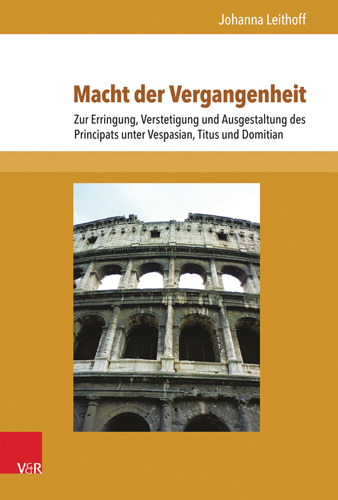 Macht der Vergangenheit
Zur Erringung, Verstetigung und Ausgestaltung des Principats unter Vespasian, Titus und Domitian
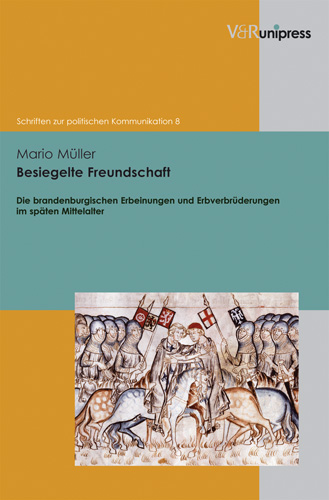 Besiegelte Freundschaft
Die brandenburgischen Erbeinungen und Erbverbrüderungen im späten Mittelalter
 Kirchenverwaltung und Landesherrschaft
Kirchenordnendes Handeln in der Landgrafschaft Hessen-Kassel im 17. Jahrhundert



 Gott und Gestirn als Präsenzformen des toten Kaisers
Apotheose und Katasterismos in der politischen Kommunikation der römischen Kaiserzeit und ihre Anknüpfungspunkte im Hellenismus
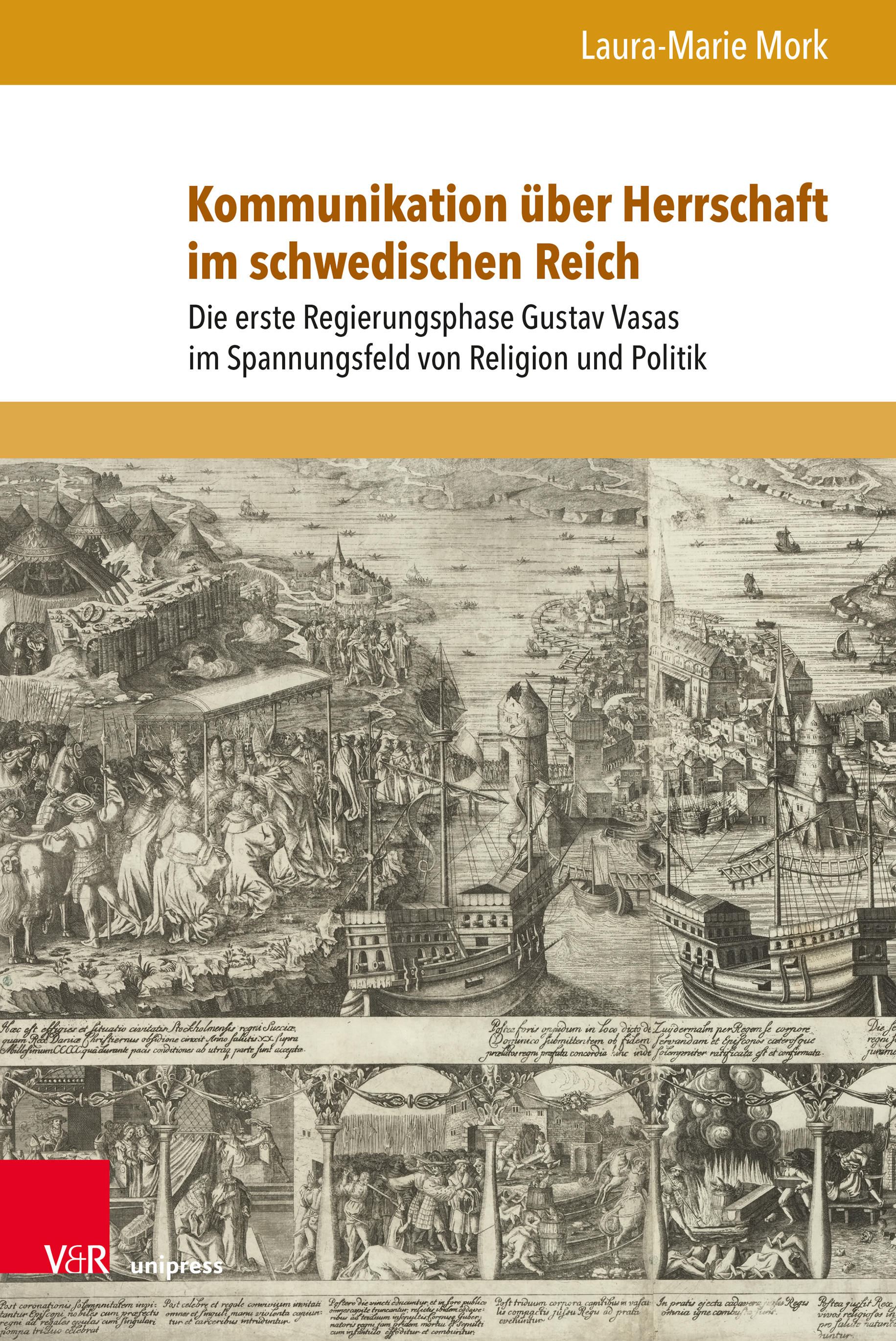 Kommunikation über Herrschaft im schwedischen Reich
Die erste Regierungsphase Gustav Vasas im Spannungsfeld von Religion und Politik
 Akteure am fremden Hof
Politische Kommunikation und Repräsentation kaiserlicher Gesandter im Jahrzehnt des Wandels am russischen Hof (1720–1730)
 Das Politische als Argument
Beiträge zur Forschungsdebatte aus dem Internationalen Graduiertenkolleg »Politische Kommunikation von der Antike bis in das 20. Jahrhundert«

 Briefe in politischer Kommunikation vom Alten Orient bis ins 20. Jahrhundert
Le lettere nella comunicazione politica dall'Antico Oriente fino al XX secolo
 Diplomatie, politische Rede und juristische Praxis im 15. Jahrhundert
Der gelehrte Rat Johannes Hofmann von Lieser
 Kulturtransfer und monarchischer »Philhellenismus«
Bithynien, Pontos und Kappadokien in hellenistischer Zeit
Similar Books


 As Messianism Turns to Heresy
The Regenstein Chair Lectures On Lurianic Kabbalah and Shabbatai Tzevi at Hebrew Union College - Cincinnati

 Beyond Sovereign Courts
Agents and Practices in Early Modern Spanish and Habsburg Diplomacy
Volume 3





 Dis/United States of Vulnerability
Literary and Cultural Transgressions in U.S. Poetry Since the 1960s
Volume 330


 European Drama and Performance Studies
Dramatisations politiques. Théâtre, politique et idéologie au XIXe siècle (1806-1914)
Volume 27

 Food Security under Armed Conflict
Global Knowledge Landscape and Public Attention to Social, Economic, and Humanitarian Dimensions


 Innovationes Lovanienses: Arts, Law and Theology at the University of Louvain (1425–1797)
Studium Lovaniense: Learning across Borders, 2
Volume 18


 Modernization, Crises, Cultural Revolutions
Yugoslavia’s 1960s and 1970s through the amateur film lens
 Myths and Tales of the Inughuit
Erik Holtved's Polar Eskimo Texts Revised and Re-translated into Danish and English
Volume 475, 12


 Students, Scholars and Their Books at the University of Louvain (1425-1797)
Studium Lovaniense: Learning across Borders, 1
Volume 17