
Religion and Material Culture
Studying Religion and Religious Elements on the Basis of Objects, Architecture, and Space: Proceedings of an international Conference held at the Centre for Bible and Cultural Memory (BiCuM), University of Copenhagen and the National Museum of Denmar
Edited by Lisbeth Bredholt Edited by Jesper Tae Jensen

Whereas until recently the history of religions began with the Sumerians and the first texts, the material turn in the humanities has opened up the possibility for tracing the history of religions back to before the invention of writing. The book gathers specialists from a variety of fields to explore the possibilities of the material perspective in the study of religion. Within a diachronic perspective, archaeologists, scholars of religion, theologians, and ancient historians focus on how the gradual invention of various forms of material culture – graves, images, objects – has made it possible for certain religious expressions to be constructed, arise, and enfold. Also, the volume investigates what types of material culture characterizes religion and what these mean. The volume represents a joint, cross-disciplinary effort to investigate religion and its various aspects with a point of departure in material culture. This means rethinking basic assumptions about religion and how to study it. Integrating material culture approaches with textual approaches, the contributions discuss the foundations for a history of religion which is not limited to a textual perspective but which is both broader and wider, both reaching back in prehistory and out to other spheres.
Whereas until recently the history of religions began with the Sumerians and the first texts, the material turn in the humanities has opened up the possibility for tracing the history of religions back to before the invention of writing. The book gathers specialists from a variety of fields to explore the possibilities of the material perspective in the study of religion. Within a diachronic perspective, archaeologists, scholars of religion, theologians, and ancient historians focus on how the gradual invention of various forms of material culture – graves, images, objects – has made it possible for certain religious expressions to be constructed, arise, and enfold. Also, the volume investigates what types of material culture characterizes religion and what these mean. The volume represents a joint, cross-disciplinary effort to investigate religion and its various aspects with a point of departure in material culture. This means rethinking basic assumptions about religion and how to study it. Integrating material culture approaches with textual approaches, the contributions discuss the foundations for a history of religion which is not limited to a textual perspective but which is both broader and wider, both reaching back in prehistory and out to other spheres.
- Edited by Lisbeth Bredholt
- Edited by Jesper Tae Jensen
Other Titles in this Series

 Spectacle Benefaction and the Politics of Appreciation
Case Studies from Italy, Gallia Narbonensis and Africa Proconsularis
Volume 12


 ‘Madness’ in the Ancient World
Innate or Acquired?: From Theoretical Concepts to Daily Life
Volume 10


Similar Books




 Athanasius of Alexandria, Epistula ad episcopos Aegypti et Libyae
Old Slavonic Version and English Translation
Volume 261

 Caesar’s Visions and Impact on the Roman Empire
Revisiting the Archaeological and Historical Record of the 40s BC
Volume 2


 Connecting the Dots: Counting, Writing, and the Beginnings of Civilization
The Secret Lives of Clay Tokens: A Memoir

 Cyril of Alexandria’s Christological Exegesis
Explorations of Partitive Exegesis in the Dialogues on the Trinity
Volume 70


 Epiphanies of the Divine in the Septuagint and the New Testament
Fifth International Symposium of the Corpus Judaeo-Hellenisticum Novi Testamenti (CJHNT), 14-17 May 2015, Nottingham


 Etruscan and Roman Hellenistic Anatomical ex votos
Reassessing Popular Religious Expressions in Central Italy
Volume 8

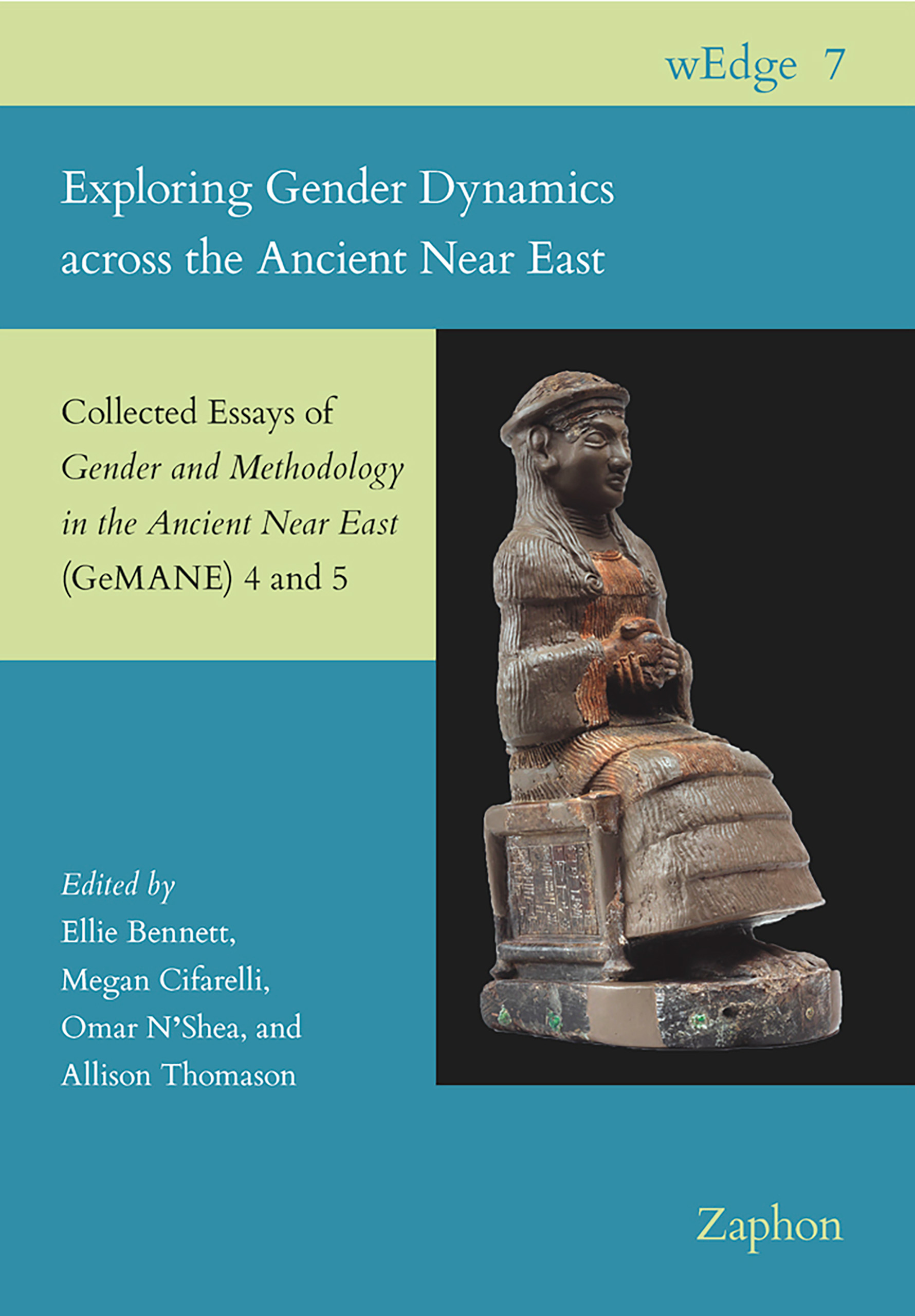 Exploring Gender Dynamics across the Ancient Near East
Collected Essays of Gender and Methodology in the Ancient Near East (GeMANE) 4 and 5
Volume 7
 Extracanonical Traditions and the Holy Land
Texts, Rituals, and Material Culture in Late Antique Palestine

 From Joseph to Jesus
The Joseph Narrative as a Compositional Template from Old Greek Esther to the Gospel of Luke
Volume 125


 Ḫattušaš utnē išḫameški
Hittite and Other Ancient Near Eastern Studies Presented to Piotr Taracha on the Occasion of His 65th Birthday


 Invisible Labour in Antiquity
Visualizing Obscure Work in the Ancient Mediterannean and West Asia
Volume 1


 Late Antique villae in the Balkans (3rd–7th c. AD): Current Research Questions and Perspectives
HAEMUS Companion to the Late Antique Balkans 1
Volume 4