
Portrait of the ›arzet‹
The Doctor in German Literature of the High and Late Middle Ages
By (author) Philip Liston-Kraft
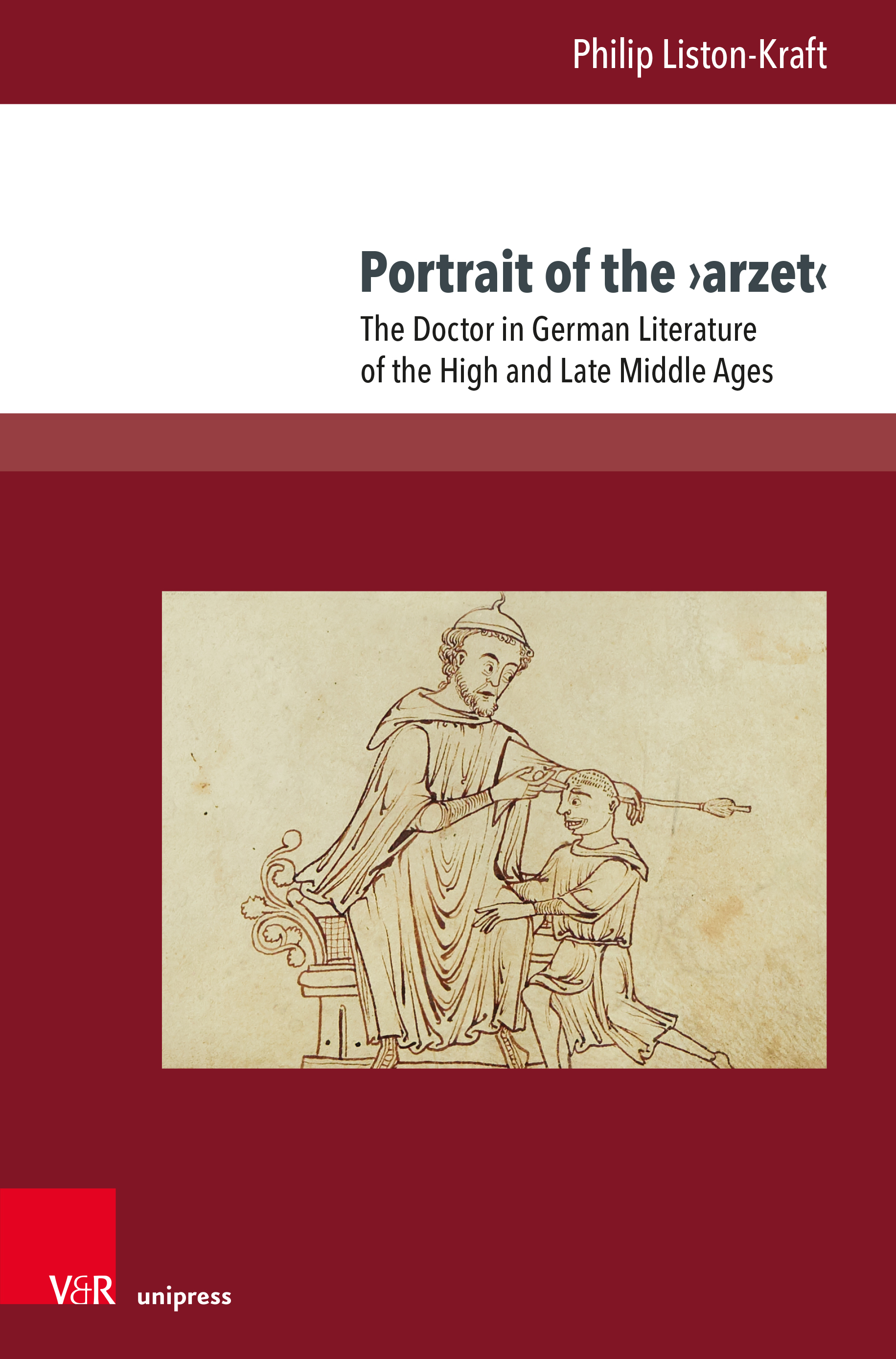
Was the medieval doctor saint or Satan? Fiend or fool? Traitor or trustworthy?
Medieval medicine could do little to aid the seriously ill. Popular attitudes toward the ›arzet‹, as reflected in the vernacular literature of the age, ran the gamut from admiration to skepticism to mockery to rejection, across a range of genres from chivalric epics to mystical texts. The university-trained doctor, schooled in the Galenic system, strove to set himself above the many other competing healers and outright charlatans offering their services to the ill. The task was made all the more difficult given the impossibility often to distinguish medicine from magic. Surprisingly, the critique of the medical profession never quite reached the level of contempt that would, centuries later, be directed at doctors in the age of COVID, when medicine had advanced so far and achieved so much.
Philip Liston-Kraft, an independent scholar of medieval German literature, mysticism, and medicine, has published articles on Meister Eckhart, Hrotsvit von Gandersheim, and Christina von Hane.
- By (author) Philip Liston-Kraft
Other Titles in this Series


 Kulturen des Manuskriptzeitalters
Ergebnisse der Amerikanisch-Deutschen Arbeitstagung an der Georg-August-Universität Göttingen vom 17. bis 20. Oktober 2002
 Diz vliegende bîspel
Ambiguity in Medieval and Early Modern Literature. Essays in Honor of Arthur Groos

 Grounding Community
Eckhartian Mysticism and Social Reform from the Late Middle Ages to the Fin de Siècle
Similar Books


 Contesting Labeled Identities
The Sociology of Gentilics in Biblical and Northwest Semitic Literature

 Drunk the Potion, No Whit Charmed
The Doctrine of Pure and Perfect Souls from Iamblichus to Damascius

 Epigraphic “Shades” from Hellenistic Thrace
Contextualizing Inscriptions in Greek from Thracian Tombs

 Epiphanies of the Divine in the Septuagint and the New Testament
Fifth International Symposium of the Corpus Judaeo-Hellenisticum Novi Testamenti (CJHNT), 14-17 May 2015, Nottingham


 Gold, Silver and Glass: Power Networks, Cultural Identities, Technology Transfers and Agency across the Old World (7th Century BC – 1st Century AD)
Proceedings of a Conference Held at the British Museum, 16–18 June 2023
 Language and Power in the Roman Empire and Early India
Hierarchy, Ambiguity, and the Art of Reading the Signs in Cosmopolitan Cultures
 Late Antique villae in the Balkans (3rd–7th c. AD): Current Research Questions and Perspectives
HAEMUS Companion to the Late Antique Balkans 1
Volume 4


 Nurturing the Elite
Representations of Drinking, Eating, and Religious Vessels in Palmyrene Funerary Iconography
Volume 13





 Roman Copies, Collecting, and Culture in the Bay of Naples and Beyond
Papers in Honor of Eugene J. Dwyer



 The Compositional History of the Book of Kings
An Analysis of the Evaluative Frameworks in 1 Kings 14–2 Kings 25




 Zooarchaeology of Ancient Greek Sanctuaries in Southwestern Sicily
Faunal Analysis from Selinus and Akragas as Evidence of Differences in the Treatment of Animals for Ritual Purposes


